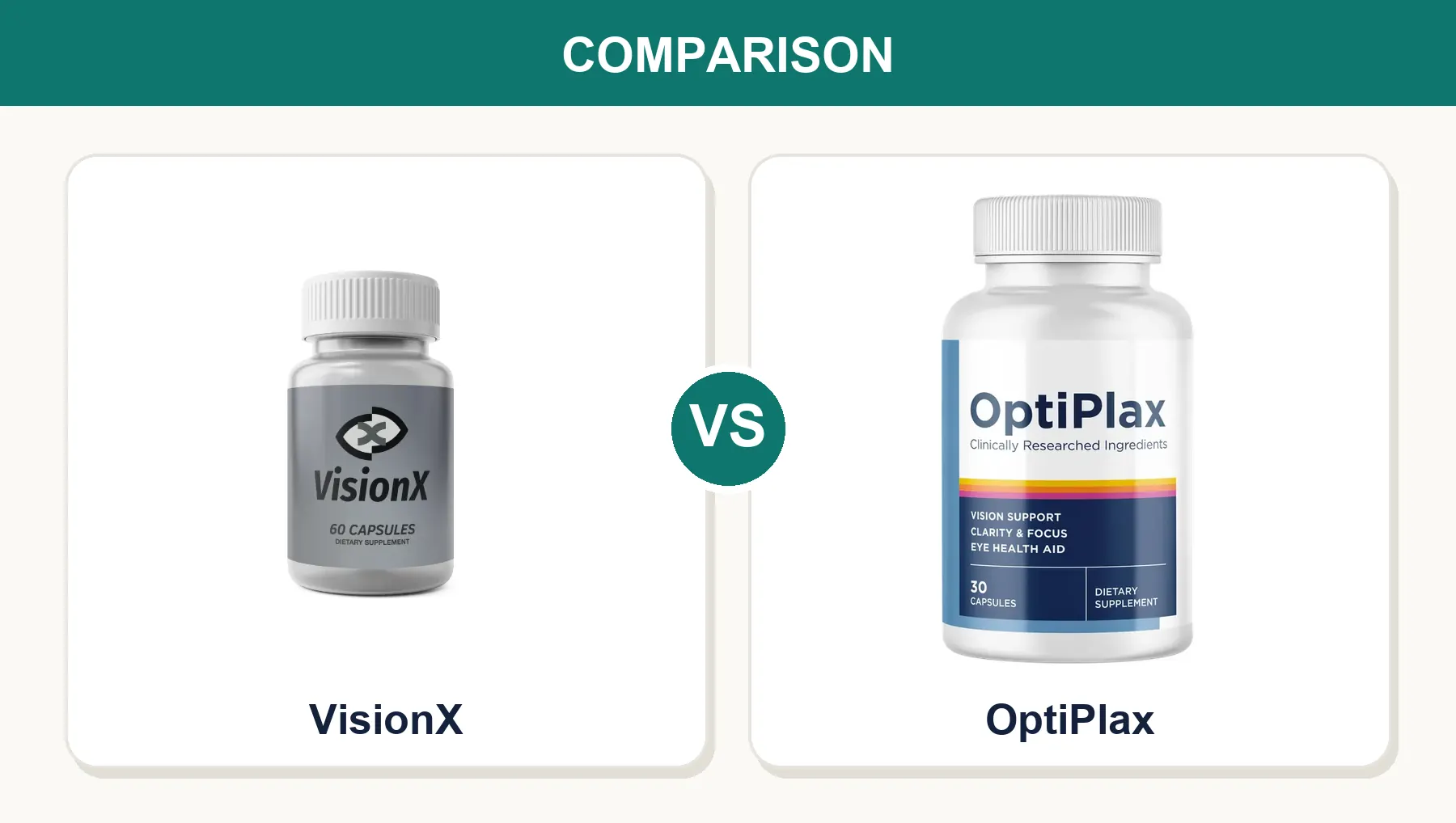
- VisionX, best for an AREDS2-style ingredient list: five of the six nutrients from the National Eye Institute's trials, though the doses are not printed. Jump to details
- OptiPlax: a published label and a refund that counts from delivery, but a seaweed blend with none of the proven eye nutrients. Jump to details
Check VisionX price on the official site →Opens the brand's official website · money-back guarantee
Eye supplements are an easy category to judge, because unlike most of the supplement aisle there is a clear research benchmark: the formula the National Eye Institute tested in its AREDS and AREDS2 trials. In this comparison we line up the two eye products we have fully reviewed on this site, VisionX and OptiPlax, against that benchmark and against each other. They cost exactly the same, so the differences come down to what is inside, how openly it is labeled, and how honestly it is sold.
The short version: VisionX is the clear winner on formula, and it is not close. OptiPlax is better labeled than VisionX's order page, but what the label shows is a seaweed blend without the nutrients that have eye-health evidence.
How we compared them
This is a comparison based on labels, official pages and published research, not on personal testing. We did not take these capsules or send them to a lab. We read each brand's order page, label, FAQ and refund policy, and we compared the ingredients with the AREDS2 formula and NIH summaries. Our criteria:
- Strength of ingredient evidence. For eye products, this mostly means: does the formula include the AREDS2 nutrients, and at what doses?
- Label transparency. Are the amounts printed, so you can compare them with the research?
- Price per month. Each bottle is a 30-day supply.
- Guarantee and refund terms. Length, when the clock starts, what you send back and who pays postage.
- Marketing red flags. Promises that could lead someone to skip an eye exam are the most serious kind.
VisionX vs OptiPlax: side by side
| VisionX | OptiPlax | |
|---|---|---|
| Format | Capsule, 1 a day | Capsule, 1 a day |
| Key ingredients | Lutein, zeaxanthin, zinc, vitamins C and E, beta carotene, selenium, bilberry, ginkgo | Kelp, wakame, astaxanthin 2%, chlorella, Ecklonia cava, fucoxanthin, nori, spirulina, sea buckthorn oil |
| AREDS2 nutrients included | ✅ 5 of 6 (no copper) | ❌ 0 of 6 |
| Doses published? | ❌ No amounts on the order page | ⚠️ Label published, but one 500 mg blend with no amount per ingredient |
| Price per bottle (30-day supply) | $79 (2) · $69 (3) · $49 (6) | $79 (2) · $69 (3) · $49 (6) |
| Shipping | Free US shipping on 6 bottles; $9.99 US otherwise per support page | $9.99 on 2 bottles; free on 3 and 6 |
| Guarantee | 60 days from order date | 60 days from delivery, empty bottles accepted |
| Return shipping | Customer pays | Customer pays |
| Support | Phone 7 days a week, plus email | Email only |
| Main safety point | Beta carotene: smokers and former smokers; ginkgo with blood thinners | Kelp iodine: thyroid conditions; chlorella with warfarin |
| Biggest marketing red flag | "Clinically proven to boost vision" | "Optical plaque" theory; testimonials about passing a vision test without glasses |
Prices are the ones listed on each official order page when we reviewed them. They change from time to time, so the checkout page is always the final word.
The benchmark: what AREDS2 used
| Nutrient | Daily amount in AREDS2 | VisionX | OptiPlax |
|---|---|---|---|
| Vitamin C | 500 mg | ✅ Listed, dose not shown | ❌ |
| Vitamin E | 400 IU | ✅ Listed, dose not shown | ❌ |
| Zinc | 80 mg | ✅ Listed, dose not shown | ❌ |
| Copper | 2 mg | ❌ | ❌ |
| Lutein | 10 mg | ✅ Listed, dose not shown | ❌ |
| Zeaxanthin | 2 mg | ✅ Listed, dose not shown | ❌ |
Copper was added to AREDS to prevent the copper deficiency that high-dose zinc can cause. Beta carotene was in the original AREDS formula but was replaced by lutein and zeaxanthin in AREDS2, because beta carotene raises lung cancer risk in current and former smokers. VisionX still lists it; OptiPlax does not.
1. VisionX: best for an AREDS2-style ingredient list
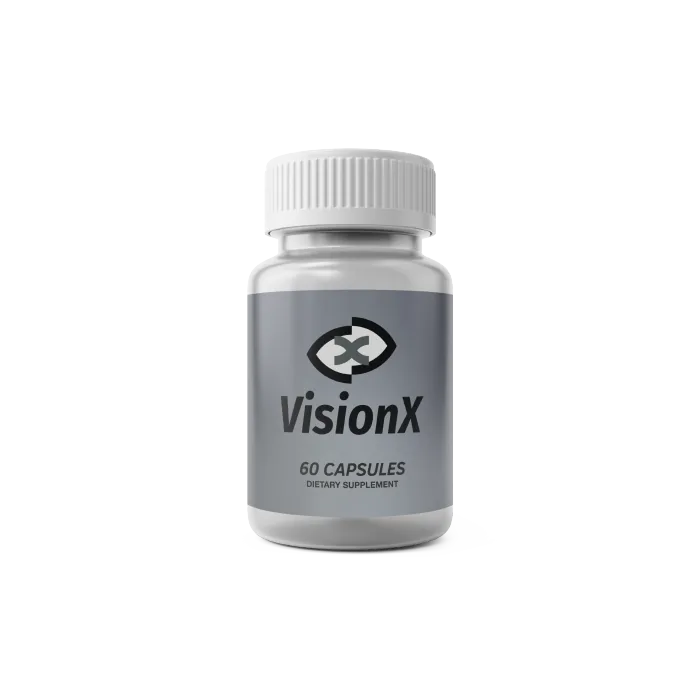
VisionX picks its ingredients from the right shelf. The order page lists lutein and zeaxanthin, zinc, vitamin C and vitamin E, which are five of the six nutrients in the National Eye Institute's AREDS2 formula (the sixth, copper, is not listed). It adds selenium, beta carotene, bilberry and ginkgo. You take one capsule a day, and lutein, zeaxanthin and vitamin E absorb better with a meal that contains some fat.
The weak point is transparency. The order page does not print the amount of each ingredient, and the AREDS2 results came from specific doses: 500 mg of vitamin C, 400 IU of vitamin E, 80 mg of zinc, 10 mg of lutein and 2 mg of zeaxanthin. A capsule with a little of everything can look similar on paper and deliver much less. Before ordering, ask support (+1 877 257-0825) for the Supplement Facts panel, or check the bottle on arrival. Two other cautions: VisionX lists beta carotene, which AREDS2 removed because it raises lung cancer risk in current and former smokers, and "clinically proven to boost vision" overstates what any of these nutrients do.
Pros
- Built on the nutrients with real eye-health trials
- One capsule a day, one-time payment
- Phone support seven days a week
- Same price as OptiPlax
Cons
- No amount per ingredient on the order page
- Beta carotene is a concern for smokers and former smokers
- "Boost vision" marketing overstates the evidence
- You pay return shipping; guarantee text mentions both 30 and 60 days
Read our full VisionX review →
Check VisionX price on the official site →Opens the brand's official website · money-back guarantee
2. OptiPlax: best for buyers who want a seaweed antioxidant, not an eye vitamin
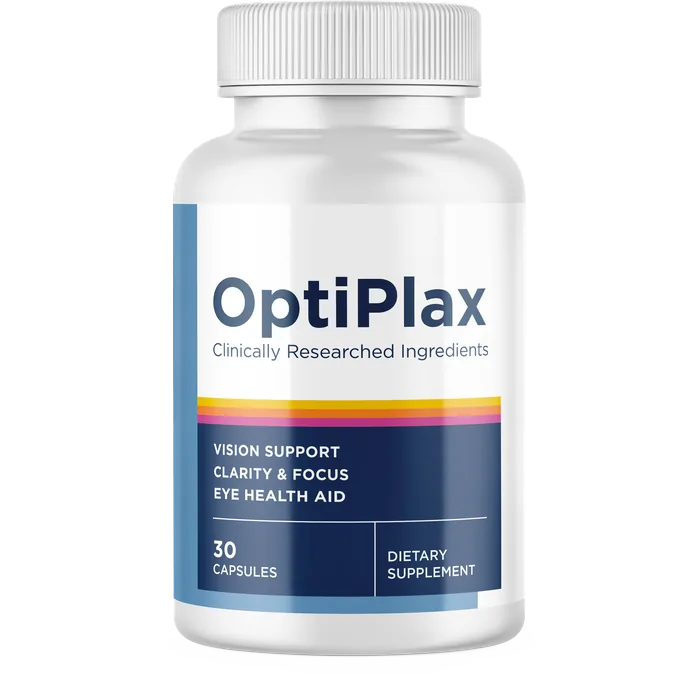
OptiPlax gets some basics right: the full Supplement Facts panel is published, it is one capsule a day, and its refund clock starts on delivery rather than the order date, with empty bottles accepted. Those are real points in its favor.
But it is not an eye vitamin in the evidence-based sense. The 500 mg blend is made of kelp, wakame, astaxanthin, chlorella, Ecklonia cava, fucoxanthin, nori, spirulina and sea buckthorn oil, and it contains none of the six AREDS2 nutrients. Its most interesting ingredient, astaxanthin, has small studies on eye fatigue at around 6 to 12 mg a day; because it is a 2% extract sharing a 500 mg blend, a capsule holds at most 10 mg of pure astaxanthin and almost certainly far less. The marketing rests on an "optical plaque" that clouds vision and can be flushed out, which is not how eye doctors explain blurry vision. Kelp is also a concentrated, variable source of iodine, and the label does not say how much a capsule supplies.
Pros
- Supplement Facts label is published
- Refund window counts from delivery; empty bottles accepted
- Free US shipping on 3 and 6 bottles
- Astaxanthin has some small eye-fatigue studies
Cons
- Contains none of the AREDS2 eye nutrients
- "Optical plaque" claims are not supported
- 500 mg blend with no amount per ingredient
- Kelp iodine and thyroid concerns; email-only support
Read our full OptiPlax review →
Check OptiPlax price on the official site →Opens the brand's official website · money-back guarantee
The extras: bilberry, ginkgo and astaxanthin
Both products add ingredients outside the benchmark. VisionX's bilberry became famous for night vision through stories about World War II pilots, but the NCCIH says there is not enough evidence that it helps any eye condition. Its ginkgo has small glaucoma studies and limited evidence overall, and it can raise bleeding risk. OptiPlax's astaxanthin is the most interesting extra on either label, with small, mostly Japanese studies on eye fatigue after screen work, but the likely dose in a shared 500 mg blend is low. Its seaweeds and algae have no trials for vision.
Price and guarantees
The two brands use identical prices: $79 a bottle for 2, $69 for 3 and $49 for 6, each bottle a 30-day supply, paid once with no subscription. Shipping differs slightly: OptiPlax ships free on 3 and 6 bottles, VisionX highlights free US shipping on 6 bottles, and its support page lists $9.99 otherwise. Check the checkout total either way.
Both give 60 days and both make you pay return shipping. OptiPlax's clock starts at delivery and accepts empty bottles, which is slightly better on paper. VisionX's clock starts at the order date, and the text next to its guarantee seal mentions "the next 30 days" even though the refund policy says 60. VisionX does have a phone line open seven days a week, while OptiPlax is email only. Neither difference outweighs the formula gap.
First, get an eye exam
Most blurry vision is an optical problem, not a nutritional one. Nearsightedness, farsightedness, astigmatism and the reading trouble that starts in your 40s (presbyopia) happen because the eye focuses light in the wrong place, and the National Eye Institute is clear that glasses, contacts or surgery correct them. No vitamin changes the shape of your eye or makes the lens flexible again.
Where nutrition matters is the long-term health of the retina, and even there the strong evidence is narrow. In the AREDS and AREDS2 trials, a specific vitamin-and-mineral formula lowered the risk of progressing to advanced age-related macular degeneration (AMD) by about 25% over five years, but only in people who already had intermediate AMD, or advanced AMD in one eye. It did not prevent AMD in healthy eyes, did not slow cataracts and did not improve eyesight. Only a dilated eye exam can tell you whether you are in the group that benefits. If you are, ask your eye doctor about an AREDS2 formula with the exact studied doses.
And some symptoms cannot wait: sudden blurry vision, a curtain or shadow over part of your sight, a burst of new floaters or flashes, eye pain or sudden loss of vision in one eye. See an eye doctor or go to an emergency room the same day.
Who should check with a doctor first
- Current and former smokers considering VisionX, because of the beta carotene.
- Anyone with a thyroid condition or on thyroid medicine considering OptiPlax, because kelp supplies an unstated amount of iodine.
- Anyone on blood thinners: VisionX's ginkgo and vitamin E can add to bleeding risk, and OptiPlax's chlorella contains vitamin K, which affects warfarin.
- Anyone with a diagnosed eye disease such as AMD, glaucoma or diabetic retinopathy: keep your treatment plan and ask your eye doctor before adding anything.
- People already taking a multivitamin or another eye vitamin: add up your vitamin A and zinc so you do not overshoot.
Our verdict
VisionX is our top pick of the two, because it is built on the nutrients the National Eye Institute actually tested. That is the single most important thing an eye supplement can get right. Before you rely on it, confirm the label amounts against the AREDS2 table above, and skip it if you smoke or used to.
OptiPlax is honest about its label but not about its premise. We cannot recommend it as an eye-health supplement: it leaves out every nutrient with strong evidence, and its "optical plaque" story could lead someone to treat a symptom that needs an eye doctor.
The best eye-health move of all costs nothing extra: a dilated eye exam. If it shows intermediate AMD, an AREDS2 formula with the studied doses, chosen with your eye doctor, is the evidence-based option. If your eyes are healthy, no supplement here will sharpen your vision.
Check VisionX price on the official site →Opens the brand's official website · money-back guarantee
Frequently asked questions
What is the best eye vitamin?
For eye health, the benchmark is the AREDS2 formula from the National Eye Institute. Of the products we have reviewed, VisionX comes closest, with five of its six nutrients, though it does not publish doses.
Is VisionX better than OptiPlax?
On ingredients, yes. VisionX includes lutein, zeaxanthin, zinc and vitamins C and E; OptiPlax contains none of them. OptiPlax publishes its label and counts its refund from delivery, which are its advantages.
Can eye vitamins improve my vision?
No. Nearsightedness, farsightedness, astigmatism and age-related reading problems are optical and need glasses, contacts or surgery. AREDS2 slowed advanced macular degeneration in people who already had intermediate AMD; it did not sharpen eyesight.
Who should avoid beta carotene in eye vitamins?
Current and former smokers. Beta carotene supplements raise lung cancer risk in this group, which is why the AREDS2 formula replaced it with lutein and zeaxanthin.
Is OptiPlax safe if I have a thyroid condition?
Ask your doctor first. OptiPlax contains kelp, a concentrated and variable source of iodine, and the label does not say how much iodine a capsule provides.
How much do VisionX and OptiPlax cost?
The same: $79 a bottle for 2, $69 for 3 and $49 for 6, each a one-time payment for a 30-day supply per bottle.
Related reading
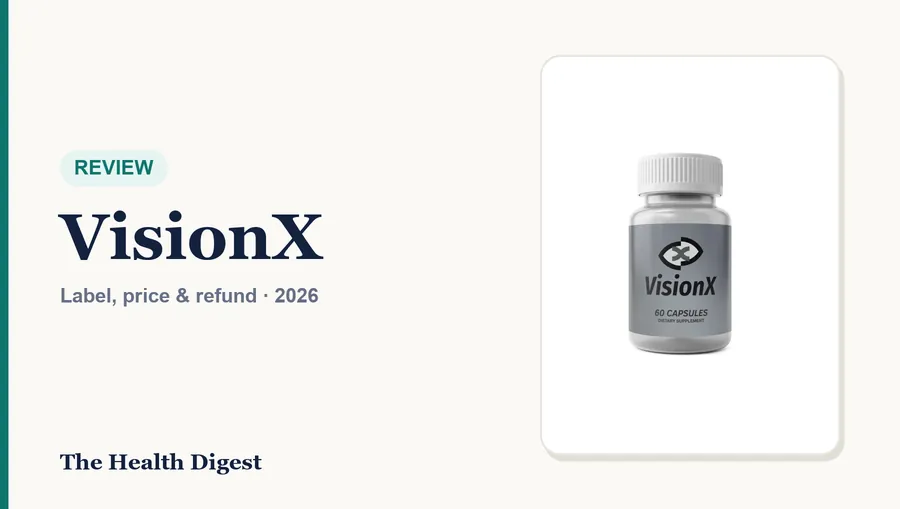 Review
VisionX review
What the VisionX order page says is inside, how it compares with the AREDS2 eye-vitamin formula, what it costs and how the 60-day guarantee works.
Read more →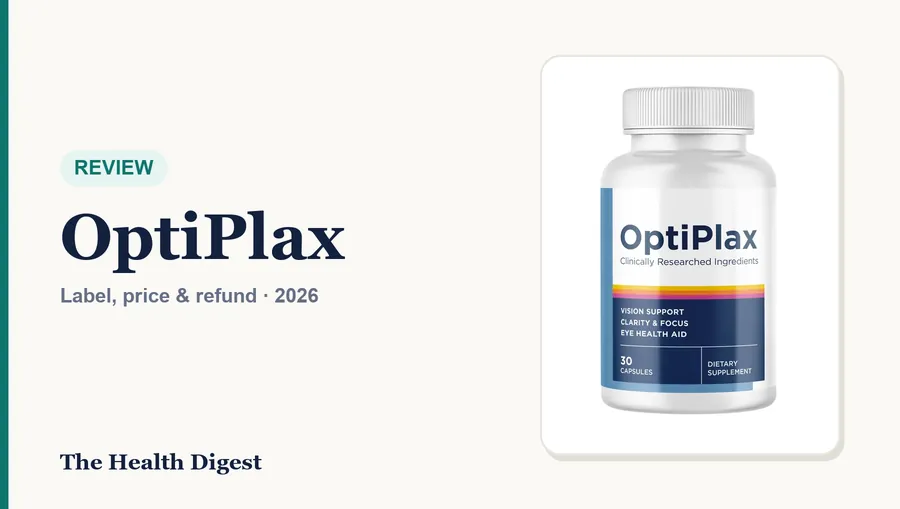 Review
OptiPlax review
What the OptiPlax label actually contains, why the "optical plaque" story does not hold up, how it compares with the AREDS2 eye formula, what it costs and how the 60-day refund works.
Read more →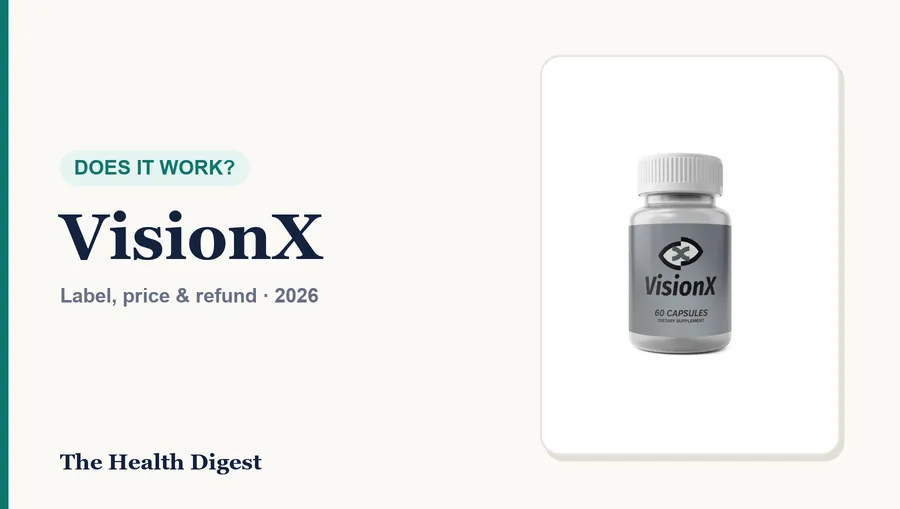 Review
Does VisionX work?
Every VisionX ingredient appears in eye research. Here is what that research measured, in whom and at what dose, and what you can honestly expect from the capsule.
Read more →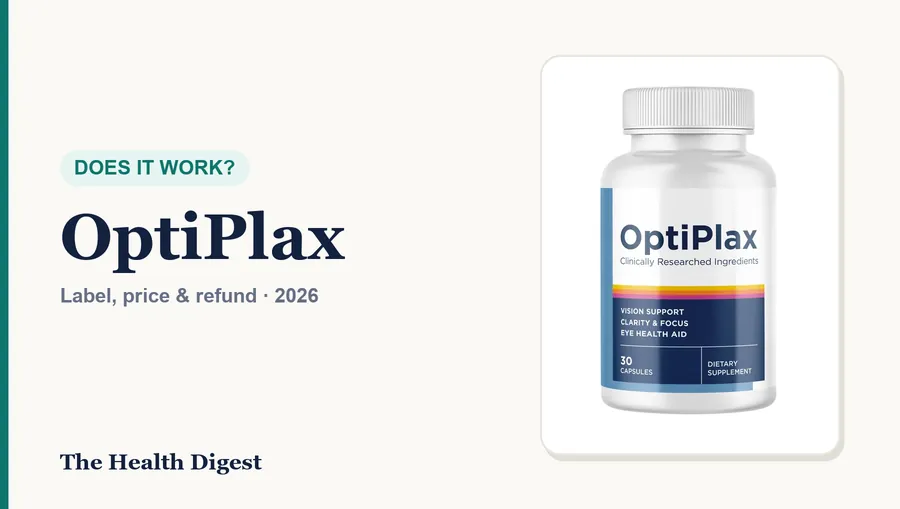 Review
Does OptiPlax work?
OptiPlax promises clearer vision with seaweed and algae. Here is what each ingredient on the label has actually been tested for, and what you can honestly expect.
Read more →
Buy it from the official store so the guarantee applies, and keep your order email until you decide.
Check VisionX price on the official site →Opens the brand's official website · money-back guaranteeSources
- VisionX official sales and order pages (buyvisionx.us), support page, refund policy and terms, as summarized in our VisionX review
- OptiPlax official order page, FAQ, Supplement Facts label, contact page, refund policy, shipping policy and references page (theoptiplax.com), as summarized in our OptiPlax review
- National Eye Institute: AREDS and AREDS2. nei.nih.gov
- AREDS2 Research Group. Lutein + zeaxanthin and omega-3 fatty acids for age-related macular degeneration. JAMA, 2013 (PubMed). pubmed.ncbi.nlm.nih.gov/23644932
- National Eye Institute: Age-Related Macular Degeneration. nei.nih.gov
- National Eye Institute: Refractive Errors. nei.nih.gov
- NIH Office of Dietary Supplements: Vitamin A and Carotenoids, Health Professional Fact Sheet. ods.od.nih.gov
- NIH Office of Dietary Supplements: Iodine, Health Professional Fact Sheet. ods.od.nih.gov
- NCCIH: Bilberry. nccih.nih.gov/health/bilberry
- NCCIH: Ginkgo. nccih.nih.gov/health/ginkgo