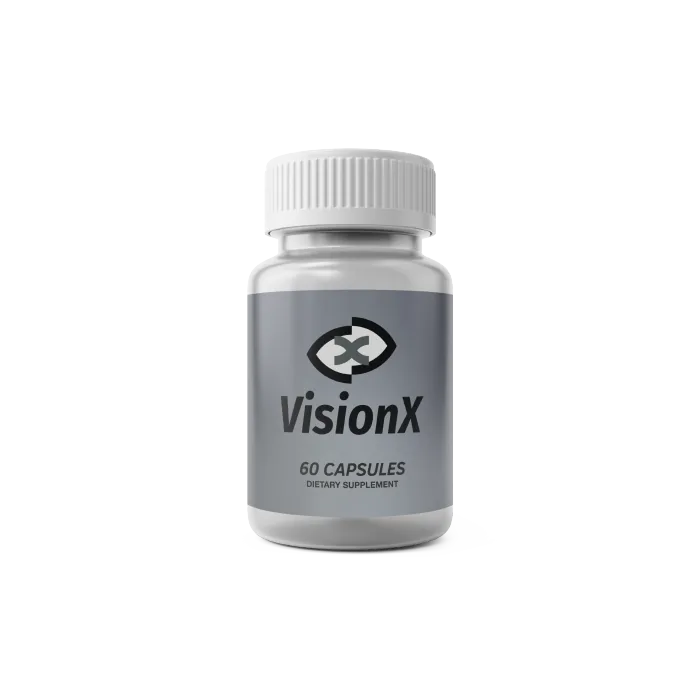
What VisionX is, in one paragraph
VisionX is a once-a-day capsule sold on buyvisionx.us for eye comfort and visual clarity. The order page lists eight nutrients: lutein and zeaxanthin, vitamin A (beta carotene), zinc, vitamin E, vitamin C, selenium, bilberry extract and ginkgo biloba. It costs $49 to $79 per bottle as a one-time payment with a 60-day money-back guarantee. The page does not print the amount of each ingredient.
First, what does "work" mean for an eye supplement?
People buy eye vitamins for three different reasons, and the evidence is very different for each:
| What you hope for | Can a supplement do it? |
|---|---|
| Sharper vision, fewer glasses | ❌ No. Focusing problems are optical and need lenses or surgery. |
| Slower macular degeneration | ✅ Yes, in people with intermediate AMD, with the AREDS2 formula at trial doses. |
| Less tired eyes, better screen comfort | ⚠️ Early evidence for lutein and zeaxanthin; habits matter more. |
So the honest answer to "does VisionX work" depends on which of these you mean.
The strongest evidence: lutein, zeaxanthin, zinc, vitamins C and E
These five are the backbone of the AREDS2 formula from the National Eye Institute. In people with intermediate age-related macular degeneration, that formula lowered the risk of progressing to the advanced stage by about 25% over five years. It used these daily amounts:
| Nutrient | Daily amount used in AREDS2 |
|---|---|
| Vitamin C | 500 mg |
| Vitamin E | 400 IU |
| Zinc | 80 mg (as zinc oxide) |
| Copper | 2 mg (added to prevent zinc-related copper deficiency) |
| Lutein | 10 mg |
| Zeaxanthin | 2 mg |
Two limits matter. The benefit was seen in people who already had intermediate AMD, not in people with healthy eyes. And the trial measured disease progression, not visual sharpness. VisionX includes five of these six nutrients, but because the order page does not give doses, you cannot tell whether one capsule gets close to these amounts. Ask support for the Supplement Facts panel if this is why you are buying.
Check VisionX price on the official site →Opens the brand's official website · money-back guarantee
Middle-tier evidence: vitamin A and selenium
Vitamin A is truly essential for night vision, but only people who are deficient benefit from more, and deficiency is rare in countries like the US. VisionX uses beta carotene, the plant form, which was in the first AREDS formula and then removed in AREDS2 because it raises lung cancer risk in smokers and former smokers. Selenium is an essential mineral that works with vitamin E in antioxidant enzymes; there is no trial showing it improves vision on its own.
Weak evidence: bilberry and ginkgo
Bilberry's reputation for night vision comes from wartime stories, not from controlled trials, and the NCCIH says there is not enough evidence that it helps any eye condition. Ginkgo has been tested in small glaucoma studies with mixed results, and the NCCIH describes the evidence for eye conditions as limited. Both are reasonable as minor extras, but neither is a reason to choose a product.
There is no trial of VisionX itself
We found no published study of the VisionX capsule. That is common for supplements, but it means every claim about the product is borrowed from research on its ingredients, often at doses or in groups of people that may not match yours. When the sales page says "clinically proven to boost vision", read it as "contains nutrients that have been studied", which is a much smaller claim.
So why do some people say they feel a difference?
A few honest explanations: people who start an eye supplement often also cut screen time, sleep better or finally get an updated prescription. Dry, tired eyes come and go with weather, workload and sleep. And anyone with a genuinely low intake of leafy greens and colorful vegetables may notice something from simply getting more lutein and vitamins. None of this is a reason to dismiss how someone feels, but it is why a testimonial is not proof.
The step that comes before any supplement
Get a dilated eye exam. It is the only way to know whether you have early macular changes, which is the situation where nutrients like these have the best evidence. It also catches glaucoma, cataracts and diabetic eye disease, which supplements do not treat. If your vision changes suddenly, or you see flashes, a shadow or a new blind spot, go the same day.
If you want to try it anyway, here is a fair test
- Check the label amounts when the bottle arrives and compare them with the AREDS2 table above.
- If you smoke or used to, or take blood thinners, ask your doctor first.
- Take one capsule a day with a meal that has some fat.
- Keep a short weekly note on eye comfort at the end of the day, without changing your glasses or screen habits.
- Decide before day 60, so you can still use the guarantee.
Cost and the 60-day window
VisionX costs $158 for 2 bottles, $207 for 3 or $294 for 6, each a one-time payment. The 60-day money-back guarantee covers orders from buyvisionx.us; you pay return shipping, and the FAQ asks for all bottles back, even empty ones. Since eye nutrients take months, a 2 or 3-bottle order is a reasonable way to try it without committing to six.
The answer, stated plainly
VisionX is built on the right nutrients, and those nutrients have real evidence for slowing intermediate macular degeneration at specific doses. It will not improve your eyesight, it has not been tested as a product, and the order page does not show whether its doses match the research. If you have early macular changes and your eye doctor agrees, it can be one way to get these nutrients. If you hope to put away your glasses, it will not do that.
Check VisionX price on the official site →Opens the brand's official website · money-back guarantee
Frequently asked questions
Is there a clinical trial of VisionX?
Not that we could find. The research the brand cites is about individual nutrients and eye disease, not about the VisionX capsule.
Can VisionX improve my eyesight?
No supplement corrects nearsightedness, farsightedness, astigmatism or presbyopia. Those need glasses, contacts or surgery.
How long does VisionX take to work?
Eye nutrients build up slowly; macular pigment changes take months. The brand itself suggests three to six months.
Does VisionX help with screen strain?
Screen strain mostly comes from focusing for long periods and blinking less. The 20-20-20 rule, good lighting and correct glasses help more. Evidence that lutein eases screen fatigue is early.
Is VisionX the same as AREDS2?
No. It shares five of the six AREDS2 nutrients and adds beta carotene, selenium, bilberry and ginkgo. The order page does not list the amounts, so you cannot confirm it matches the trial doses.
Related reading
 Review
VisionX review
What the VisionX order page says is inside, how it compares with the AREDS2 eye-vitamin formula, what it costs and how the 60-day guarantee works.
Read more → Legit or scam?
Is VisionX legit or a scam?
VisionX has a real checkout, a one-time price and a returns address. It also has marketing that promises more than eye research can deliver. Here is how to tell the difference.
Read more → Review
Does NerveCell work?
Every ingredient in NerveCell has research behind it. The useful question is what kind of research, because test tubes, mice and people are not the same rung of the same ladder.
Read more →
Buy it from the official store so the guarantee applies, and keep your order email until you decide.
Check VisionX price on the official site →Opens the brand's official website · money-back guaranteeSources
- VisionX official sales and order pages (buyvisionx.us/funnelb3/), support page, refund policy and terms, accessed October 2026
- National Eye Institute: AREDS and AREDS2. nei.nih.gov
- AREDS2 Research Group. Lutein + zeaxanthin and omega-3 fatty acids for age-related macular degeneration. JAMA, 2013 (PubMed). pubmed.ncbi.nlm.nih.gov/23644932
- NCCIH: Bilberry. nccih.nih.gov/health/bilberry
- NCCIH: Ginkgo. nccih.nih.gov/health/ginkgo
- NIH Office of Dietary Supplements: Vitamin A and Carotenoids, Health Professional Fact Sheet. ods.od.nih.gov