What OptiPlax is, in one paragraph
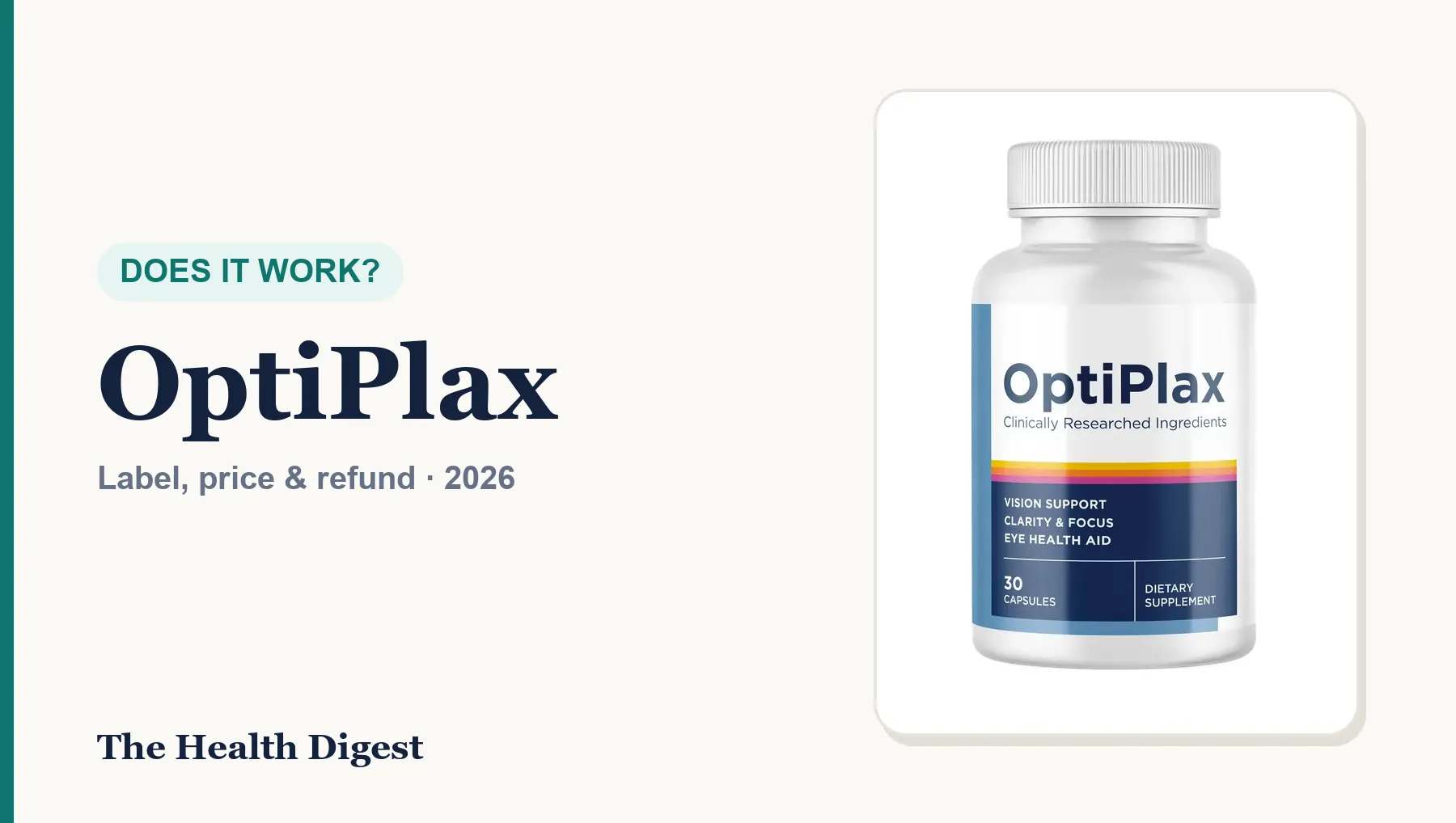
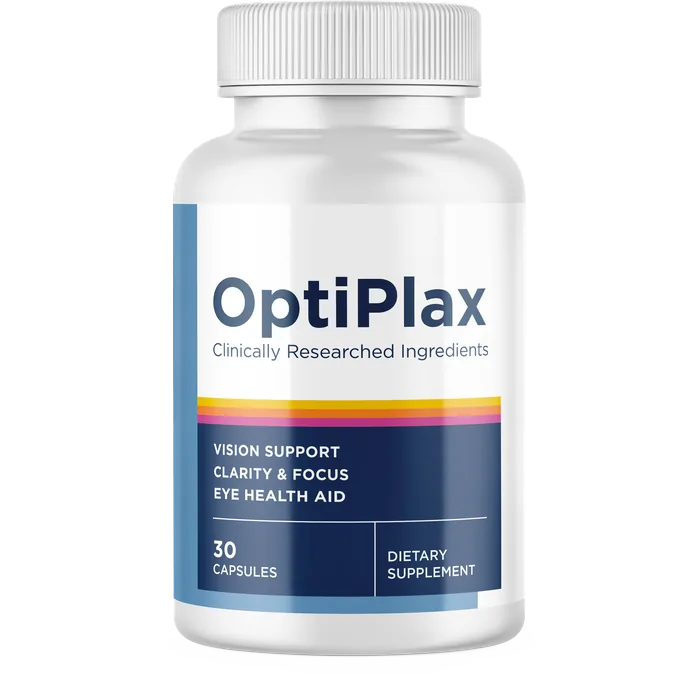
OptiPlax is a once-a-day capsule sold on theoptiplax.com for "sharper and clearer vision". Its label lists a 500 mg proprietary blend: kelp powder, wakame extract, astaxanthin 2%, chlorella, Ecklonia cava, kelp extract standardized to 10% fucoxanthin, nori, spirulina and sea buckthorn oil. It costs $49 to $79 per bottle as a one-time payment with a 60-day money-back guarantee.
First, what does "work" mean for an eye supplement?
| What you hope for | Can a supplement do it? |
|---|---|
| Sharper vision, fewer glasses, 20/20 again | ❌ No. Focusing problems are optical and need lenses or surgery. |
| Fewer floaters | ❌ No supplement has been shown to clear floaters. |
| Slower macular degeneration | ✅ Yes, with the AREDS2 formula at trial doses, in people with intermediate AMD. OptiPlax is not that formula. |
| Less eye fatigue after screens | ⚠️ Small studies on astaxanthin; habits and correct glasses matter more. |
The evidence ladder, ingredient by ingredient
Rung 1: small human studies on eyes (astaxanthin)
Astaxanthin is the only ingredient with human eye research, mostly small, short Japanese studies on eye fatigue and retinal blood flow at around 6 to 12 mg a day. OptiPlax lists a 2% extract inside a 500 mg blend, so a capsule cannot hold more than 10 mg of astaxanthin and almost certainly holds much less.
Rung 2: limited human data, not for vision (sea buckthorn oil, spirulina, chlorella)
Sea buckthorn oil has a few small studies on dry eye. Spirulina and chlorella have general nutrition research. None has been tested for eyesight.
Rung 3: lab and animal work (Ecklonia cava, fucoxanthin, kelp, wakame, nori)
The Ecklonia cava studies the brand cites were done in cells and mice, on blood vessels and nerve cells. Fucoxanthin is a seaweed pigment studied mostly in the lab. Kelp, wakame and nori are foods; their main measurable contribution in a capsule is iodine and minerals.
Check OptiPlax price on the official site →Opens the brand's official website · money-back guarantee
The missing benchmark: AREDS2
The National Eye Institute's AREDS2 formula is the best-studied eye supplement. In people with intermediate age-related macular degeneration it lowered the risk of advanced disease by about 25% over five years, using these daily amounts:
| Nutrient | AREDS2 daily amount | In OptiPlax? |
|---|---|---|
| Vitamin C | 500 mg | ❌ |
| Vitamin E | 400 IU | ❌ |
| Zinc | 80 mg | ❌ |
| Copper | 2 mg | ❌ |
| Lutein | 10 mg | ❌ |
| Zeaxanthin | 2 mg | ❌ |
Even AREDS2 did not improve eyesight; it slowed a disease. OptiPlax includes none of these nutrients, so it cannot borrow that evidence.
Does the "optical plaque" theory hold up?
The brand says plaque builds up in the eye and causes blurriness, and that its seaweeds flush it out. The studies it cites found microplastics on the eye's surface and in the vitreous, and amyloid plaques in the retinas of people with Alzheimer's disease. Those are interesting findings, but they do not explain ordinary age-related blur, and no study has shown seaweed removing anything from a human eye. Blurry vision has well-understood causes, from refractive errors and cataracts to dry eye, diabetes and macular disease, and an eye exam can tell which one you have.
So why do some people say it works?
Vision feels different from day to day with sleep, screen time, dry air and lighting. People who start a supplement often also rest their eyes more or finally update their glasses. And expectation shapes how we judge something as subjective as "clarity". None of that makes someone's experience false, but it is why testimonials are not proof.
If you want to try it anyway, here is a fair test
- Get a dilated eye exam first, so a treatable problem is not missed.
- If you have a thyroid condition or take warfarin, ask your doctor first.
- Take one capsule a day with a meal.
- Note your eye comfort weekly without changing glasses or screen habits.
- Decide before day 60 after delivery, so the guarantee still applies; keep the bottles and packing slip.
The answer, stated plainly
OptiPlax is unlikely to change your eyesight. Its ingredients have little human evidence for the eyes, the product has never been tested, and it leaves out the nutrients with the strongest evidence. If you want eye-nutrient support, ask your eye doctor about an AREDS2-style formula. If you try OptiPlax, treat the 60-day guarantee as your safety net and an eye exam as your first step.
Check OptiPlax price on the official site →Opens the brand's official website · money-back guarantee
Frequently asked questions
Is there a clinical trial of OptiPlax?
Not that we could find. The references page cites studies on individual ingredients, microplastics and retinal plaques, not on the OptiPlax capsule.
Can OptiPlax improve my eyesight?
No supplement corrects nearsightedness, farsightedness, astigmatism or presbyopia. Those need glasses, contacts or surgery.
Does OptiPlax get rid of floaters?
There is no evidence it does. Most floaters are harmless, but a sudden shower of new floaters, flashes or a shadow over your sight can mean a retinal tear and needs an eye exam the same day.
How long does OptiPlax take to work?
The refund policy suggests using it for at least three months. Since there is no trial of the product, there is no evidence-based timeline.
Is OptiPlax the same as an AREDS2 eye vitamin?
No. It contains none of the six AREDS2 nutrients: vitamin C, vitamin E, zinc, copper, lutein and zeaxanthin.
Related reading
 Review
OptiPlax review
What the OptiPlax label actually contains, why the "optical plaque" story does not hold up, how it compares with the AREDS2 eye formula, what it costs and how the 60-day refund works.
Read more → Legit or scam?
Is OptiPlax legit or a scam?
OptiPlax has a real checkout, a published label and an Ohio returns address. It also has an "optical plaque" story that eye research does not support. Here is how to tell the difference.
Read more → Review
Does NerveCell work?
Every ingredient in NerveCell has research behind it. The useful question is what kind of research, because test tubes, mice and people are not the same rung of the same ladder.
Read more →
Buy it from the official store so the guarantee applies, and keep your order email until you decide.
Check OptiPlax price on the official site →Opens the brand's official website · money-back guaranteeSources
- OptiPlax official order page, text presentation and FAQ, Supplement Facts label, contact page, refund policy, shipping policy and references page (theoptiplax.com), accessed October 2026
- National Eye Institute: AREDS and AREDS2. nei.nih.gov
- AREDS2 Research Group. Lutein + zeaxanthin and omega-3 fatty acids for age-related macular degeneration. JAMA, 2013 (PubMed). pubmed.ncbi.nlm.nih.gov/23644932
- National Eye Institute: Refractive Errors. nei.nih.gov
- NIH Office of Dietary Supplements: Iodine, Health Professional Fact Sheet. ods.od.nih.gov
- Wu D, et al. Impact of Microplastics on the Ocular Surface. Int J Mol Sci, 2023 (cited on the references page). pmc.ncbi.nlm.nih.gov/articles/PMC9962686
- National Eye Institute: Age-Related Macular Degeneration. nei.nih.gov