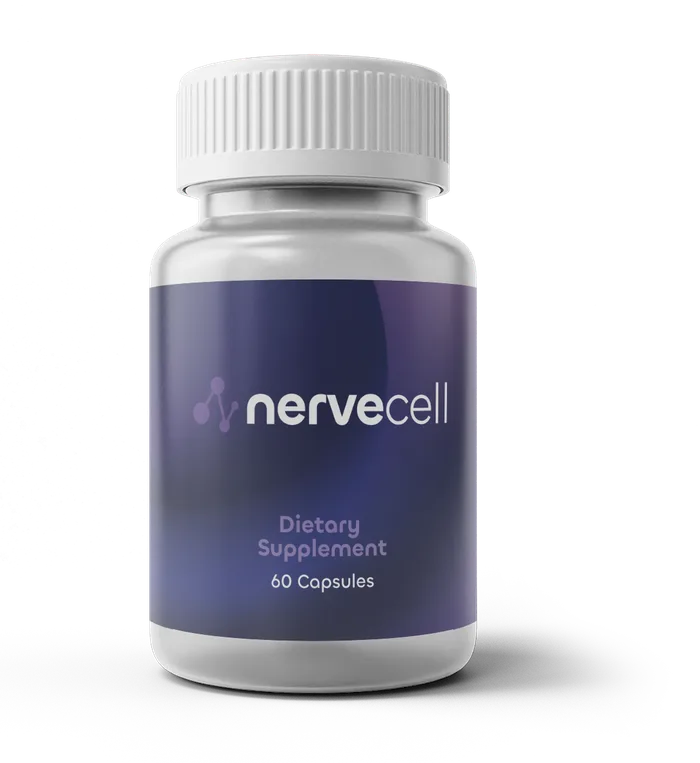
NerveCell's ingredient list is short, fully disclosed and built around traditional calming plants, which makes it easy for you and your pharmacist to review. The research on these herbs is mostly lab, animal or sleep and anxiety work, not nerve studies, so the fair way to see the formula is as a gentle botanical routine rather than a nerve treatment. If you like that idea and your doctor agrees, it is simple to try with a 60-day guarantee.
What we like
- Five named botanicals with the amount of each on the label
- No proprietary blend, no stimulants listed
- Vegetable capsule with only three standard fillers
- Short list that a pharmacist can check in minutes
Keep in mind
- Human research on these herbs for nerve symptoms is very limited
- Passionflower, corydalis and California poppy can cause drowsiness
- Corydalis has case reports of liver injury in the medical literature
Check NerveCell price on the official site →Opens the brand's official website · money-back guarantee
Searching for "nerve cell ingredients" can bring up biology lessons about neurons. This page is about the NerveCell supplement sold at thenervecell.com, and the ingredients printed on its Supplement Facts label.
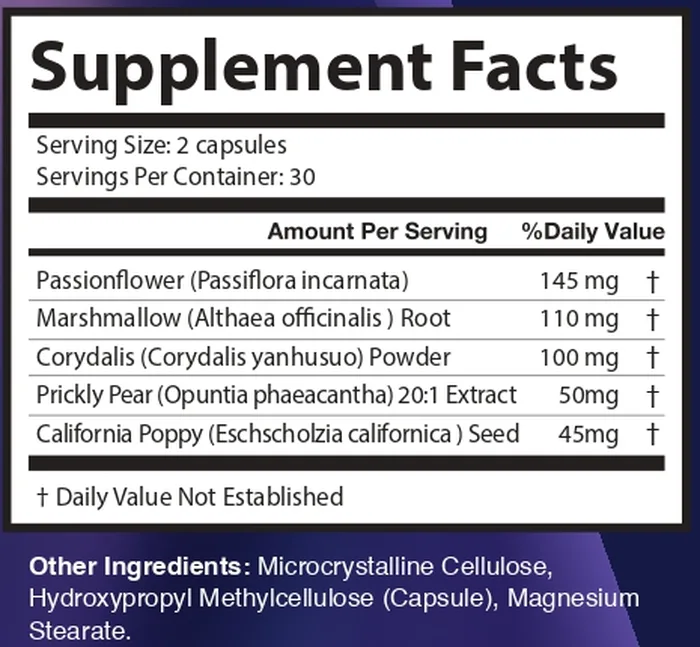
The NerveCell supplement contains five botanicals per 2-capsule serving: passionflower (145 mg), marshmallow root (110 mg), corydalis powder (100 mg), prickly pear 20:1 extract (50 mg) and California poppy seed (45 mg). That adds up to roughly 450 mg of plant material a day. The label (REV 11/25) has no vitamins, no minerals and no proprietary blend, so you can see exactly what you are taking. Below, we go through each ingredient in label order: what the plant is, what research on it has actually looked at, and the safety note you should know.
What ingredients are in the NerveCell supplement?
Here is the full panel as the brand publishes it. The amounts are per serving of two capsules, and one bottle holds 60 capsules, which is 30 servings.
| Ingredient | Form on the label | Per 2 capsules | Traditionally known as |
|---|---|---|---|
| Passionflower | Passiflora incarnata | 145 mg | A calming herb |
| Marshmallow root | Althaea officinalis root | 110 mg | A soothing, mucilage-rich root |
| Corydalis | Corydalis yanhusuo powder | 100 mg | A traditional Chinese herb for discomfort |
| Prickly pear | Opuntia phaeacantha 20:1 extract | 50 mg | A cactus used as food |
| California poppy | Eschscholzia californica seed | 45 mg | A relaxing herb in sleep blends |
The "other ingredients" line lists microcrystalline cellulose (a plant-fiber filler), hydroxypropyl methylcellulose (the vegetarian capsule shell) and magnesium stearate (a flow agent that keeps powder from sticking to machines). The product is distributed for NerveCell from 11870 62nd St N, Largo, FL 33773.
How should you read the NerveCell label?
Three small details on this panel are worth understanding before you look at the individual plants.
- Powder, extract and seed are different forms. Corydalis is listed as a powder, prickly pear as a 20:1 extract and California poppy as seed. A "20:1" ratio on a label usually means the manufacturer started with about 20 parts of raw plant to make 1 part of extract. The label does not state any standardized marker compound for the other plants.
- The serving count has a typo on one image. The label on the main order page says 60 servings per container; an otherwise identical image on the brand's sales page says 30. Two capsules from a 60-capsule bottle is 30 servings, so a bottle lasts a month.
- The directions are simple. Two capsules daily with 8 oz of water, and do not exceed that amount.
What does each NerveCell ingredient do?
A quick note on how to read this section. The studies mentioned below were done on the individual plants, often in animals, in cells or for sleep and anxiety. None of them tested NerveCell itself, and none of them shows that the formula treats neuropathy or repairs nerves.
Passionflower (145 mg): the largest ingredient
What it is: the leaves and stems of a climbing vine native to the Americas, long used in herbal teas for relaxation.
What research has looked at: the NIH's National Center for Complementary and Integrative Health (NCCIH) says a small amount of research suggests passionflower might reduce anxiety and improve total sleep time, and that there is not enough evidence for other uses. The sleep trial quoted on the NerveCell sales page used passionflower tea.
Safety note: drowsiness, dizziness and confusion are possible. NCCIH says it should not be used in pregnancy because it may cause uterine contractions, and it may interact with anesthesia.
Marshmallow root (110 mg)
What it is: the root of a European wetland plant (the original source of the candy's name), rich in a slippery, gel-forming fiber called mucilage.
What research has looked at: the evidence the brand cites comes from cell studies on immune cells in a dish. We found no human research on marshmallow root and nerve symptoms.
Safety note: WebMD's reference entry says there is not enough research to know its side effects, notes that allergic reactions are possible, and says marshmallow may affect the absorption of some medicines, especially diabetes medicines.
Check NerveCell price on the official site →Opens the brand's official website · money-back guarantee
Corydalis (100 mg)
What it is: the tuber of Corydalis yanhusuo, a plant from the poppy family used in traditional Chinese herbalism for discomfort.
What research has looked at: most modern work is in animals and in the lab; the PLOS ONE study the sales page cites was done in mice. Human data are very limited, such as a small 2004 trial in which a corydalis and Angelica dahurica combination was tested during a cold-water pain challenge in healthy volunteers. We found no trials in people with neuropathy.
Safety note: corydalis is traditionally sedating. It also has published case reports of liver injury: a 2023 report in ACG Case Reports Journal describes two adults whose liver tests rose while taking a corydalis-containing sleep product and improved after stopping it.
Prickly pear 20:1 extract (50 mg)
What it is: an extract of Opuntia phaeacantha, one of the prickly pear cacti of the American Southwest. Prickly pear pads and fruit are everyday foods in Mexican cooking.
What research has looked at: most prickly pear research concerns other Opuntia species and blood sugar. A PubMed search for prickly pear and neuropathy returns no results, so there is no nerve-specific human data.
Safety note: prickly pear cactus may lower blood sugar. A 2010 case report in the Annals of Pharmacotherapy describes low blood sugar in a man who ate prickly pear pads daily while taking two diabetes drugs.
California poppy seed (45 mg)
What it is: the seed of California's state flower, a relaxing herb that appears in many nighttime blends. It is not the opium poppy.
What research has looked at: the studies cited by the brand are animal experiments from 1991 and 2001. Human data exist only for combination products aimed at sleep or anxiety. A benefit for nerve discomfort has not been established.
Safety note: like passionflower and corydalis, it is traditionally calming, so its effect may add to other sedating products.
What is not in NerveCell?
Knowing what is missing is as useful as knowing what is there. The NerveCell label lists no B vitamins (such as B1, B6 or B12), no alpha lipoic acid, no benfotiamine and no caffeine or other stimulants. Those nutrients are what many shoppers expect in a "nerve" product, so if you were looking for one of them, this is a different kind of formula. Our NerveCell vs alpha lipoic acid comparison explains the difference. It also means NerveCell will not correct a vitamin B12 deficiency, which is one of the treatable causes of tingling feet that a doctor can test for.
How do the five ingredients fit together?
Read as a whole, the formula has a clear theme. More than half of it by weight (passionflower, California poppy and corydalis, about 290 mg) is made of plants that herbal traditions use to calm and relax. Marshmallow root and prickly pear are gentler, food-like botanicals that round out the blend. That is why we describe NerveCell as a calming botanical formula marketed for nerve comfort, and why many people would find it more natural to take in the evening. It is not a combination that has been tested as a whole, and the brand's "neural inflammatory cycling" explanation is marketing language, not an established medical mechanism.
Which NerveCell ingredients need a conversation with your doctor?
Because the doses are printed, a pharmacist can review this label quickly. Bring it along if any of these apply to you:
- You take sedating medicines such as sleep aids, anxiety medicines, opioids, gabapentin or pregabalin, or you drink alcohol regularly. Three of the five herbs are traditionally sedating.
- You have liver disease or take medicines that affect the liver, because of the corydalis case reports.
- You have diabetes and take glucose-lowering medicine, because of prickly pear and the marshmallow absorption note.
- You have surgery planned, because passionflower may interact with anesthesia.
- You are pregnant, nursing or under 18, or you have any medical condition. The label itself asks you to consult a physician.
And one point that matters more than any ingredient: burning, tingling or numb feet and hands need a diagnosis. The National Institute of Neurological Disorders and Stroke lists diabetes, vitamin B12 deficiency, alcohol, some medications and other diseases as possible causes. Symptoms that are new, spreading or getting worse, or that come with weakness, balance problems or foot sores, deserve a prompt medical visit. For the wider safety picture, see our NerveCell review.
Where can you buy NerveCell with this label?
The label shown above is the one published on the brand's own order page. Look-alike sites use the NerveCell name too (our legitimacy check lists them), so buying on thenervecell.com is the simplest way to know which formula and which refund policy you get. Each package is a one-time payment:
 2 bottles60-day supply$79 /bottle$158 · + shippingCheck availability →Best value
 6 bottles180-day supply$49 /bottle$294 · free shipping + bonusesCheck availability →
 3 bottles90-day supply$69 /bottle$207 · free US shippingCheck availability →
| Package | Supply | Price per bottle | Total | Shipping |
|---|---|---|---|---|
| 2 bottles | 60 days | $79 | $158 | + shipping |
| 3 bottles | 90 days | $69 | $207 | free US shipping |
| 6 bottles | 180 days | $49 | $294 | free shipping + bonuses |
Prices as listed on the official order page when we checked. They change from time to time, so the order page is the final word.
The order page shows $9.99 shipping on 2 bottles and free shipping on 3 and 6, while the support page says only 6-bottle orders ship free, so check the total at checkout.

Every order from the official NerveCell store is covered by a 60-day money-back guarantee, and it is a one-time payment with no subscription.
Orders have a 60-day money-back guarantee from the order date. The customer pays return shipping, and the support pages disagree on whether all bottles or only unused ones must go back, so email support@healthyconsumer.us before returning anything.
Check NerveCell price on the official site →Opens the brand's official website · money-back guarantee
Frequently asked questions
What are the 5 ingredients in NerveCell?
Passionflower 145 mg, marshmallow root 110 mg, corydalis powder 100 mg, prickly pear 20:1 extract 50 mg and California poppy seed 45 mg, per 2-capsule serving.
Does NerveCell contain vitamin B12 or alpha lipoic acid?
No. The label lists only the five botanicals plus capsule and filler ingredients. There are no vitamins, minerals or alpha lipoic acid.
Is there a proprietary blend in NerveCell?
No. Every ingredient has its own amount on the Supplement Facts label, which makes it easy to review with a pharmacist.
Does California poppy in NerveCell contain opium?
California poppy is a different plant from the opium poppy. It is traditionally used as a relaxing herb, and it can add to the effect of other sedating products.
Is NerveCell vegan?
The capsule is hydroxypropyl methylcellulose, a plant-based shell, and the other ingredients are cellulose and magnesium stearate. The label does not carry a vegan certification, so ask support if you need confirmation.
Related reading
 Comparison
NerveCell vs alpha lipoic acid
Alpha lipoic acid is the ingredient most people search for when their feet tingle. NerveCell does not contain it. Here is what each one is built to do, what the evidence says, and when to stop shopping and book an appointment.
Read more → Review
Does NerveCell work?
Every ingredient in NerveCell has research behind it. The useful question is what kind of research, because test tubes, mice and people are not the same rung of the same ladder.
Read more → Legit or scam?
Is NerveCell legit or a scam?
NerveCell has a real label, a working checkout and a published returns address. It also has a blank homepage, four look-alike domains and a label typo. Here is how to sort the red flags from the rough edges.
Read more →
Buy it from the official store so the guarantee applies, and keep your order email until you decide.
Check NerveCell price on the official site →Opens the brand's official website · money-back guaranteeSources
- NerveCell official order page and sales page (thenervecell.com/funnelb4/aff-dtc/ and /funnelb3/), Supplement Facts label REV 11/25, support page, accessed September 2026
- NCCIH: Passionflower. nccih.nih.gov/health/passionflower
- WebMD: Marshmallow, uses and precautions. webmd.com/vitamins-supplements/marshmallow
- Corydalis yanhusuo and Angelica dahurica in a human cold-pressor pain test, J Clin Pharmacol 2004. pubmed.ncbi.nlm.nih.gov/15496650
- Engman et al. Corydalis and drug-induced liver injury: a series of 2 cases. ACG Case Reports Journal, 2023. pmc.ncbi.nlm.nih.gov/articles/PMC10735149
- Sobieraj and Freyer. Probable hypoglycemic reaction with prickly pear cactus, glipizide and metformin. Ann Pharmacother 2010. pubmed.ncbi.nlm.nih.gov/20516361
- NINDS: Peripheral Neuropathy. ninds.nih.gov