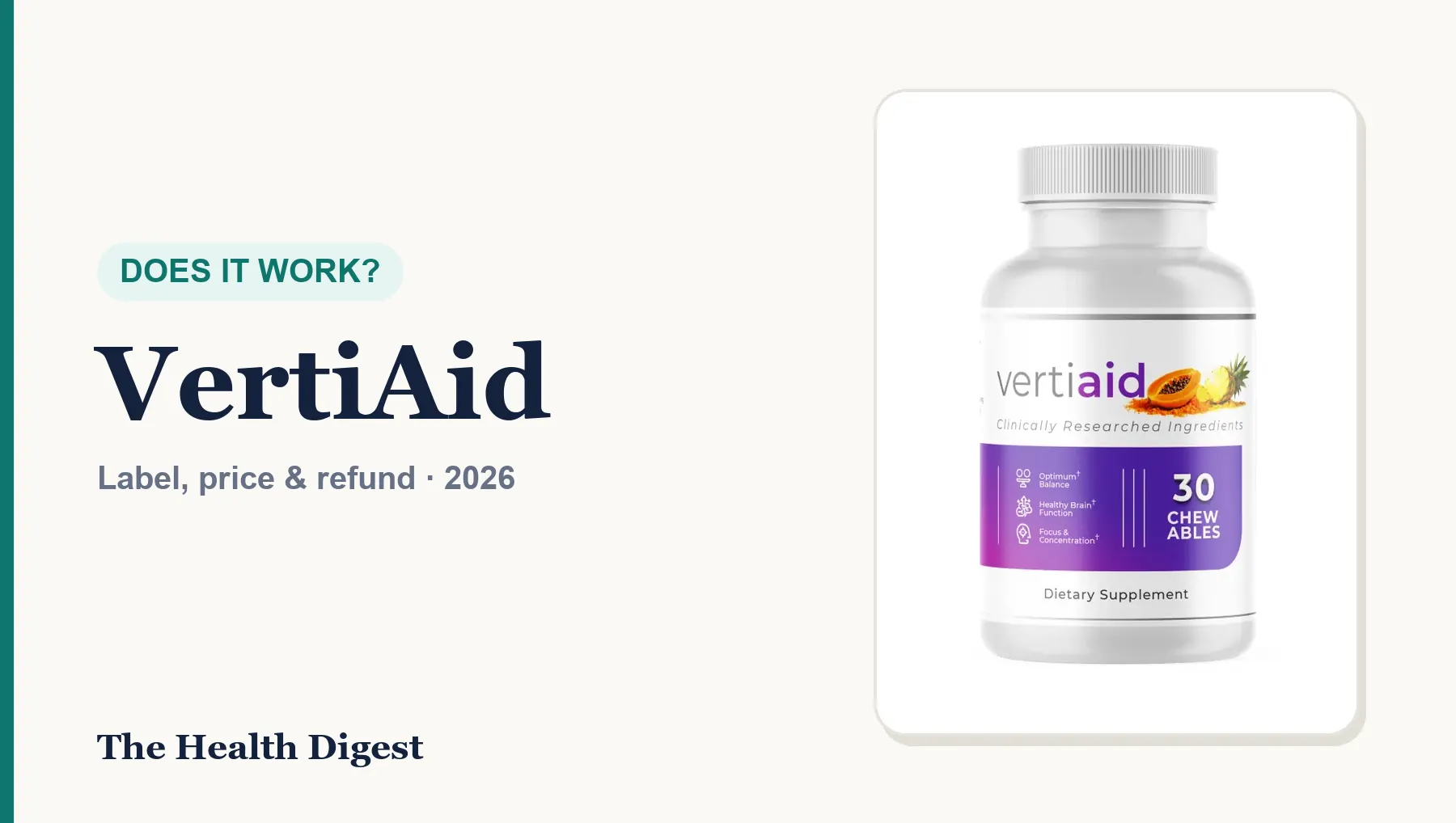
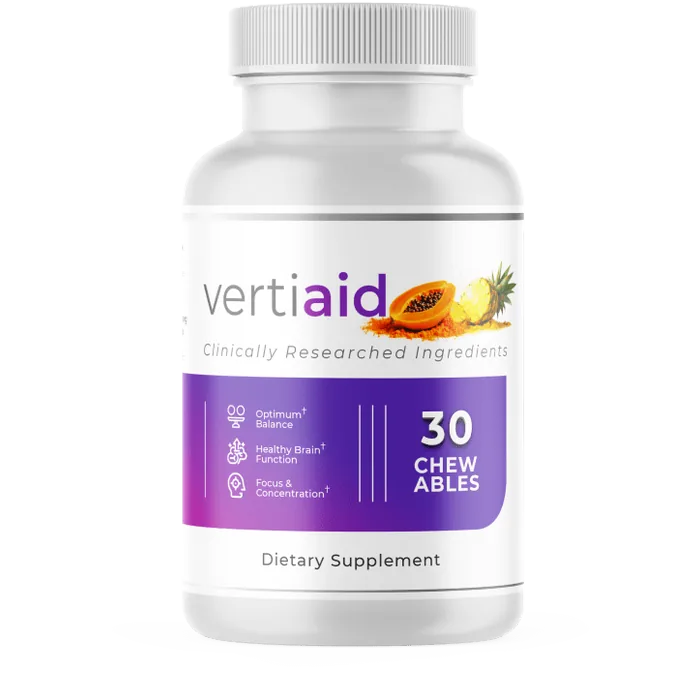
What VertiAid is, in one paragraph
VertiAid is a once-a-day chewable sold on thevertiaid.com for balance and vertigo. Its label lists vitamin D3 (20 mcg, or 800 IU), riboflavin 1.3 mg, vitamin B6 1.7 mg, calcium 20 mg, zinc 5 mg and potassium 30 mg, plus a 227 mg blend of papaya, pineapple, marine collagen, eggshell membrane and American ginseng. It costs $49 to $69 per bottle as a one-time payment with a 60-day money-back guarantee.
What "work" can mean here
| What you hope for | Realistic? |
|---|---|
| Stop a vertigo attack right now | ❌ No. No vitamin acts that fast; BPPV attacks are treated with repositioning maneuvers. |
| Dissolve loose ear crystals | ❌ No study shows any supplement doing this. |
| Fewer repeat BPPV episodes | ⚠️ Possible if your vitamin D is low, based on one good trial. |
| Better balance from other causes (Ménière's, migraine, nerve inflammation, aging) | ❌ No evidence for this formula. |
The evidence ladder, ingredient by ingredient
Rung 1: a real trial (vitamin D, with calcium)
In the 2020 Neurology trial, 1,050 people treated for BPPV were randomized. Those in the supplement group whose vitamin D was below 20 ng/mL took 800 IU of vitamin D and 1,000 mg of calcium carbonate a day for a year, and the group had about 24% fewer recurrences than the group that was simply followed. VertiAid matches the vitamin D dose but provides only 20 mg of calcium, and the supplements were given only to people who were low to begin with.
Rung 2: weak or indirect human data (vitamin B6, riboflavin, zinc)
The B6 study the brand cites is a small 1988 experiment on vertigo caused by a drug, minocycline. Riboflavin has been studied for migraine prevention, which matters for vestibular migraine, but at about 400 mg a day, not the 1.3 mg here. The zinc study looked at people with severe zinc deficiency after bowel surgery.
Rung 3: lab and animal work (collagen, eggshell membrane, ginseng, papaya, pineapple)
The eggshell membrane studies are about collagen materials in the lab and safety in rats. The ginseng study used red ginseng in mice. The bromelain reference is a general review. None tested these ingredients for vertigo in people, and together they make up just 227 mg.
Check VertiAid price on the official site →Opens the brand's official website · money-back guarantee
No trial of the finished product
We found no published study of VertiAid itself. Every claim about the chewable is borrowed from ingredient research, often in different doses, in animals or in different conditions. The one solid piece, the vitamin D trial, can be applied just as well with an ordinary vitamin D supplement after a blood test.
Why do some people say it worked?
BPPV often settles by itself within days to weeks, even without treatment, so anything started during an episode can look like the cure. Vertigo also comes and goes, and people tend to start a remedy when symptoms are at their worst, so the next weeks are usually better whatever they do. That does not make anyone's experience false, but it is why testimonials are not proof.
If you want to try it, here is a fair test
- Get a diagnosis first. If it is BPPV, ask about a repositioning maneuver.
- Ask for a vitamin D blood test; the evidence applies to people who are low.
- Check your medicines: ginseng can interact with warfarin and diabetes drugs.
- Take one chewable a day and keep a simple log of vertigo episodes.
- Decide before day 60 after delivery so the guarantee still applies; keep the bottles and packing slip.
The answer, stated plainly
VertiAid contains one ingredient with real evidence, vitamin D, for one situation: preventing repeat BPPV in people who are low in it. It will not stop an attack, it does not dissolve ear crystals, and its other ingredients add little. Get a diagnosis first, treat BPPV with a repositioning maneuver, and if your vitamin D is low, VertiAid is one of several ways to correct it. And never wait out sudden vertigo with stroke signs: call 911.
Check VertiAid price on the official site →Opens the brand's official website · money-back guarantee
Frequently asked questions
Is there a clinical trial of VertiAid?
Not that we could find. The references page cites studies on individual ingredients, mostly vitamin D, vitamin B6, collagen materials and ginseng in mice.
Does vitamin D help vertigo?
In a 2020 trial, vitamin D plus calcium reduced repeat BPPV episodes by about a quarter in people who had low vitamin D. It has not been shown to help people with normal levels or to stop an attack.
How fast does VertiAid work?
No evidence supports fast results. In the vitamin D trial, people took supplements for a year and the outcome was fewer recurrences over time.
What is the best treatment for BPPV?
A repositioning maneuver, such as the Epley maneuver, done by a doctor or physical therapist. It usually works in one or a few sessions.
When is vertigo an emergency?
When it starts suddenly together with facial drooping, weakness or numbness, slurred speech, double vision, trouble walking or a severe headache. Call 911.
Related reading
 Review
VertiAid review
What the VertiAid label contains, which ingredient has real vertigo research behind it, which claims go too far, when dizziness is an emergency, what it costs and how the refund works.
Read more → Legit or scam?
Is VertiAid legit or a scam?
VertiAid has a real checkout, a published label and an Ohio returns address. It also promises to dissolve loose ear crystals, which no study supports. Here is how to tell the difference.
Read more →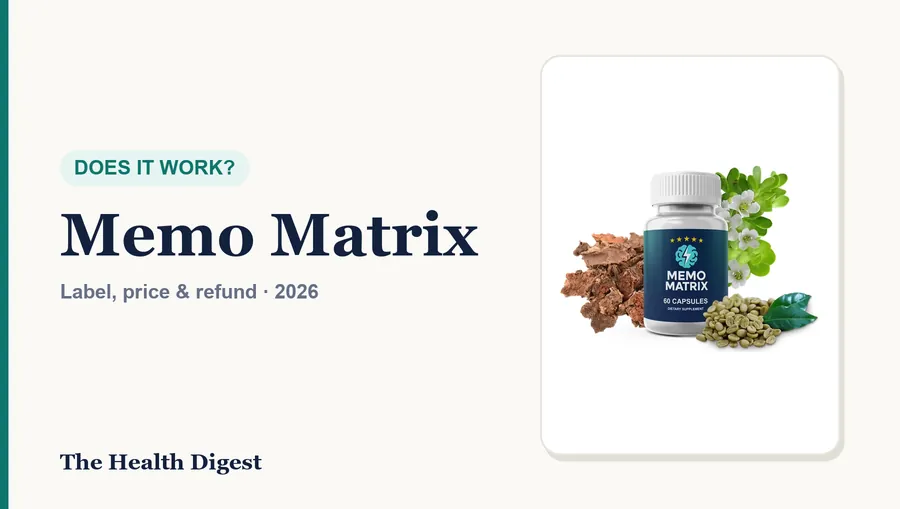 Review
Does Memo Matrix work?
Memo Matrix is unusual among nootropics: its own pages describe three different formulas. You cannot answer the question until you know which one is in the bottle.
Read more →
Buy it from the official store so the guarantee applies, and keep your order email until you decide.
Check VertiAid price on the official site →Opens the brand's official website · money-back guaranteeSources
- VertiAid official order page, text presentation and FAQ, Supplement Facts label, contact page, refund policy, shipping policy and references page (thevertiaid.com), accessed October 2026
- Jeong SH, et al. Prevention of benign paroxysmal positional vertigo with vitamin D supplementation: a randomized trial. Neurology, 2020 (cited on the references page). neurology.org
- MedlinePlus: Benign positional vertigo. medlineplus.gov
- NIDCD: Balance Disorders. nidcd.nih.gov
- MedlinePlus: Stroke. medlineplus.gov/stroke.html
- Claussen CF, Claussen E. Antivertiginous action of vitamin B6 on experimental minocycline-induced vertigo in man. Arzneimittelforschung, 1988 (cited on the references page). pubmed.ncbi.nlm.nih.gov/3382463
- NIH Office of Dietary Supplements: Riboflavin, Health Professional Fact Sheet. ods.od.nih.gov
- MedlinePlus: Dizziness and Vertigo. medlineplus.gov