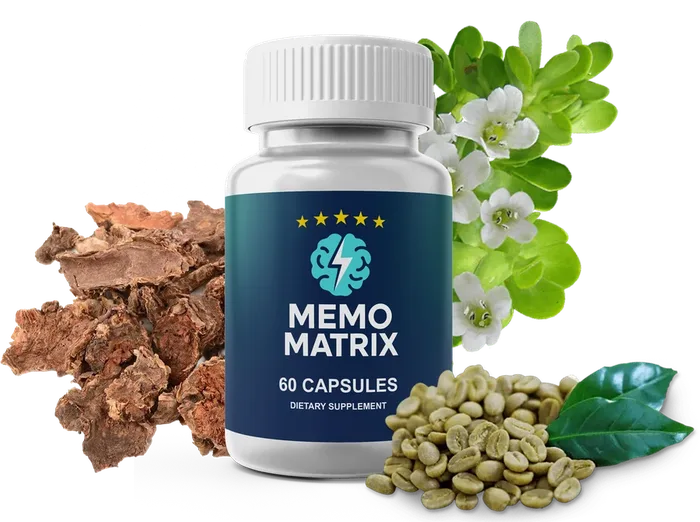
Memo Matrix is built on genuinely studied ingredients, bacopa and L-theanine in particular, and it prints exact amounts instead of hiding behind a proprietary blend. What it cannot offer is a trial of the finished capsule, or even a single consistent description of itself: the label and the sales copy list different ingredients. Treat the label as the truth, treat the copy as marketing, and treat the 60-day window as your deadline for deciding.
What we like
- Every ingredient amount is printed, with no proprietary blend
- Bacopa and L-theanine are among the better-studied ingredients in this category
- 60-day money-back guarantee from the order date
- One-time payment with no subscription or auto-shipments
Keep in mind
- The brand's own pages describe three different formulas
- No published trial of the finished product
- Refund terms differ between the order page and the support pages
Check Memomatrix price on the official site →Opens the brand's official website · money-back guarantee
Most "does it work" questions start with the research. With Memo Matrix you have to start one step earlier, with a question almost nobody asks: which Memo Matrix? The brand's own pages describe three different formulas, and until you know which one you are holding, no amount of ingredient science means anything. So that is where this page begins. For the label, prices and refund rules in one place, see our Memo Matrix reviews and complaints.
Step one: three formulas, one product name
Here is what the brand publishes about itself, side by side.
| Source | What it describes |
|---|---|
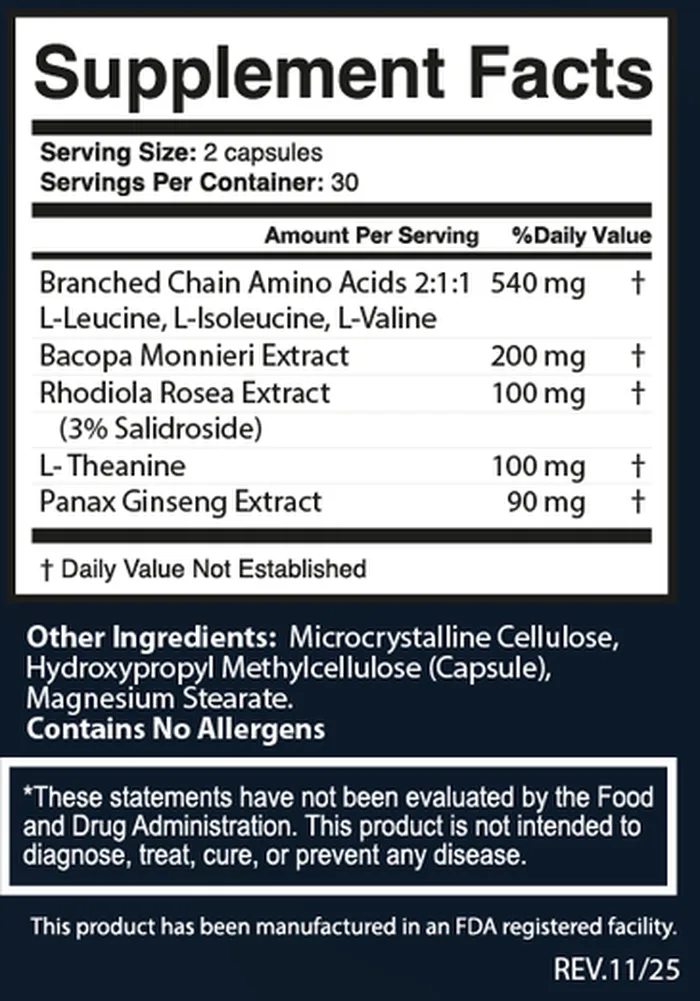
| The current label (REV.11/25) on the order page | 2 capsules per serving, 60 capsules per bottle. BCAAs 2:1:1 540 mg, bacopa monnieri extract 200 mg, rhodiola rosea (3% salidroside) 100 mg, L-theanine 100 mg, Panax ginseng extract 90 mg |
| The sales copy, on both the order page and the main site | "8 plant-based nootropics": bacopa, ginkgo biloba, lion's mane, phosphatidylserine, rhodiola, alpha-GPC, huperzine A, L-theanine |
| An older label still shown on the root site | 1 capsule per day, 30 capsules. B1 6 mg, B6 8.5 mg, B12 24 mcg plus a 151 mg blend containing caffeine from green coffee bean, L-tyrosine, theacrine, theobromine, bacopa, rhodiola and huperzia serrata |
The mismatches are not small. The label shows no ginkgo, no lion's mane, no phosphatidylserine, no alpha-GPC and no huperzine A, while adding BCAAs and Panax ginseng that the sales text never mentions. The root site's FAQ still says one capsule a day from a 30-capsule bottle; the current label says two capsules from a 60-capsule bottle. And the older formula contains stimulants on a site that describes the product as stimulant-free.
We are stating this neutrally, because the most likely explanation is a reformulation that the marketing pages were never updated to match. But it has a direct consequence for you: the Supplement Facts panel on your bottle is the only document that describes what you are swallowing. Photograph it when it arrives and compare.
Step two: what is Memo Matrix marketed for?
It is sold for memory, focus and "brain fog", aimed at adults who feel slower than they used to. That framing is where it should stay. A dietary supplement is not a treatment for memory loss, cognitive decline or dementia, and the marketing hooks attached to this product, the "Harvard scientists discover monk ritual" angle, claims about Tibetan monasteries with the world's lowest dementia rates, and a figure about reducing neural inflammation "by up to 97%", are advertising devices, not findings. We tried to trace the study reference behind the inflammation number and could not verify it.
None of that makes the capsule worthless. It does mean the promotional material tells you nothing useful about whether it works.
Step three: what research exists on the five real ingredients?
The rule we apply everywhere: research on an ingredient is not evidence about a finished product. Different extract, different amount, different population. With that boundary in place, here is the honest state of the literature.
Bacopa monnieri, 200 mg
The strongest name on the label. A 2014 meta-analysis of nine randomized trials found small improvements on some memory and attention measures. A 2021 review describes the clinical data as limited and mixed. Most of those trials ran for around twelve weeks, which is longer than a 60-day refund window. One detail worth noting neutrally: the label does not state a standardization percentage for the bacopa extract, and bacopa research is usually done with standardized material.
L-theanine, 100 mg
A 2025 meta-analysis of randomized trials in healthy people looked at L-theanine's effects on cognition, sleep and mood, both alone and alongside caffeine. Effects reported are modest and vary between studies. L-theanine is generally described as calming rather than stimulating.
Rhodiola rosea, 100 mg
NCCIH states there is not enough reliable evidence that rhodiola is useful for any health purpose, and that most human research is low to moderate quality.
Panax ginseng, 90 mg
Studied for cognition, but in small, short trials. NCCIH calls the evidence limited.
BCAAs, 540 mg
The largest single amount on the label, and the least relevant to the product's purpose. Branched-chain amino acids are studied mostly in muscle and liver contexts. We found no solid human data supporting them for memory in healthy adults.
Check Memomatrix price on the official site →Opens the brand's official website · money-back guarantee
Step four: the trial that does not exist
We searched for a clinical trial of the finished Memo Matrix formula and found none. That is ordinary for supplements sold this way and is not in itself suspicious, but it has hard consequences for what anyone can claim.
Without a trial there is no response rate, no effect size, no time-to-effect and no placebo comparison. So when the copy calls the blend "clinically proven", that phrase is doing work no study supports, and the blend it refers to is not even the blend on the label. Claims about the product "starting to work immediately" or about a percentage of customers choosing a particular package are marketing, not measurement.
Step five: why do people report such different experiences?
Cognitive supplements produce unusually scattered reports, for reasons that are worth understanding before you spend money.
- "Brain fog" is not one thing. It can be poor sleep, stress, thyroid problems, low B12, depression, medication side effects, dehydration or simply a demanding week. Those have different fixes and only some of them respond to anything you can buy.
- Cognition is hard to self-assess. You cannot feel your own recall accuracy. What you feel is confidence, alertness and mood, which move independently of performance.
- Calming ingredients can feel like focus. L-theanine, rhodiola and ginseng affect how alert or settled you feel. Feeling less scattered is a real experience, and it is not the same as remembering more.
- Timelines differ. The bacopa literature generally studies longer periods than a two-month trial, so an early verdict may simply be too early.
- Expectation is a large effect in cognitive research. Placebo groups in nootropic trials often improve, partly because people get better at the tests by taking them twice.
How to run a fair 60-day test on yourself
If you want to find out, design the test before you start.
- Pick two concrete measures, not a feeling. For example: how many times a week you walk into a room and forget why, and whether you finish a specific task without reaching for your phone. Count them for a week before the first capsule.
- Fix your sleep first, or at least record it. Sleep is the single biggest driver of everything you are trying to measure. If your sleep changes during the trial, the trial is measuring sleep.
- Take it as the label says: 2 capsules daily with 8 oz of water, 20 to 30 minutes before a meal. Do not exceed the dose.
- Re-count in week 7, using the same two measures over the same number of days.
- Decide by day 50, not day 60, so the refund process has room to run.
Worth knowing: ginseng commonly causes insomnia, and rhodiola can cause dizziness, headache and insomnia. If your sleep worsens on the product, that alone can undo any focus benefit, and it is a reason to stop rather than push on.
What the 60-day guarantee actually covers

Every order from the official Memomatrix store is covered by a 60-day money-back guarantee, and it is a one-time payment with no subscription.
The window is 60 days from the order date, but the terms are not stated consistently and you should know that before ordering. The order page promises a refund of "every single penny, no questions asked". The support pages give two different rules in two different sections: one asks for all bottles back, empty, full or partially full; the other refunds only unused bottles in perfect condition. Refund timing is listed as 5 to 10 business days on one page and 3 to 5 on another. Who pays return shipping is not stated on the brand's pages.
Practical advice: ask support in writing which rule applies to your order, keep every bottle including empties until you have that answer in writing, and start the conversation by day 50. Returns go to Memo Matrix, 11870 62nd St N, Largo, FL 33773, and support is at support@healthyconsumer.us or +1 (877) 257-0825. We go through the checks in more detail in our legitimacy check, and the formula itself in the Memo Matrix review.
What a 60-day test costs
Each bottle is 60 capsules at two a day, so one bottle is a month.
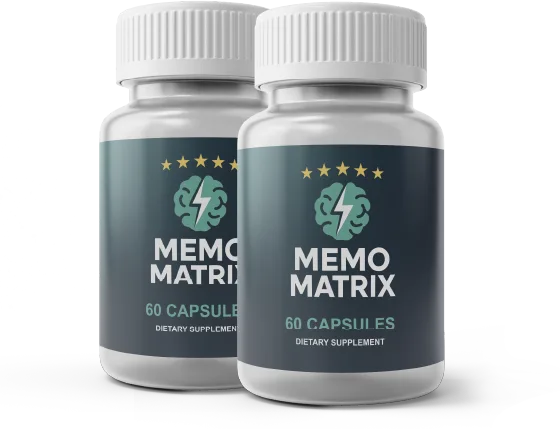 2 bottles60-day supply$79 /bottle$158 · + shippingCheck availability →Best value
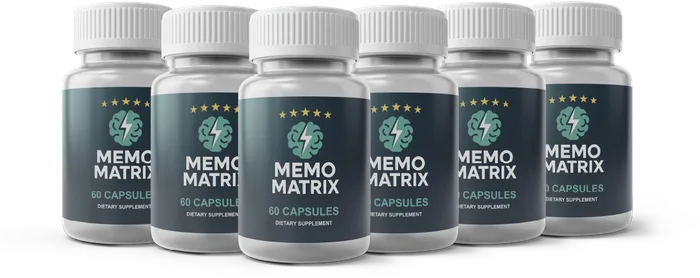 6 bottles180-day supply$49 /bottle$294 · free shipping + bonusesCheck availability →
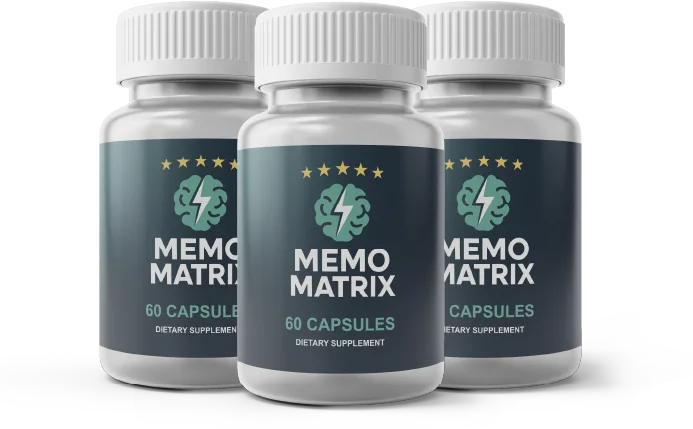 3 bottles90-day supply$69 /bottle$207 · + shippingCheck availability →
Two bottles cover the refund window. Note that the order page and the support page disagree about whether the 3-bottle package ships free, so check the total on the checkout page before you pay rather than relying on either. The root site also lists different prices from the order page; use the order page.
When memory problems need a doctor, not a supplement
This is the part that matters more than any of the above. The National Institute on Aging draws a line between ordinary forgetfulness and memory problems that need evaluation, and some of the causes behind the second group are treatable once they are found: thyroid disorders, vitamin B12 deficiency, medication side effects and depression among them.
Make an appointment rather than buying a supplement if you or the people around you notice:
- Memory loss that is getting worse or is disrupting daily life.
- Asking the same questions repeatedly, or getting lost in familiar places.
- Trouble with words, or with following a conversation or a recipe.
- Confusion about time or place, poor judgment, or changes in mood and personality.
- Family members raising concerns you had not noticed yourself.
Also talk to a doctor first if you take diabetes, blood-pressure, anticoagulant or psychiatric medicines: ginseng may lower blood sugar and affect clotting, and an interaction between rhodiola and losartan has been reported. The label advises pregnant or nursing women, anyone under 18 and anyone with a medical condition to ask a physician before use.
The honest bottom line
Does Memo Matrix work? There is no trial, so there is no factual yes or no. There are five real ingredients with a mixed and mostly modest research record, a label that contradicts the brand's own marketing, and a 60-day window in which to find out what it does for you specifically. Check your bottle's label, run a measured test, and get a real evaluation if your memory is genuinely changing.
Check Memomatrix price on the official site →Opens the brand's official website · money-back guarantee
Frequently asked questions
Has Memo Matrix been clinically tested?
We found no published trial of the finished product. The sales copy's 'clinically proven' phrasing refers to an eight-ingredient blend that does not match the label.
Which Memo Matrix formula will I receive?
The current label is REV.11/25: BCAAs 540 mg, bacopa 200 mg, rhodiola 100 mg, L-theanine 100 mg and Panax ginseng 90 mg, 2 capsules per serving. Compare the panel on your bottle when it arrives.
Does Memo Matrix contain ginkgo or lion's mane?
Not according to the current label. The sales copy lists ginkgo, lion's mane, phosphatidylserine, alpha-GPC and huperzine A, and none of them appear on the REV.11/25 panel.
How long should I give it before deciding?
Most bacopa research runs longer than 60 days, so an early verdict may be premature. Practically, compare a written baseline against week 7 and decide by day 50, because the refund window is 60 days.
Can Memo Matrix stop memory loss?
No. It is not a treatment for memory loss or dementia. Memory problems that are worsening or disrupting daily life need a medical evaluation.
Will it keep me awake?
It might. Insomnia is a common effect of Asian ginseng, and rhodiola can cause insomnia, headache and dizziness. If your sleep worsens, that is a reason to stop and ask for advice.
Related reading
 Safety
Memo Matrix side effects
Memo Matrix is made of familiar ingredients, but two of them, Panax ginseng and rhodiola, come with side effects and drug interactions worth knowing. Here is what to watch for and who should check with a doctor before the first capsule.
Read more →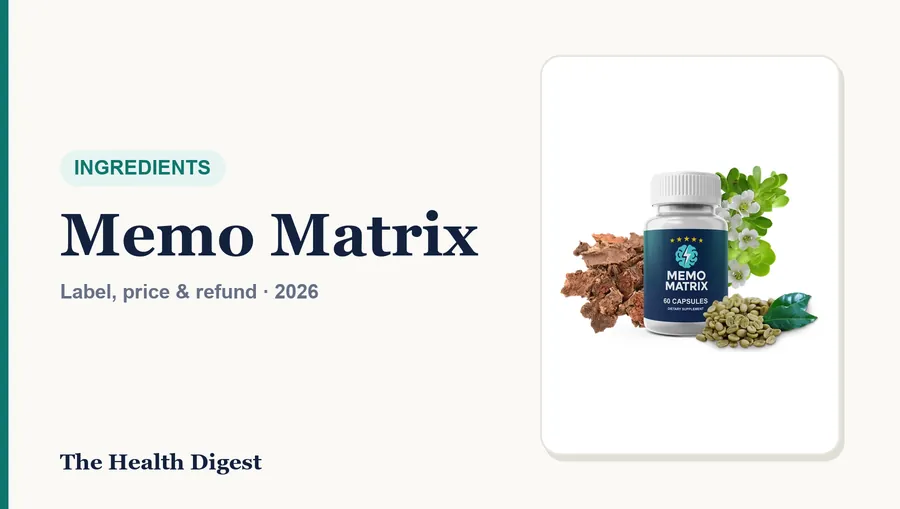 Ingredients
Memo Matrix ingredients
Three different Memo Matrix ingredient lists circulate online, two of them on the brand's own website. We lay them side by side, then go through the five ingredients that are actually on the current bottle.
Read more →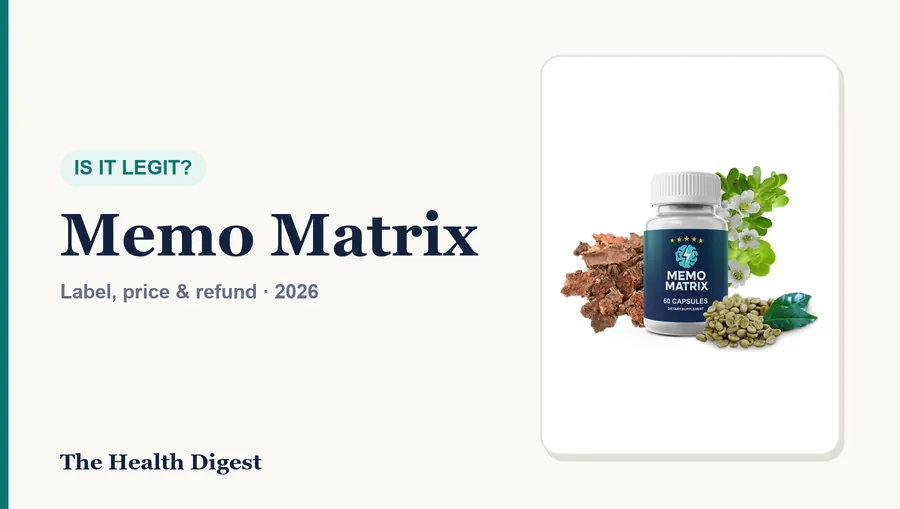 Legit or scam?
Is Memo Matrix legit or a scam?
Memo Matrix has a real label, a real checkout and a published returns address. It also has ads built on unverifiable science and a website that lists ingredients the bottle does not contain. Here is how to separate the two.
Read more →
Buy it from the official store so the guarantee applies, and keep your order email until you decide.
Check Memomatrix price on the official site →Opens the brand's official website · money-back guaranteeSources
- Memo Matrix official order page and Supplement Facts label (REV.11/25), root site, support pages and terms (thememomatrix.com), accessed September 2026
- Bacopa monnieri and human memory: meta-analysis of randomized controlled trials, 2014 (PubMed). pubmed.ncbi.nlm.nih.gov/24252493
- Review of bacopa clinical evidence, 2021 (PubMed). pubmed.ncbi.nlm.nih.gov/33436817
- L-theanine in healthy adults: meta-analysis of randomized trials, 2025 (PubMed). pubmed.ncbi.nlm.nih.gov/40314930
- NCCIH: Rhodiola. nccih.nih.gov/health/rhodiola
- NCCIH: Asian Ginseng. nccih.nih.gov/health/asian-ginseng
- National Institute on Aging: Memory problems, forgetfulness and aging. nia.nih.gov