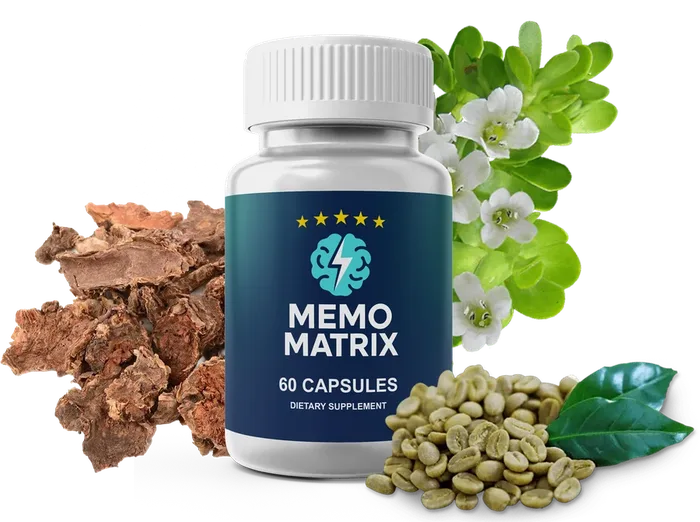
The current Memo Matrix formula is short and transparent: five ingredients, each with its own amount, no caffeine and a plant-based capsule. Bacopa monnieri and L-Theanine are the ingredients with the most human research behind them, while rhodiola, Panax ginseng and BCAAs have thinner evidence for cognition. The one thing to keep in mind is that the brand's marketing describes a different mix, so the bottle's label is the list to trust.
What we like
- Every ingredient has a stated amount (no proprietary blend)
- Current label lists no caffeine or other stimulants
- Plant-based HPMC capsule, label says 'Contains No Allergens'
Keep in mind
- Sales copy lists five ingredients that are not in the current formula
- Bacopa extract standardization is not stated on the label
- Evidence for rhodiola, ginseng and BCAAs on memory is limited
Check Memomatrix price on the official site →Opens the brand's official website · money-back guarantee
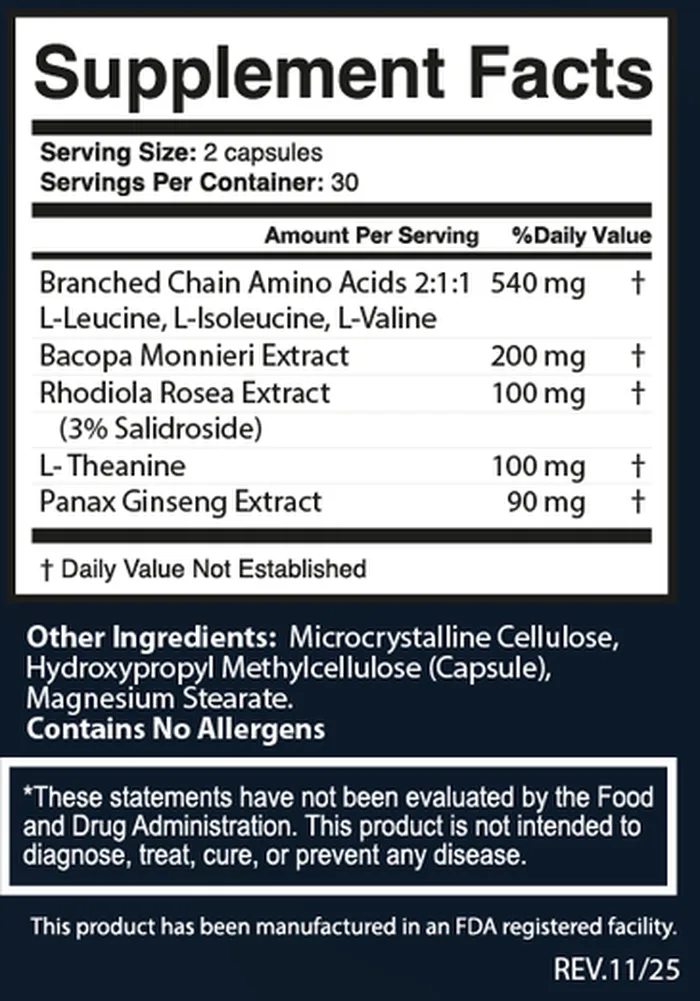
If you are trying to find out what is really inside Memo Matrix, here is the answer from the source that counts, the Supplement Facts label printed on the official order page (revision REV 11/25). Per serving of 2 capsules it lists: branched-chain amino acids 540 mg, Bacopa monnieri extract 200 mg, Rhodiola rosea extract 100 mg, L-Theanine 100 mg and Panax ginseng extract 90 mg. That is the whole active formula, about 1,030 mg per serving. The confusion starts when you read the rest of the website.
Why are there three different Memo Matrix ingredient lists?
The brand's own pages disagree with each other. The sales text was written for one formula, the homepage still shows the label of an older formula, and the order page shows the current label. Here they are side by side:
| Ingredient | Current label (REV 11/25) | Sales text ("8 nootropics") | Older label (homepage) |
|---|---|---|---|
| Bacopa monnieri | 200 mg | Named | In a 151 mg blend (20% bacosides) |
| Rhodiola rosea | 100 mg | Named | In the blend |
| L-Theanine | 100 mg | Named | Not listed |
| Panax ginseng | 90 mg | Not mentioned | Not listed |
| BCAAs 2:1:1 | 540 mg | Not mentioned | Not listed |
| Ginkgo biloba | Not on label | Named | Not listed |
| Lion's Mane | Not on label | Named | Not listed |
| Phosphatidylserine | Not on label | Named | Not listed |
| Alpha-GPC | Not on label | Named | Not listed |
| Huperzine A | Not on label | Named | Huperzia serrata (1% Huperzine-A) in the blend |
| Caffeine, theacrine, theobromine, L-tyrosine | Not on label | Not mentioned | In the blend |
| Vitamins B1, B6, B12 | Not on label | Not mentioned | 6 mg / 8.5 mg / 24 mcg |
The older label was also a different format: 30 capsules, one capsule a day. The current one is 60 capsules, two a day. The support FAQ still describes the old format. We base everything below on the current label, because that is the panel attached to the product you order today.
The five ingredients on the current label
Branched-chain amino acids (540 mg)
This is the largest ingredient by weight, and the one the marketing never mentions. BCAAs are three essential amino acids, L-leucine, L-isoleucine and L-valine, here in a 2:1:1 ratio (twice as much leucine as each of the other two). You get them every day from protein foods such as meat, eggs, dairy and legumes. As supplements, they are best known in sports nutrition and have been studied mostly for muscle and in liver disease. A memory or focus benefit in healthy adults has not been established. Their role in a cognitive formula is not explained on the brand's pages.
Bacopa monnieri extract (200 mg)
Bacopa is a creeping wetland herb used for centuries in Ayurvedic tradition, where it is associated with learning and memory. It is also the ingredient with the most modern research in this formula. A 2014 meta-analysis pooled nine randomized controlled trials and found small improvements on some tests of attention and memory. A 2021 review was more cautious, describing the clinical data as limited and mixed. Bacopa research usually uses extracts standardized to compounds called bacosides; the current Memo Matrix label does not state a standardization for its Bacopa (the older label listed 20% bacosides). Bacopa studies tend to run for several weeks, which is one reason it is positioned as a daily, long-term ingredient rather than a quick pick-me-up.
Rhodiola rosea extract, 3% salidroside (100 mg)
Rhodiola, sometimes called golden root or arctic root, grows in cold, mountainous regions and has a traditional reputation as an "adaptogen", a plant used to help the body handle stress and fatigue. The label specifies 3% salidroside, one of the plant's characteristic compounds, which tells you the extract is standardized. On the evidence, the NIH's National Center for Complementary and Integrative Health (NCCIH) is direct: there isn't enough reliable evidence to say rhodiola is useful for any health purpose, and most human studies are of low to moderate quality.
Check Memomatrix price on the official site →Opens the brand's official website · money-back guarantee
L-Theanine (100 mg)
L-Theanine is an amino acid found naturally in tea leaves, and it is part of why a cup of tea can feel calmer than a cup of coffee. It is popular in focus products because it is associated with relaxed alertness rather than stimulation. A 2025 meta-analysis of randomized trials in healthy people looked at its effects on cognition, sleep and mood, alone and paired with caffeine. The effects reported were modest and varied from study to study. In the current Memo Matrix formula it appears without caffeine.
Panax ginseng extract (90 mg)
Panax ginseng, also called Asian or Korean ginseng, is one of the most widely used herbal ingredients in the world. It has been studied for cognition and mental performance, but the trials are small and short, and NCCIH describes the overall evidence as limited. It is also the ingredient on this label with the most notable safety profile: insomnia is a common side effect, and it may lower blood sugar, affect blood clotting and interact with some medicines. That is worth knowing before you combine it with prescription drugs.
What else is in the capsule?
The "other ingredients" line is short: microcrystalline cellulose (a plant-fiber filler), hydroxypropyl methylcellulose (the capsule shell, which is plant-based rather than gelatin) and magnesium stearate (a flow agent used in capsule manufacturing). The label states "Contains No Allergens". There are no colors, sweeteners or flavorings listed.
Does Memo Matrix contain caffeine or stimulants?
The current label does not list caffeine, theacrine, guarana or any other stimulant. That is a real difference from the older formula shown on the homepage, which contained caffeine from green coffee bean, theacrine and theobromine inside its blend, while the site called the product "stimulant-free". If you are caffeine-sensitive, the practical step is simple: look at the panel on the bottle that arrives and confirm it is the REV 11/25 version with five ingredients. Keep in mind that Panax ginseng itself can disturb sleep in some people even without caffeine.
How the formula fits together
Looking at the current label as a whole, the logic appears to be a mix of two ideas. Bacopa, rhodiola and Panax ginseng are traditional herbs associated with memory, mental fatigue and stress resilience. L-Theanine is there for calm focus. The BCAAs are the outlier, an amino-acid ingredient more common in workout products. The brand describes the goal as focus, mental energy and less "brain fog", and that is how we would frame what the formula is designed to support. The research on each ingredient is described above; none of it tested Memo Matrix as a finished product.
What the formula is not designed to do is treat memory loss. The ads that promote Memo Matrix with "Alzheimer reversal" language describe marketing, not anything these ingredients have been shown to do. Memory problems that are new or worsening need a doctor, since thyroid problems, low B12, medication effects and depression can all affect memory and many of those causes are treatable.
Checking your bottle: a quick routine
- Find the revision code near the bottom of the label. The current one reads REV 11/25.
- Count the active ingredients. You should see five, starting with BCAAs 540 mg.
- Check the serving: 2 capsules, 30 servings, 60 capsules.
- If your bottle shows a proprietary blend with caffeine or B vitamins, it is the older formula; contact support at support@healthyconsumer.us or +1 (877) 257-0825 with any questions.
- Show the panel to your doctor or pharmacist if you take diabetes, blood-pressure, anticoagulant or psychiatric medication. Rhodiola has a reported interaction with losartan.
For price, the refund rules and our overall take, see the Memo Matrix review.
Check Memomatrix price on the official site →Opens the brand's official website · money-back guarantee
Frequently asked questions
Does Memo Matrix contain Lion's Mane?
Not according to the current label (REV 11/25). Lion's Mane is named in the sales text, along with Ginkgo, Phosphatidylserine, Alpha-GPC and Huperzine A, but none of them appears on that panel.
What is the main ingredient in Memo Matrix?
By weight it is branched-chain amino acids (540 mg). Among the herbs, Bacopa monnieri (200 mg) is the largest and the most studied.
Is Memo Matrix stimulant-free?
The current label lists no caffeine or stimulants. An older label shown on the homepage did include caffeine and theacrine, so confirm the panel on your bottle.
Is Memo Matrix vegetarian?
The capsule is hydroxypropyl methylcellulose, a plant-based shell, and the label lists no animal-derived ingredients, though it does not carry a vegetarian claim.
How many capsules of Memo Matrix are in a bottle?
The current label says 60 capsules, 2 per serving, 30 servings. Older pages mention 30 capsules at 1 per day, which refers to the previous formula.
Related reading
 Legit or scam?
Is Memo Matrix legit or a scam?
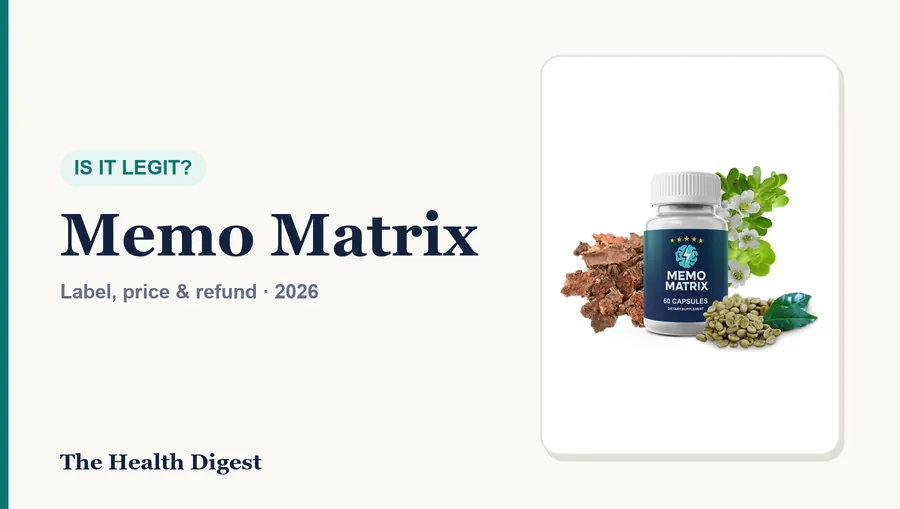
Memo Matrix has a real label, a real checkout and a published returns address. It also has ads built on unverifiable science and a website that lists ingredients the bottle does not contain. Here is how to separate the two.
Read more →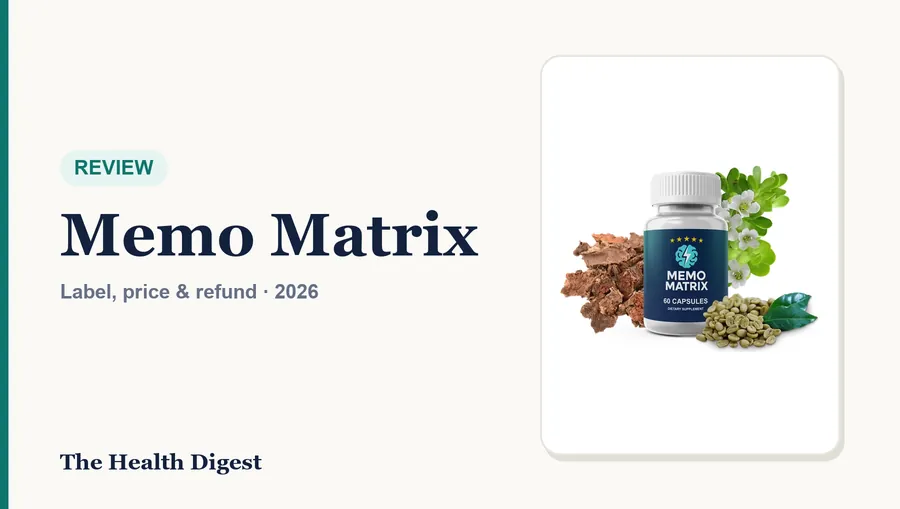 Review
Memo Matrix review
Memo Matrix is a two-capsule memory and focus supplement. Its own web pages describe three different formulas, so we went back to the Supplement Facts label on the order page and built this review from it.
Read more →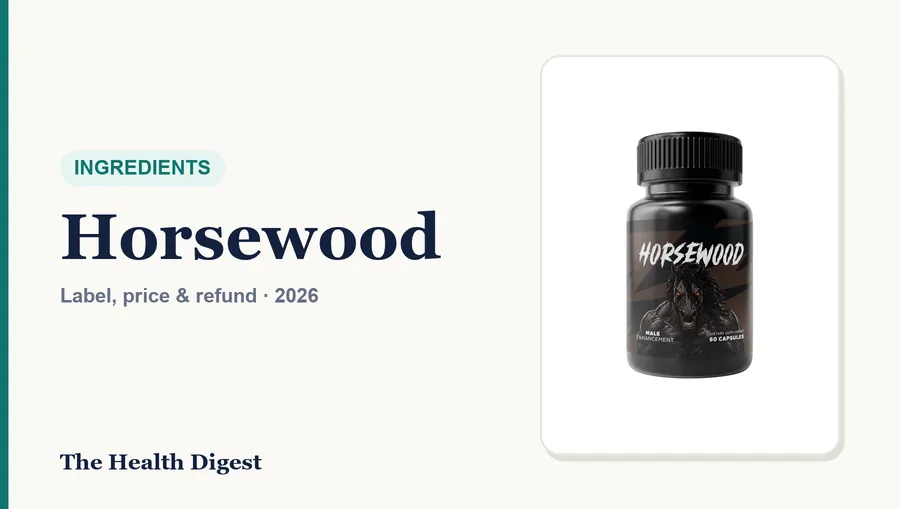 Ingredients
Horsewood ingredients
We read the Horsewood bottle the way a pharmacist would: every line of the Supplement Facts panel, what an extract ratio means, why one official page gets the capsule count wrong, and where each botanical comes from.
Read more →
Buy it from the official store so the guarantee applies, and keep your order email until you decide.
Check Memomatrix price on the official site →Opens the brand's official website · money-back guaranteeSources
- Memo Matrix official order page and Supplement Facts label (REV 11/25); older label and support FAQ on thememomatrix.com, accessed September 2026
- Meta-analysis of randomized controlled trials on cognitive effects of Bacopa monnieri extract, 2014. pubmed.ncbi.nlm.nih.gov/24252493
- Review of Bacopa monnieri clinical evidence, 2021. pubmed.ncbi.nlm.nih.gov/33436817
- Meta-analysis of L-theanine effects on cognition, sleep and mood in healthy people, 2025. pubmed.ncbi.nlm.nih.gov/40314930
- NCCIH: Rhodiola. nccih.nih.gov/health/rhodiola
- NCCIH: Asian ginseng. nccih.nih.gov/health/asian-ginseng