VertiAid publishes a clear label, and one of its ingredients, vitamin D3 at 800 IU, connects to a real 2020 trial in which vitamin D and calcium reduced repeat episodes of positional vertigo in people who were low in vitamin D. The rest of the formula is small doses and ingredients with no vertigo research in people, and the marketing goes well beyond the evidence by promising to "dissolve" loose ear crystals. It is sold as a one-time payment with a 60-day guarantee. It may suit someone whose doctor has diagnosed recurring BPPV and found low vitamin D, but it is not a substitute for that diagnosis.
What we like
- Full Supplement Facts label with real doses for the vitamins
- Vitamin D has a genuine trial behind it for repeat BPPV
- One chewable a day, one-time payment
- 60-day refund that accepts empty bottles
Keep in mind
- "Dissolves rogue crystals" is not supported by any study
- Most doses are basic daily amounts; calcium is a token 20 mg
- Collagen and ginseng claims rest on lab and mouse studies
- Email-only support; you pay return shipping
Check VertiAid price on the official site →Opens the brand's official website · money-back guarantee
VertiAid is sometimes written as Verti Aid or Vertiaid chewables; it is the same product sold on thevertiaid.com.
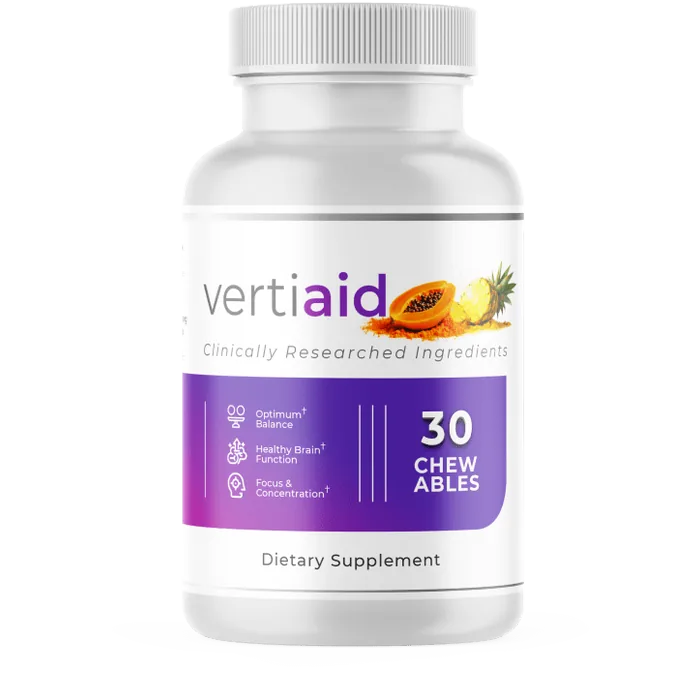
VertiAid is a daily chewable supplement marketed to people with dizziness, vertigo and poor balance. The site says it supports the inner ear's otolithic membrane, the layer that holds the tiny balance crystals in place. Its label lists vitamin D3, riboflavin, vitamin B6, calcium from red algae, zinc-L-carnosine and potassium, plus a 227 mg blend of papaya, pineapple, marine collagen, eggshell membrane and American ginseng. It is sold through thevertiaid.com at $49 to $69 per bottle as a one-time payment, with a 60-day money-back guarantee. This review covers the safety points first, then the evidence, the price and the refund fine print.
First, a word about dizziness and vertigo
"Dizziness" covers several different feelings: the room spinning (vertigo), feeling faint or light-headed, or feeling unsteady on your feet. They have different causes. The most common cause of spinning vertigo is benign paroxysmal positional vertigo (BPPV): tiny calcium crystals in the inner ear, called otoconia, drift into one of the balance canals, so turning your head or rolling over in bed sets off a brief, intense spin. Other causes include inner-ear inflammation, Ménière's disease, vestibular migraine, medicines, low blood pressure, heart rhythm problems and, less often but most importantly, stroke.
The good news is that the most common cause is very treatable. A doctor or physical therapist can usually confirm BPPV with a simple positional test and fix it in the office with a repositioning maneuver, such as the Epley maneuver, that guides the crystals back where they belong. So the first step for new or recurring vertigo is a diagnosis. VertiAid is a dietary supplement, not a treatment for vertigo or any balance disorder.
What is inside VertiAid?
Unlike many brands, VertiAid publishes its full Supplement Facts panel:
| Supplement Facts (per chewable) | Amount | % Daily Value |
|---|---|---|
| Vitamin D3 (cholecalciferol) | 20 mcg (800 IU) | 100% |
| Riboflavin (vitamin B2, as riboflavin 5'-phosphate) | 1.3 mg | 100% |
| Vitamin B6 (as pyridoxal 5'-phosphate) | 1.7 mg | 100% |
| Calcium (from Aquamin F red marine algae) | 20 mg | 2% |
| Zinc (as zinc-L-carnosine) | 5 mg | 45% |
| Potassium (as potassium bicarbonate) | 30 mg | 1% |
| Proprietary blend: papaya powder, pineapple powder, marine collagen, avian eggshell membrane collagen, American ginseng root powder | 227 mg total | not established |
| Other ingredients | Natural flavors, xylitol, inulin (chicory root), magnesium stearate | |
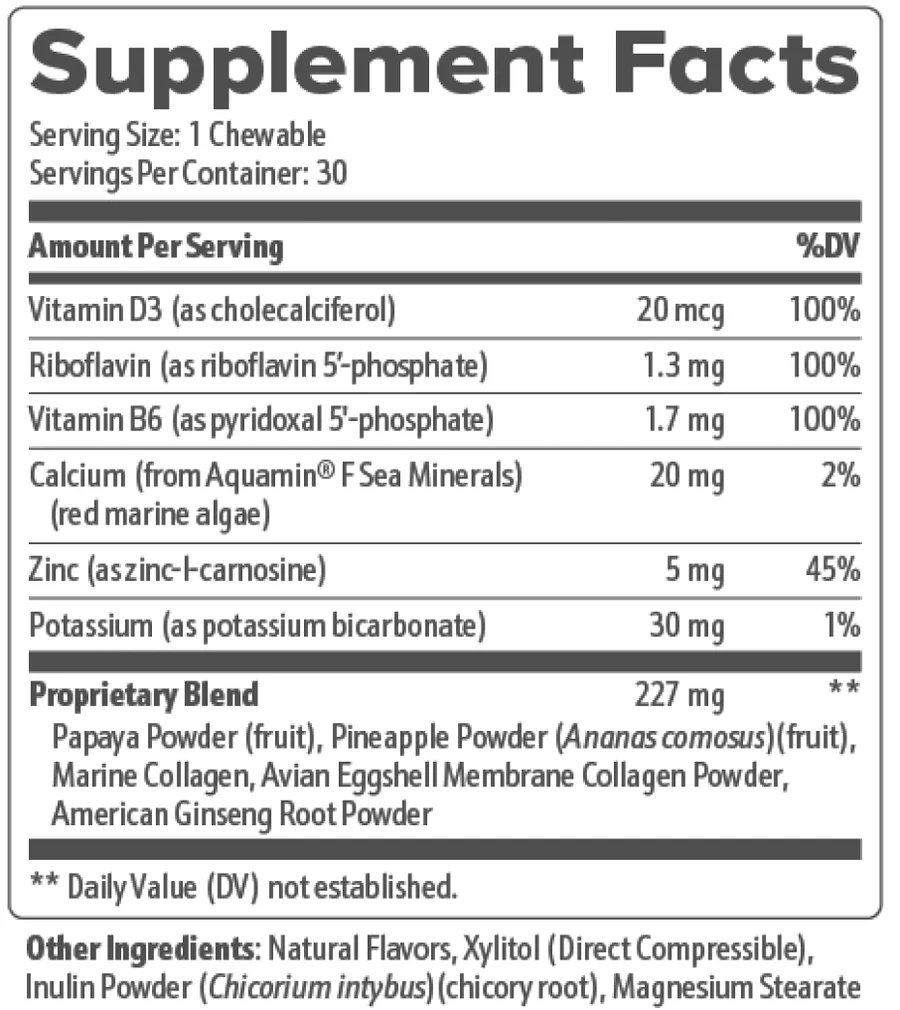
The vitamins and minerals have real doses on the label, which is good. But most of them are at roughly one day's requirement or less, and the five blend ingredients share 227 mg, so each is a small amount. Here is each ingredient next to what research supports.
| Ingredient | What the brand says | What research supports |
|---|---|---|
| Vitamin D3 (800 IU) | Supports the inner-ear membrane | The strongest link here: a 2020 trial found fewer BPPV recurrences when people with low vitamin D took vitamin D plus calcium. |
| Calcium (20 mg) | Sea minerals for the inner ear | The trial above used 1,000 mg of calcium carbonate a day; 20 mg of calcium is a token amount. |
| Vitamin B6 (1.7 mg) | Eases vertigo | The study the brand cites is a small 1988 experiment on drug-induced vertigo. 1.7 mg is a normal daily requirement. |
| Riboflavin (1.3 mg) | Nerve and brain support | Riboflavin has been studied for migraine prevention at about 400 mg a day; 1.3 mg is the daily requirement. |
| Zinc-L-carnosine (5 mg zinc) | Supports balance | The cited paper looked at people with zinc deficiency from bowel surgery; no trials in ordinary dizziness. |
| Eggshell membrane and marine collagen | Strengthen the otolithic membrane | The cited studies are about collagen materials in the lab and safety in animals, not about the ear. |
| Papaya and pineapple | Enzymes such as bromelain | General reviews of bromelain; no balance or vertigo trials. |
| American ginseng | Protects hearing and balance | The cited study used red ginseng in mice. No human vertigo trials. |
Every ingredient, up close
Here is every active ingredient on the label, what it actually is, and what research does and does not show.
Vitamin D3 (cholecalciferol)
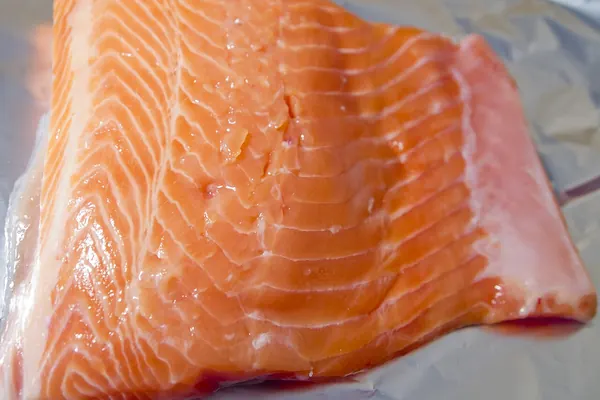
20 mcg (800 IU), 100% DVThe form of vitamin D the skin makes in sunlight, needed for calcium balance, including in the calcium-based crystals of the inner ear (pictured: salmon, a common food source of vitamin D). It is the one ingredient here with a real trial behind it: in a 2020 study, people with BPPV and low vitamin D had fewer repeat episodes on vitamin D plus calcium. The trial dose was 800 IU a day, the same as this label, but there is no evidence that more helps if your level is already normal.
Photo: Tiia Monto / CC BY-SA 3.0, via Wikimedia Commons
Riboflavin (vitamin B2, as riboflavin 5'-phosphate)
1.3 mg (100% DV)A B vitamin the body uses to turn food into energy (pictured: eggs, a common food source of riboflavin). It has been studied for migraine prevention, which matters because vestibular migraine is one cause of vertigo, but those studies used about 400 mg a day; 1.3 mg is simply the daily requirement.
Photo: Cory Seward cseward15 / CC0, via Wikimedia Commons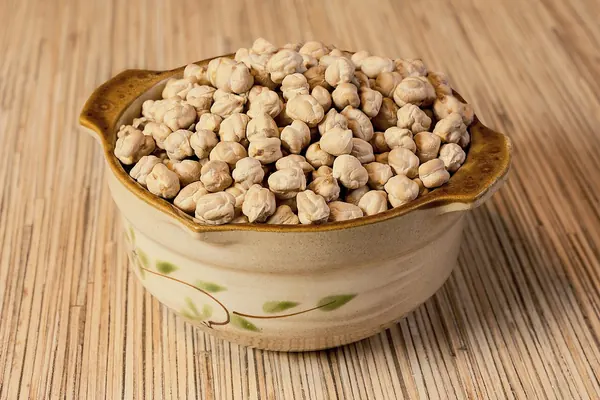
Vitamin B6 (as pyridoxal 5'-phosphate)
1.7 mg (100% DV)An active form of vitamin B6, involved in nerve signaling (pictured: chickpeas, a common food source of vitamin B6). The study the brand cites is a small 1988 experiment on drug-induced vertigo, and 1.7 mg is a normal daily amount, not a therapeutic dose.
Photo: AlixSaz / CC BY-SA 4.0, via Wikimedia Commons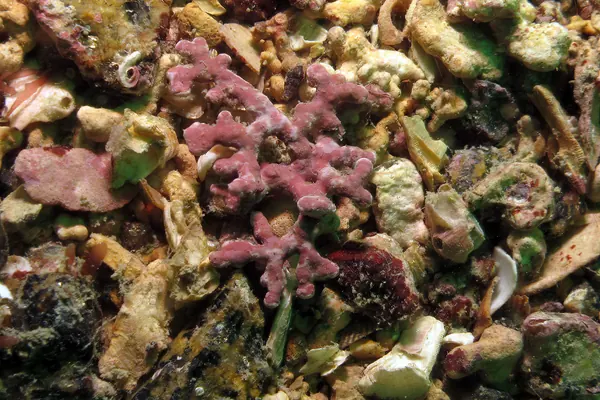
Calcium (from Aquamin F red marine algae)
20 mg (2% DV)Aquamin is a mineral powder made from calcified red seaweed (pictured: maerl, the type of seaweed it comes from). The vertigo trial gave 1,000 mg of calcium carbonate a day alongside vitamin D; 20 mg is a token amount, about 2% of the Daily Value.
Photo: Christophe Quintin / CC BY-SA 4.0, via Wikimedia Commons
Zinc (as zinc-L-carnosine)
5 mg (45% DV)Zinc bound to the amino acid compound carnosine, a form mostly studied for the stomach lining (pictured: pumpkin seeds, a common food source of zinc). The paper the brand cites involved people with zinc deficiency after bowel surgery; there are no trials in ordinary dizziness.

Potassium (as potassium bicarbonate)
30 mg (1% DV)An electrolyte that helps regulate fluid balance (pictured: bananas, a common food source of potassium). At 30 mg, about 1% of the Daily Value, it is far less than a single banana provides and is unlikely to have any effect.
Photo: Wilfredor / CC0, via Wikimedia Commons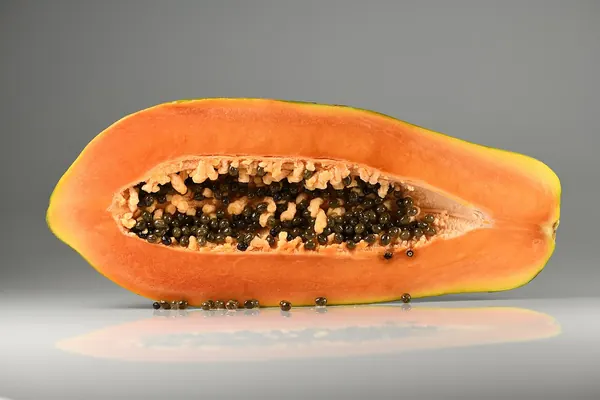
Papaya powder
In a 227 mg blend, amount not disclosedDried tropical fruit, a source of the protein-digesting enzyme papain. There are no balance or vertigo studies of papaya, and people with latex allergy sometimes react to it.
Photo: Ivar Leidus / CC BY-SA 4.0, via Wikimedia Commons
Pineapple powder
In a 227 mg blend, amount not disclosedDried pineapple, marketed here for its enzyme bromelain. The brand cites general reviews of bromelain; none involve vertigo or the inner ear.
Photo: flowcomm / CC BY 2.0, via Wikimedia CommonsMarine collagen
In a 227 mg blend, amount not disclosedCollagen protein extracted from fish skin or scales. The brand says it strengthens the inner ear's otolithic membrane, but the studies it cites are about collagen materials in the lab, not the ear, and anyone with a fish allergy should avoid it.

Avian eggshell membrane collagen
In a 227 mg blend, amount not disclosedThe thin protein film lining the inside of an eggshell, sold mainly as a joint supplement (pictured: a cracked eggshell; the membrane is the layer inside). The cited studies looked at the material in the lab and safety in animals, with nothing on balance. Avoid it with an egg allergy.
Photo: TeWeBs / CC BY-SA 4.0, via Wikimedia Commons
American ginseng root powder
In a 227 mg blend, amount not disclosedThe root of Panax quinquefolius, a North American cousin of Asian ginseng, studied mostly for blood sugar and colds. The study the brand cites used red ginseng in mice, and there are no human vertigo trials. It may lower blood sugar and can change how warfarin works.
Photo: USGS Bee Inventory and Monitoring Lab from Beltsville, Maryland, USA / Public domain, via Wikimedia CommonsThe one ingredient with real evidence: vitamin D
The most useful study on the references page is a 2020 randomized trial published in Neurology. 1,050 people whose BPPV had just been treated with repositioning maneuvers were split into two groups. In the supplement group, those whose blood vitamin D was below 20 ng/mL took 400 IU of vitamin D and 500 mg of calcium carbonate twice a day for a year; the other group was simply followed. The supplement group had about 24% fewer BPPV recurrences (0.83 against 1.10 episodes per person per year), and the authors concluded that supplements "may be considered" in people with frequent attacks, especially when vitamin D is low.
Three details matter when you compare that with VertiAid:
- It helped people who were low in vitamin D. If your level is normal, there is no evidence that more helps. A simple blood test answers that.
- It reduced repeat episodes; it did not treat an active one. The patients were first treated with repositioning maneuvers.
- The trial also gave 1,000 mg of calcium carbonate a day. VertiAid's vitamin D matches the trial's 800 IU daily, but its 20 mg of calcium is a small fraction of what was used.
Check VertiAid price on the official site →Opens the brand's official website · money-back guarantee
The claims that go too far
The contact page says VertiAid's "7-second chewing breakthrough" strengthens the otolithic membrane "so it holds the octonia in place" and "quickly dissolves any loose crystals floating around in your inner ear". (The crystals are called otoconia.) We found no study showing that any supplement dissolves displaced crystals. In BPPV, loose crystals are moved back with a repositioning maneuver, and the body tends to reabsorb them over time on its own. The collagen and eggshell membrane studies the brand cites were done on materials in the lab and on safety in animals, and the ginseng study was in mice.
The testimonials, such as dizziness that "stopped almost immediately" after the first chewable, cannot be verified. A vitamin cannot plausibly work that fast. BPPV episodes also often settle by themselves within weeks, which makes it easy to credit whatever you started taking.
How to take VertiAid
The label says one chewable a day, chewed until it dissolves or swallowed with 6 to 8 oz of water. The FAQ says you can chew it for about seven seconds. Taking it with a meal helps vitamin D absorption. Do not exceed the label dose, and count it toward your total if you already take vitamin D or a multivitamin. Because it contains xylitol, keep the bottle away from dogs.
How much does VertiAid cost?
The official order page sells three packages, each a single charge. The FAQ says there are no recurring shipments or charges.
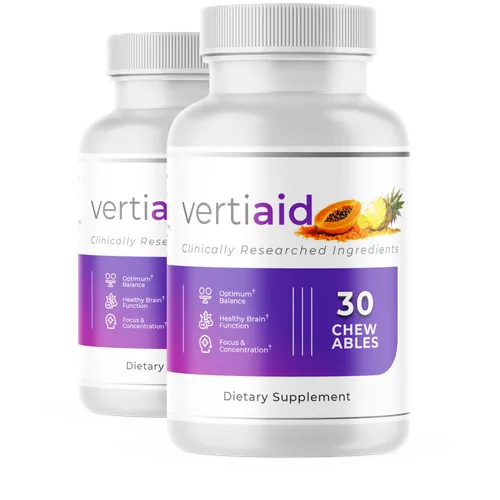 2 bottles60-day supply$69 /bottle$138 · see checkout for shippingCheck availability →Best value
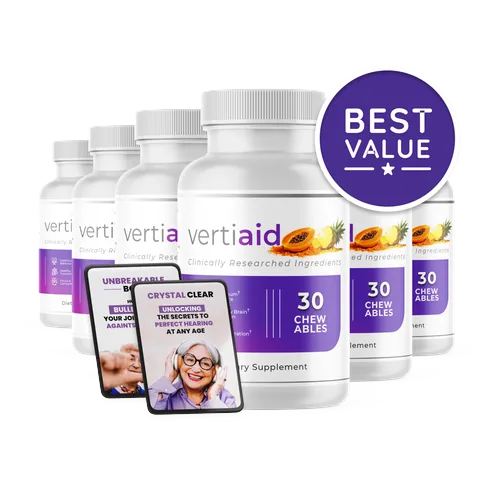 6 bottles180-day supply$49 /bottle$294 · free US shipping + 2 e-booksCheck availability →
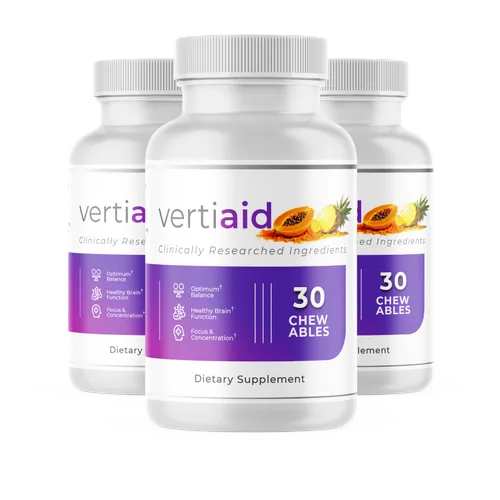 3 bottles90-day supply$59 /bottle$177 · see checkout for shippingCheck availability →
| Package | Supply | Price per bottle | Total | Extras |
|---|---|---|---|---|
| 2 bottles | 60-day supply | $69 | $138 | see checkout for shipping |
| 6 bottles | 180-day supply | $49 | $294 | free US shipping + 2 e-books |
| 3 bottles | 90-day supply | $59 | $177 | see checkout for shipping |
Prices as listed on the official order page when we checked. They change from time to time, so the checkout page is the final word.
About shipping: the order page marks the 6-bottle package with free shipping, and the shipping table on the site lists US shipping as free with delivery in 5 to 7 working days. Canada, the UK and Ireland, Australia and New Zealand pay $15.95 and wait 10 to 15 working days. The 6-bottle package includes two e-books, Unbreakable Body and Crystal Clear. Check the total on the checkout page before paying.
How the 60-day guarantee works
Every order from the official VertiAid store is covered by a 60-day money-back guarantee, and it is a one-time payment with no subscription or auto-shipment.
The refund policy gives you 60 days from the day your package is delivered. Email contact@vertiaid-product.com with "Refund Request" in the subject line, then mail all the bottles, empty or not, with the packing slip and a note with your name, email and order number, to 285 Northeast Ave, Tallmadge, OH 44278, USA. Things to know:
- You pay return shipping.
- Support is email only; we found no phone number for the brand. Order questions can also go to BuyGoods, the payment platform.
- The policy says refunds are processed within days of receiving your package and can take 5 to 10 days to show on your card.
Who should talk to a doctor before taking VertiAid?
- Anyone whose dizziness has not been diagnosed: the cause decides the treatment, and some causes, from heart rhythm problems to medicine side effects, need a doctor rather than a supplement.
- People taking warfarin or other blood thinners: ginseng may change how warfarin works.
- People with diabetes on glucose-lowering medicine: ginseng may lower blood sugar.
- Anyone already taking vitamin D or a multivitamin: add up the totals; 800 IU is a full daily value on its own.
- People allergic to fish, eggs, papaya, pineapple or latex-related fruits: the blend contains marine collagen, eggshell membrane, papaya and pineapple.
- Dog owners: the chewable contains xylitol, which is dangerous to dogs. Store the bottle out of their reach.
- Pregnant or nursing women and people under 18: the label advises asking a physician first.
What to realistically expect
If your vertigo is BPPV and your vitamin D is low, the evidence suggests that correcting it, ideally with calcium as in the trial, may mean fewer repeat episodes over months. VertiAid's vitamin D is one way to get that, though an ordinary vitamin D supplement would do the same. It will not stop an attack in progress, and it is not a reason to skip the repositioning treatment that fixes most BPPV. If you try it, do it after a diagnosis, keep a simple log of episodes, and decide before day 60 after delivery.
Our verdict
VertiAid is more transparent than most products in its category, and its vitamin D links to a genuine trial for preventing repeat BPPV. But the formula's other ingredients add little, and the central promise of dissolving loose crystals is not backed by research. The most important point is not about the product at all: sudden vertigo with any stroke sign is a 911 call, and new or recurring vertigo deserves a diagnosis. If your doctor has confirmed BPPV and low vitamin D, VertiAid is one option worth considering from the official site.
Check VertiAid price on the official site →Opens the brand's official website · money-back guarantee
Your doubts, answered honestly
Is this a scam?
VertiAid is a real product with a full Supplement Facts panel, a checkout run through BuyGoods, a written refund policy and a returns address in Tallmadge, Ohio. What does not hold up is the marketing: no study shows that any supplement "dissolves" loose ear crystals, and testimonials about dizziness stopping almost immediately cannot be verified. A transparent label with an oversold pitch.
Why does it cost $49 to $69 a bottle?
A bottle is a 30-day supply, so you pay roughly a dollar and sixty cents to about two dollars and thirty cents a day, depending on the package. The one ingredient with real evidence, vitamin D3 at 800 IU, is sold on its own in single-ingredient supplements that are usually much cheaper, and an ordinary vitamin D supplement would match what the trial tested for that ingredient.
Will it stop my vertigo?
It will not stop an attack in progress, and it does not replace the repositioning maneuver that fixes most BPPV. The realistic hope is fewer repeat episodes over months, and only if your vertigo is BPPV and your vitamin D is low, as in the 2020 trial, which ran for a year and also used much more calcium. If your vitamin D is normal, or your dizziness has another cause, you are unlikely to notice a difference.
Is it safe? Can I take it with my medication?
Get any undiagnosed dizziness checked first; sudden vertigo with face drooping, weakness, slurred speech or vision loss is a 911 call. Ginseng may change how warfarin works and may lower blood sugar, so ask your doctor if you take blood thinners or diabetes medicine. Count the 800 IU of vitamin D if you already take vitamin D or a multivitamin. Avoid it with fish, egg, papaya, pineapple or latex-fruit allergies, and keep it away from dogs because of the xylitol.
What if it does not work?
You have 60 days from delivery. Email the company with "Refund Request" in the subject line, then send all bottles back, empty or not, with the packing slip and a note to the Tallmadge, Ohio address. You pay return shipping, support is email only, and refunds take a few days to process plus 5 to 10 days to show on your card. Keep a simple log of episodes so you can decide in time.
Why not just buy it on Amazon?
The guarantee in this review covers orders from thevertiaid.com. We cannot vouch for marketplace listings, and a bottle from another seller would not be covered by that refund policy.
Do you get paid if I buy?
Yes. If you order through our buttons we may earn a commission, at no extra cost to you. It does not change what we write, and the buttons lead to the brand's own order page.
Frequently asked questions
What are the ingredients in VertiAid?
Each chewable lists vitamin D3 20 mcg, riboflavin 1.3 mg, vitamin B6 1.7 mg, calcium 20 mg from red algae, zinc 5 mg as zinc-L-carnosine, potassium 30 mg, and a 227 mg blend of papaya, pineapple, marine collagen, eggshell membrane collagen and American ginseng. It also contains xylitol, inulin and natural flavors.
How do you take VertiAid?
One chewable a day. The label says to chew it until it dissolves or swallow it with 6 to 8 oz of water.
How much does VertiAid cost?
2 bottles for $138 ($69 each), 3 bottles for $177 ($59 each) or 6 bottles for $294 ($49 each, free US shipping and two e-books). Each package is a one-time payment.
Can VertiAid cure vertigo?
No. It is a dietary supplement. The most common cause of vertigo, BPPV, is usually treated in a doctor's office with a repositioning maneuver. Sudden vertigo with weakness, speech trouble, double vision or a severe headache is an emergency: call 911.
Is VertiAid a subscription?
No. The FAQ says it is a one-time payment with no recurring shipments or charges.
Who pays return shipping on VertiAid?
The customer. The refund policy says return shipping is not covered, and you must send back all bottles, empty or not, with the packing slip.
Related reading
 Is it legit?
Is VertiAid legit?
VertiAid has a real checkout, a published label and an Ohio returns address. It also promises to dissolve loose ear crystals, which no study supports. Here is how to tell the difference.
Read more →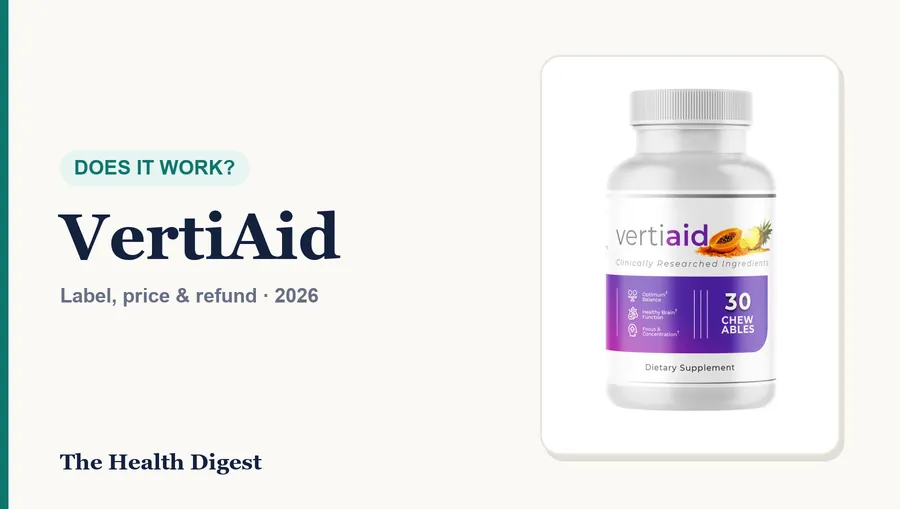 Review
Does VertiAid work?
VertiAid promises steadier balance. One ingredient, vitamin D, has a real trial behind it. Here is what that trial found and what you can honestly expect from the chewable.
Read more →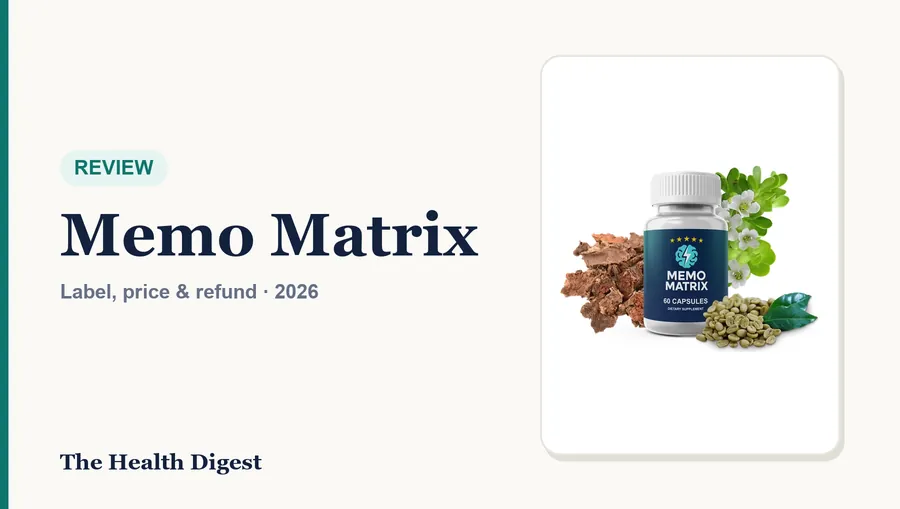 Review
Memo Matrix review
Memo Matrix is a two-capsule memory and focus supplement. Its own web pages describe three different formulas, so we went back to the Supplement Facts label on the order page and built this review from it.
Read more →
Buy it from the official store so the guarantee applies, and keep your order email until you decide.
Check VertiAid price on the official site →Opens the brand's official website · money-back guaranteeSources
- VertiAid official order page, text presentation and FAQ, Supplement Facts label, contact page, refund policy, shipping policy and references page (thevertiaid.com), accessed October 2026
- Jeong SH, et al. Prevention of benign paroxysmal positional vertigo with vitamin D supplementation: a randomized trial. Neurology, 2020 (cited on the references page). neurology.org
- MedlinePlus: Benign positional vertigo. medlineplus.gov
- NIDCD: Balance Disorders. nidcd.nih.gov
- MedlinePlus: Stroke. medlineplus.gov/stroke.html
- NIDCD: Sudden Sensorineural Hearing Loss. nidcd.nih.gov
- Claussen CF, Claussen E. Antivertiginous action of vitamin B6 on experimental minocycline-induced vertigo in man. Arzneimittelforschung, 1988 (cited on the references page). pubmed.ncbi.nlm.nih.gov/3382463
- NIH Office of Dietary Supplements: Vitamin D, Health Professional Fact Sheet. ods.od.nih.gov
- NIH Office of Dietary Supplements: Riboflavin, Health Professional Fact Sheet. ods.od.nih.gov
- NCCIH: Asian Ginseng. nccih.nih.gov/health/asian-ginseng
- FDA: Paws Off Xylitol; It's Dangerous for Dogs. fda.gov