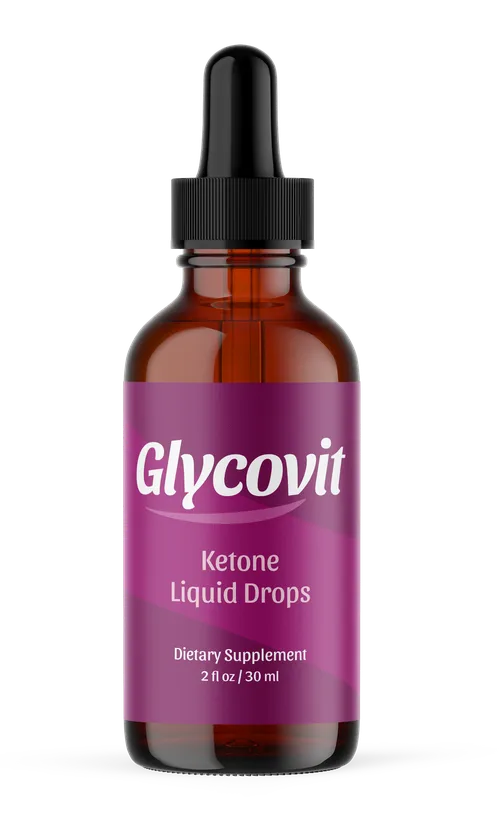
Glycovit's ingredient list is long and clearly printed, covering plants traditionally linked to energy and metabolism plus a set of amino acids. What the label does not give is the amount of each blend item, so you know what is inside but not how much. Research on the headline ingredients is limited or mixed. It is a reasonable choice for someone who wants a broad liquid blend and has checked the list against their own medications with a doctor.
What we like
- Every ingredient is named on the label
- Liquid base sweetened with stevia and xylitol, no sugar listed
- Broad mix of botanicals and amino acids in 1 ml
Keep in mind
- Proprietary blend: individual amounts not listed
- Contains caffeine sources (guarana, green tea)
- Marketing cites research on ingredients that are not in the formula
Check Glycovit price on the official site →Opens the brand's official website · money-back guarantee
The Glycovit Supplement Facts label lists exactly two lines of active content: chromium, 0.7 mcg (as chromium picolinate, 2% of the Daily Value), and a 200 mg proprietary blend that contains 22 ingredients. All of it comes in a 1 ml serving of liquid drops. Because it is a proprietary blend, the label names every item but not how much of each is present. Below we sort the 22 into groups, explain what each one is and what research has looked at, and point out which ones deserve a second look if you take medication.
The full Glycovit label at a glance
This is the panel the brand publishes on the order page and main site (revision REV 07/25):
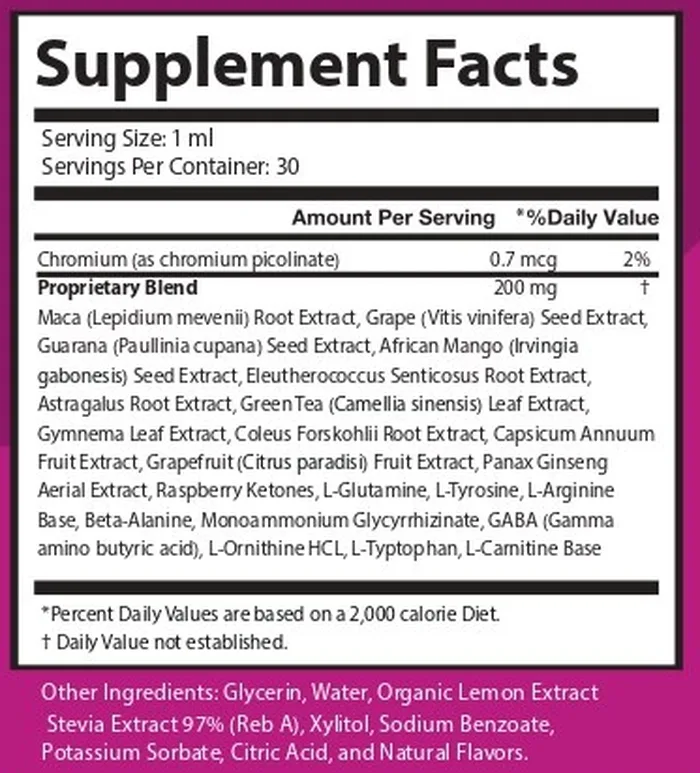
Ingredients in a proprietary blend are listed in descending order by weight, so maca root is the largest item in the 200 mg and L-carnitine the smallest. That order is the only clue the label gives about proportions. Some press releases describe a "3,000 mg" blend; the label says 200 mg, and the label is the document to trust.
How to read a proprietary blend
A proprietary blend is a legal way for a brand to list a group of ingredients under one total weight without disclosing each amount. For you as a buyer, it means three things. You can check every ingredient against your allergies and medications, because they are all named. You can see the rough ranking, because the order runs from most to least. And you cannot know the exact quantity of any single blend item, so questions such as "how much caffeine is in it?" have no answer from the label alone. If an exact figure matters to you for medical reasons, ask support before ordering, or talk to your doctor about whether the uncertainty is acceptable.
Group 1: plants linked to energy and vitality
Maca root extract
Maca is a root vegetable from the Andes, eaten as food for centuries and sold today as an energy and vitality supplement. It is the first item in the Glycovit blend, which makes it the largest by weight. Human research on maca is small and mostly focused on mood and libido rather than metabolism.
Eleuthero (Eleutherococcus senticosus) root extract
Sometimes called Siberian ginseng, although it is a different plant from true ginseng. Eleuthero is traditionally classed as an "adaptogen", a plant used to help the body cope with stress and fatigue.
Panax ginseng aerial extract
Asian ginseng is one of the most studied herbs in the world. A 2022 review reported some cardiometabolic improvements, but NCCIH calls the evidence on blood sugar "inconclusive and conflicting". The label specifies an aerial extract, meaning the above-ground parts of the plant. Ginseng may lower blood sugar, which matters if you take diabetes medication.
Astragalus root extract
A staple of traditional Chinese herbal formulas, used for general vitality. Good human evidence for metabolic effects is not established.
Group 2: the caffeine sources
Guarana seed extract
Guarana is an Amazonian seed naturally rich in caffeine and widely used in energy drinks. Its presence means Glycovit is not stimulant-free, whatever the main site's "No Stimulants" line says.
Green tea leaf extract
Green tea supplies catechins and caffeine. NCCIH says green tea may have a modest effect on body weight, while the evidence for most uses is inconclusive. Green tea extract has rare reports of liver injury and known interactions with nadolol, atorvastatin and raloxifene.
Group 3: plants popular in metabolism products
Gymnema leaf extract
Gymnema sylvestre is a climbing plant from India, used traditionally in Ayurveda and known for temporarily dulling the taste of sweetness. It appears in many blood sugar formulas; good human evidence is not established.
African mango (Irvingia gabonensis) seed extract
A West African fruit seed sold for weight management. Little good human evidence supports it.
Coleus forskohlii root extract
The source of forskolin, a compound studied in the lab for its effects on cell signaling. It is a common name in metabolism blends.
Capsicum annuum fruit extract
Chili pepper extract, the source of capsaicin, which gives peppers their heat. It is included in many "thermogenic" products.
Grapefruit fruit extract
Grapefruit is well known for interacting with many prescription drugs. Whether this extract does so at the amount in Glycovit is not known, so mention it to your pharmacist if you take regular medication.
Grape seed extract
A source of polyphenols (proanthocyanidins), valued as antioxidants.
Raspberry ketones
The aroma compound of red raspberries, popularized as a weight-loss ingredient. There is little or no good human evidence for it.
Check Glycovit price on the official site →Opens the brand's official website · money-back guarantee
Group 4: amino acids and related compounds
Eight items in the blend are amino acids or close relatives: L-glutamine, L-tyrosine, L-arginine, beta-alanine, GABA, L-ornithine, L-tryptophan and L-carnitine. They are all nutrients your body uses or makes every day, and many are familiar from sports and wellness products. L-carnitine helps move fatty acids into cells for energy use, L-tyrosine is a building block for several brain messengers, and L-tryptophan is a precursor of serotonin. (The label spells it "Typtophan", a small typo.) Beta-alanine is known in sports nutrition, and GABA is a calming messenger in the nervous system. These amino acids are the last items in the blend, meaning they are among the smallest by weight.
Group 5: the licorice compound
Monoammonium glycyrrhizinate
A compound derived from licorice root, often used as a natural sweetener and flavor. In large amounts, licorice compounds can raise blood pressure and lower potassium. The amount in Glycovit is not disclosed. If you have high blood pressure, discuss it with your doctor.
Chromium: the one ingredient with a stated dose
Chromium is an essential trace mineral that plays a role in how the body handles glucose. Glycovit lists 0.7 mcg as chromium picolinate, 2% of the Daily Value. NCCIH cites a 2022 review of 16 studies suggesting possible improvements in HbA1c and fasting glucose in people with type 2 diabetes, while calling the evidence weak with no clear conclusions. That research describes chromium as an ingredient; it does not show what Glycovit does.

What are the "other ingredients"?
These make up the liquid itself: glycerin and water as the base, organic lemon extract and natural flavors for taste, stevia extract (97% Reb A) and xylitol as sweeteners, sodium benzoate and potassium sorbate as preservatives, and citric acid for tartness. There is no sugar in the list, which is useful for anyone counting carbohydrates.
Ingredients the marketing mentions that are not in Glycovit
The main site has a "Scientific References" section that cites research on black walnut, flaxseed, dried plum, aloe, Lactobacillus and glucomannan. None of these appears on the Glycovit label. If you are researching the product, ignore those references; they are about different ingredients. The ingredient list above is the complete formula according to the brand's own label.
Which ingredients matter most for safety?
| Ingredient | Why it matters |
|---|---|
| Panax ginseng, chromium | May lower blood sugar; can add to diabetes medication |
| Guarana, green tea | Caffeine sources; green tea extract interacts with nadolol, atorvastatin, raloxifene |
| Grapefruit extract | Grapefruit interacts with many drugs; effect at this amount unknown |
| Monoammonium glycyrrhizinate | Licorice compounds can raise blood pressure in large amounts |
If you have diabetes or prediabetes, or take any daily medication, show this list to your doctor or pharmacist before starting. Because ginseng and chromium may lower blood sugar, combining them with diabetes medication can add to its effect and raise the risk of hypoglycemia (low blood sugar), so never adjust your medication on your own. Glycovit does not replace prescribed treatment, and blood sugar that stays high needs medical care. For price, format and refund terms, see our full Glycovit review.
Our take on the formula
The Glycovit label is transparent about what is inside and silent about how much. You get a wide-ranging mix of traditional energy herbs, metabolism-themed plants and everyday amino acids in a liquid sweetened with stevia and xylitol. If that approach appeals to you and your medications do not conflict, the official store sells it with a 60-day guarantee.
Check Glycovit price on the official site →Opens the brand's official website · money-back guarantee
Frequently asked questions
How many ingredients are in Glycovit?
The label lists chromium plus a 200 mg proprietary blend of 22 ingredients, for 23 active items in total, alongside liquid-base ingredients such as glycerin, water, stevia and xylitol.
How much of each ingredient does Glycovit contain?
Only chromium has a stated amount (0.7 mcg). The other 22 are in a 200 mg proprietary blend, and the label does not break it down.
Does Glycovit have sugar in it?
No sugar is listed. It is sweetened with stevia extract and xylitol.
Is there caffeine in Glycovit?
Yes, indirectly: guarana seed and green tea leaf extracts are both natural caffeine sources, though the label does not state a caffeine amount.
Does Glycovit contain glucomannan or black walnut?
No. The main site cites research on those ingredients, but they are not on the Glycovit label.
Related reading
 Legit or scam?
Is Glycovit legit or a scam?
Glycovit is a real product with a real checkout and a published returns address. Some of its marketing, though, says things the label does not back up. Here is how to separate the two.
Read more →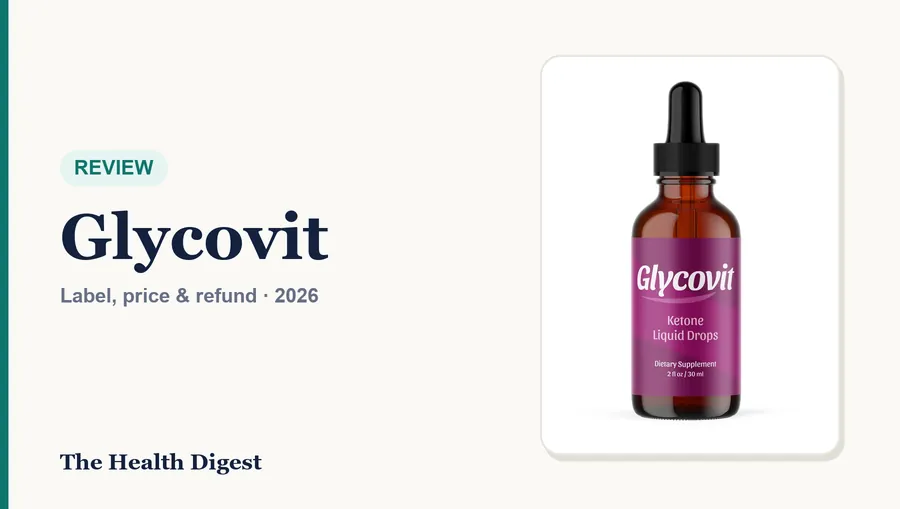 Review
Glycovit review
Glycovit is a liquid dropper supplement marketed for blood sugar balance, metabolism and energy. We read the label, the order page and the refund policy so you know what you are buying before you pay.
Read more → How to use
How to take Vigortrix
The directions fit on one line, but consistency, timing and expectations decide whether you give it a fair trial. A practical guide to the first 60 days.
Read more →
Buy it from the official store so the guarantee applies, and keep your order email until you decide.
Check Glycovit price on the official site →Opens the brand's official website · money-back guaranteeSources
- Glycovit Supplement Facts label (REV 07/25) and main site 'Scientific References' section (glycovit.com), accessed September 2026
- NCCIH: Diabetes and Dietary Supplements (chromium). nccih.nih.gov/health/diabetes-and-dietary-supplements
- NCCIH: Green Tea. nccih.nih.gov/health/green-tea
- NCCIH: Asian Ginseng. nccih.nih.gov/health/asian-ginseng