What Zeneara is, in one paragraph
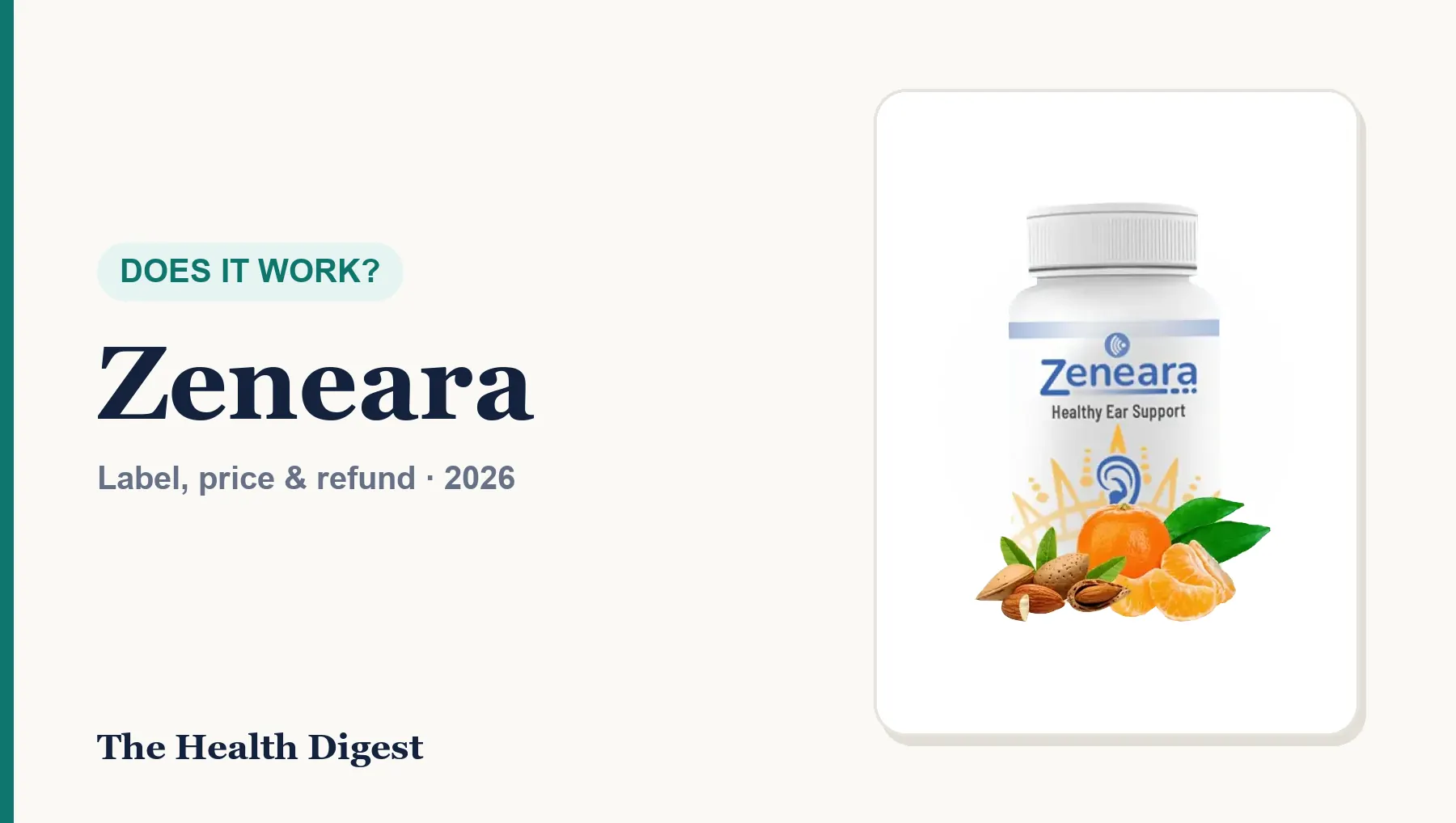
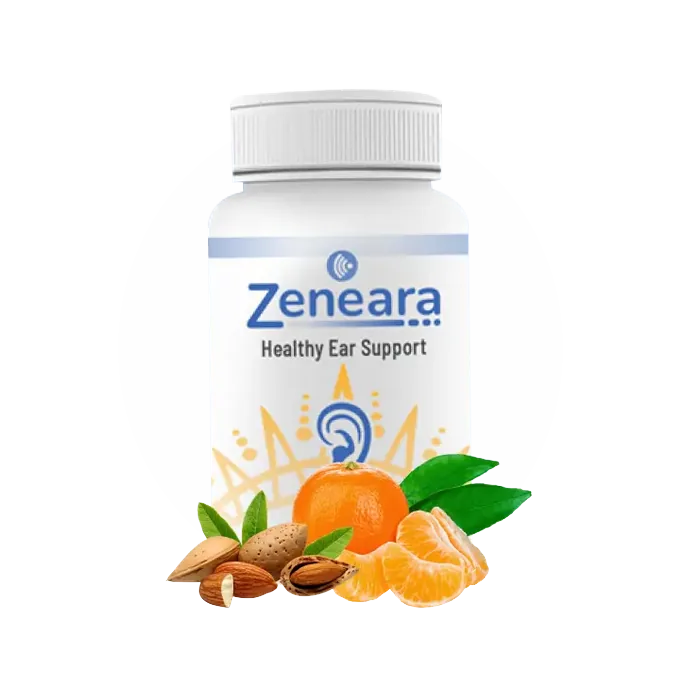
Zeneara is a capsule supplement sold for tinnitus and ear health, taken once a day according to its order page. The page names eight ingredients: Lactobacillus paracasei, Lactobacillus brevis, taurine, ginkgo biloba, valerian, passion flower, zinc and vitamin B6. We could not find a published label with amounts. It costs $39 to $59 per bottle as a one-time payment through ClickBank, with a 365-day money-back guarantee.
What "work" can mean here
| What you hope for | Realistic? |
|---|---|
| The ringing stops, as the page promises | ❌ No ingredient has been shown to do this. |
| Better hearing | ❌ No evidence; hearing loss needs a hearing test. |
| Sleeping a little more easily | ⚠️ Possible for some people from valerian or passion flower, if the amounts are meaningful; the evidence for both is mixed. |
| Being less bothered by tinnitus | ⚠️ Possible, mostly through better sleep, expectation and routine; sound therapy and CBT have real evidence for this. |
The GABA theory: what it gets right
The order page builds on a real line of research: tinnitus is linked to changes in the brain's hearing areas, where the balance between excitation (glutamate) and inhibition (GABA) appears to shift. That much is a reasonable summary of the science. What does not follow is the rest: that a probiotic, taurine and calming herbs can restore that balance, that the imbalance is "killing" brain cells, or that fixing it reverses brain damage and prevents Alzheimer's. None of that has been shown.
The evidence, ingredient by ingredient
Ginkgo and zinc: the two that were tested
Ginkgo is the herb most often tried for tinnitus. A Cochrane review of the trials found little or no evidence that it reduces tinnitus, and the order page's claim that it helped "every participant" does not match that research. Zinc has also been tested in several randomized trials; a Cochrane review found no evidence that it improves tinnitus in adults.
The probiotics and taurine
Some strains of L. paracasei and L. brevis make GABA in the lab, and gut-brain research is a real field. But we found no human trial showing that these probiotics change GABA in the brain's hearing areas or reduce tinnitus. Taurine has been studied in animals and for heart and exercise outcomes, not for tinnitus in people.
Valerian, passion flower and B6
Valerian and passion flower are studied for sleep and anxiety, with mixed results. Vitamin B6 is needed to make GABA, but most people get enough from food, and there is no evidence that more helps tinnitus.
Check Zeneara price on the official site →Opens the brand's official website · money-back guarantee
The missing doses
Even for the ingredients with some human research, the amount matters, and Zeneara's order page does not give any. There is no probiotic count, no milligrams of ginkgo or valerian, no zinc amount. The bottle photos show 60 capsules, while the page says to take one a day. Until you can read a full label, there is no way to compare Zeneara with the doses used in studies.
No trial of the finished product
The page says the formula "eliminated tinnitus in 99.7% of participants within just 14 days", "restored perfect hearing in 87%" and worked for all 51 people in an informal experiment. We found no published study of Zeneara, and no study of any supplement for tinnitus has shown results like these.
If you want to try it, here is a fair test
- See a doctor or ENT first, and right away if your tinnitus is sudden, one-sided, pulsing or comes with hearing loss or dizziness.
- Read the label when it arrives and show it to your doctor or pharmacist, especially if you take sleep medicine or blood thinners.
- Rate your tinnitus from 0 to 10 for loudness and for how much it bothers you, once a week, and note your sleep.
- Take it as the label directs for eight to twelve weeks and change nothing else.
- Decide well within the 365 days, and email support for return instructions before mailing anything.
The answer, stated plainly
Zeneara is unlikely to work for tinnitus. It rests on a real research idea but stretches it far beyond the evidence, the two ingredients tested for tinnitus have not clearly helped, and the product itself has never been studied. If you want to try it anyway, treat it as an experiment covered by the long refund window, after your ears have been checked, and keep the proven options, hearing aids, sound therapy and CBT, on the table.
Check Zeneara price on the official site →Opens the brand's official website · money-back guarantee
Frequently asked questions
Is there a clinical trial of Zeneara?
Not that we could find. The order page mentions a 51-person "experiment" and a 99.7% success rate, but names no published study.
How long does Zeneara take to work?
The page says a few days for relief and up to 87 days for severe cases. Neither figure comes from a published study.
Does ginkgo help tinnitus?
Ginkgo is the most studied herb for tinnitus, and a Cochrane review found little or no evidence that it helps, with low certainty in the evidence.
Can probiotics raise GABA in the brain?
Some Lactobacillus strains produce GABA in lab cultures, and gut-brain research is active, but there is no good evidence that a probiotic capsule raises GABA in the hearing areas of the human brain or reduces tinnitus.
What actually helps tinnitus?
Treating causes such as earwax or a medicine side effect, hearing aids when there is hearing loss, sound therapy and cognitive behavioral therapy have the best evidence.
Related reading
 Review
Zeneara review
What Zeneara contains, what research says about each ingredient for tinnitus, which claims go too far, what it costs and how the 365-day refund works.
Read more → Legit check
Is Zeneara legit?
Zeneara has a real ClickBank checkout, a one-time price and a 365-day refund, plus no published label and very bold claims. Here is how to weigh both before you pay.
Read more →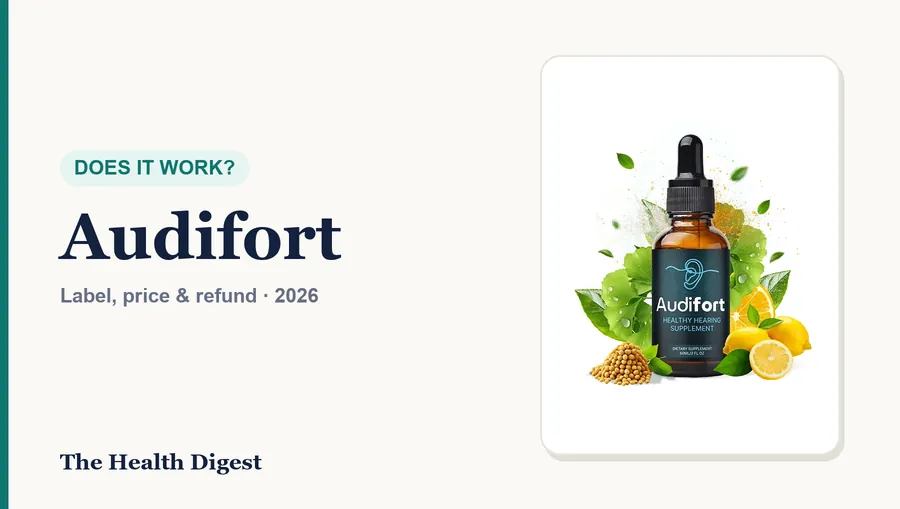 Review
Does Audifort work?
We match every ingredient on the Audifort label with the research behind it, explain what the 200 mg blend means and show how to test it fairly.
Read more →
Buy it from the official store so the guarantee applies, and keep your order email until you decide.
Check Zeneara price on the official site →Opens the brand's official website · money-back guaranteeSources
- Zeneara official order page (zeneara.com, text sales page), shipping and returns page, terms, privacy and disclaimer pages, plus the ClickBank order forms, accessed October 2026
- NIDCD: Tinnitus. nidcd.nih.gov/health/tinnitus
- NIDCD: Sudden Sensorineural Hearing Loss. nidcd.nih.gov/health/sudden-deafness
- MedlinePlus: Tinnitus. medlineplus.gov/tinnitus.html
- Sereda M, et al. Ginkgo biloba for tinnitus. Cochrane Database of Systematic Reviews, 2022.
- Person OC, et al. Zinc supplementation for tinnitus. Cochrane Database of Systematic Reviews, 2016.
- NCCIH: Valerian. nccih.nih.gov/health/valerian
- NCCIH: Probiotics: Usefulness and Safety. nccih.nih.gov