What Audifort is, in one paragraph
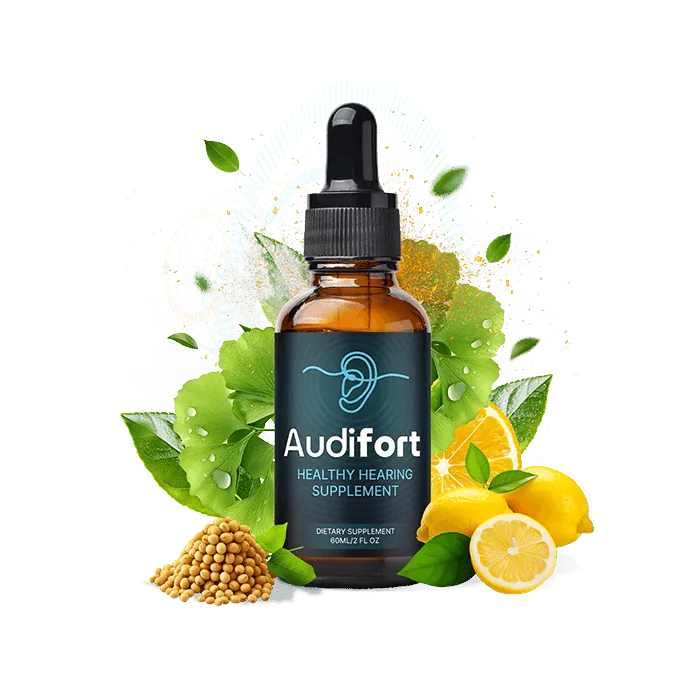
Audifort is a liquid supplement sold for hearing support, taken by dropper under the tongue or in water. Its label lists chromium (0.7 mcg) and a 200 mg proprietary blend of 22 ingredients: maca, grape seed, guarana, African mango, eleuthero, astragalus, green tea, gymnema, Coleus forskohlii, capsicum, grapefruit, Panax ginseng, raspberry ketones, seven amino acids, GABA and a licorice compound. It costs $49 to $79 per bottle as a one-time payment with a 90-day money-back guarantee.
What "work" can mean here
| What you hope for | Realistic? |
|---|---|
| The ringing stops | ❌ No ingredient on the label has been shown to do this. |
| Better hearing | ❌ No evidence; hearing loss needs a hearing test. |
| Feeling a bit more alert | ⚠️ Possible, from the caffeine in guarana and green tea, if the amount is meaningful. |
| Being less bothered by tinnitus | ⚠️ Possible for some people, mostly through expectation and routine; sound therapy and CBT have real evidence for this. |
The evidence, ingredient by ingredient
The six featured ingredients
The order page links maca to energy, grape seed to "antioxidants that protect the ear", green tea to "blood flow to the ears", capsicum to inflammation, gymnema to "supports hearing" and GABA to relaxation. In research, maca has small trials on mood and libido, grape seed on blood pressure, green tea on weight and cholesterol, capsaicin on metabolism and pain creams, gymnema on blood sugar and GABA on stress and sleep. We found no human trial of any of them for tinnitus or hearing.
The rest of the blend
Guarana, African mango, Coleus forskohlii, raspberry ketones and grapefruit are typical of weight-loss and energy products. Eleuthero, astragalus and Panax ginseng are traditional tonic herbs studied mainly for fatigue. The amino acids (glutamine, tyrosine, arginine, beta-alanine, ornithine, tryptophan, carnitine) are usually studied at grams per day.
What has been tested for tinnitus
Ginkgo, zinc and melatonin have actually been tested for tinnitus, with disappointing or uncertain results. None of them is on the Audifort label.
Check Audifort price on the official site →Opens the brand's official website · money-back guarantee
The dose problem
The label gives one amount for 22 ingredients: 200 mg. Split evenly, that is about 9 mg each. Even if the brand weighted it toward a few ingredients, there is not enough room for the doses used in studies of ginseng, green tea or amino acids, which run from hundreds of milligrams to several grams. The chromium, at 0.7 mcg, is about 2% of the daily value, less than many foods provide.
No trial of the finished product
We found no published study of Audifort. The order page's references include an NIDCD news story about an animal study in rats and brain-mapping studies of tinnitus, which explain how tinnitus happens but do not involve any of these ingredients. Other references, such as a spiritual book and a survey of plants for stomach problems, have nothing to do with hearing.
So why do some people say it helps?
Tinnitus is very sensitive to attention, stress and sleep. It often fades into the background with time, especially once a person learns it is not dangerous. Starting any daily routine and expecting improvement can make the sound less bothersome for a while. That is real relief, but it is not the same as a supplement working, and it is why testimonials cannot settle the question.
If you want to try it, here is a fair test
- See a doctor or ENT first, and right away if your tinnitus is sudden, one-sided, pulsing or comes with hearing loss or dizziness.
- Rate your tinnitus from 0 to 10 for loudness and for how much it bothers you, once a week.
- Take the label dose daily and change nothing else, including caffeine and noise exposure.
- After six to eight weeks, compare your ratings honestly.
- Decide well before day 60 so you are covered under every version of the refund policy.
The answer, stated plainly
Audifort is unlikely to work for tinnitus or hearing. Its label is a small blend of energy and metabolism ingredients, none tested for tinnitus, and the product itself has never been studied. If you want to try it anyway, treat it as an experiment covered by the 90-day refund, after your ears have been checked, and put most of your hope in the treatments that do have evidence.
Check Audifort price on the official site →Opens the brand's official website · money-back guarantee
Frequently asked questions
Is there a clinical trial of Audifort?
Not that we could find. The references on the order page are about tinnitus and herbs in general, and several are unrelated to hearing.
How long does Audifort take to work?
The FAQ says some people notice a difference after a week and recommends four months or more. Neither figure comes from a study.
Can Audifort restore hearing loss?
No. Nothing on the label has been shown to restore hearing. For hearing loss, a hearing test and, if needed, hearing aids are the proven route.
Does caffeine in Audifort make tinnitus worse?
The blend includes guarana and green tea, which contain caffeine, but the amount is not listed and is likely small. Research on caffeine and tinnitus is mixed.
What actually helps tinnitus?
Treating causes such as earwax or a medicine side effect, hearing aids when there is hearing loss, sound therapy and cognitive behavioral therapy have the best evidence.
Related reading
 Review
Audifort review
What the Audifort label really lists, what research says about each ingredient for tinnitus, who should ask a doctor first, what it costs and how the 90-day refund works.
Read more → Legit check
Is Audifort legit?
Audifort has a real ClickBank checkout, a published label and a 90-day refund. It also has a label that does not look like a hearing formula. Here is how to weigh both before you pay.
Read more → Review
Does VertiAid work?
VertiAid promises steadier balance. One ingredient, vitamin D, has a real trial behind it. Here is what that trial found and what you can honestly expect from the chewable.
Read more →
Buy it from the official store so the guarantee applies, and keep your order email until you decide.
Check Audifort price on the official site →Opens the brand's official website · money-back guaranteeSources
- Audifort official order page, Supplement Facts label image, FAQ, contact page, return policy, shipping policy and terms (audisoothe.com and audifort.com), plus the ClickBank order form, accessed October 2026
- NIDCD: Tinnitus. nidcd.nih.gov/health/tinnitus
- NIDCD: Sudden Deafness. nidcd.nih.gov/health/sudden-deafness
- MedlinePlus: Tinnitus. medlineplus.gov/tinnitus.html
- NIH Office of Dietary Supplements: Chromium, Health Professional Fact Sheet. ods.od.nih.gov
- "Rebooting the brain helps stop the ring of tinnitus in rats", NIDCD research news on an animal study (listed in the references on the Audifort order page)