If you are shopping the apple cider vinegar gummy aisle, Burntide is a legitimate member of the category with an unusual twist: BHB salts in place of the vitamin add-ons most brands use. It is a one-gummy-a-day routine, sold direct with a one-time payment and a 60-day guarantee, which is more consumer-friendly than many subscription-style supplement offers. The honest caveats are the same ones that apply to the whole category: the research behind ACV is small and short-term, no trial exists on any finished gummy including this one, and a proprietary blend means you do not see individual amounts.
What we like
- A short, two-ingredient label in a category full of long ones
- One gummy a day, 30 per jar, no water needed
- One-time payment with no subscription, unlike many gummy brands
- 60-day money-back guarantee with a published US returns address
Keep in mind
- The 525 mg blend does not disclose how much is ACV and how much is BHB
- 2 g of sugar per gummy, including 1 g of added sugar
- No published research on the finished product, as with every gummy in this category
Check Burntide price on the official site →Opens the brand's official website · money-back guarantee
Search "apple cider vinegar gummies" in the United States and you get thousands of jars that look almost identical: amber-colored, apple-flavored, sold on the promise of turning a sour kitchen staple into something you would actually put in your mouth. Burntide belongs to that category but is built differently. Its Supplement Facts panel lists one 525 mg proprietary blend of apple cider vinegar and BHB salts, where most ACV gummies list ACV powder alongside added vitamins. This page explains what is typically in an ACV gummy, what BHB actually is, what research has and has not shown, and the checklist we would use on any jar in this aisle, Burntide included.
What is usually inside an apple cider vinegar gummy?
The category is more consistent than the marketing suggests. Open almost any ACV gummy panel and you tend to find:
- Apple cider vinegar, usually as a dried powder rather than liquid vinegar, since liquid does not set well into a gummy. The amount printed varies widely from brand to brand, and some brands disclose it per gummy while others fold it into a blend.
- Added vitamins, most often vitamin B12 and folate, sometimes vitamin B6. These are cheap, stable in a gummy and let a label carry a percent Daily Value column.
- Fruit and vegetable extras such as beetroot, pomegranate or superfruit powders, frequently present in small, mostly cosmetic amounts that give the gummy its color and its ingredient list some length.
- A gelling base: pectin (plant-based) or gelatin (animal-based), plus a sweetener, usually cane sugar and glucose syrup, occasionally a sugar alcohol in the "sugar-free" versions.
- Flavor and color, natural or artificial.
That is the template. There is nothing wrong with it; it is a sensible way to make vinegar palatable, and the format exists because a lot of people tried drinking vinegar, hated it, and stopped.
Where Burntide steps away from the template
Burntide keeps the ACV and drops the vitamins. In their place it adds BHB salts, which is a choice you normally see in the ketogenic-supplement aisle rather than the vinegar one.
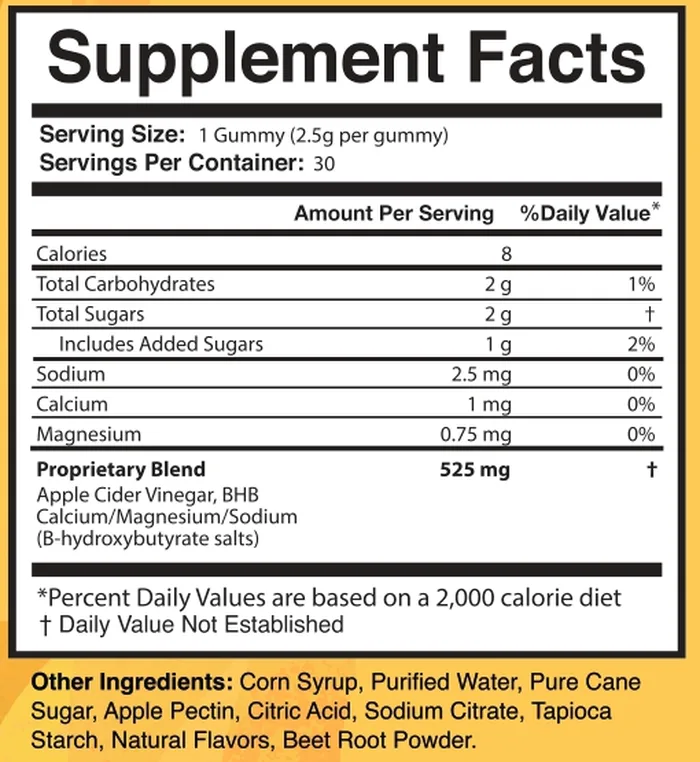
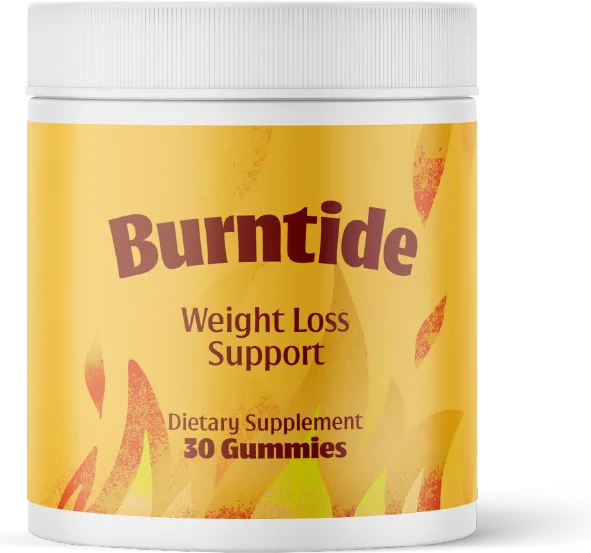
The panel (revision REV 04/24) reads: serving size 1 gummy (2.5 g), 30 servings per jar, 8 calories, 2 g total carbohydrates, 2 g total sugars including 1 g added sugars, 2.5 mg sodium, 1 mg calcium, 0.75 mg magnesium, and a Proprietary Blend of 525 mg containing apple cider vinegar and BHB calcium, BHB magnesium and BHB sodium. Other ingredients: corn syrup, purified water, pure cane sugar, apple pectin, citric acid, sodium citrate, tapioca starch, natural flavors and beet root powder.
| Typical ACV gummy | Burntide | |
|---|---|---|
| Headline ingredient | Apple cider vinegar powder | Apple cider vinegar, inside a blend |
| Second element | Vitamin B12, folate, fruit powders | BHB salts (calcium, magnesium, sodium) |
| Amounts shown | Often per ingredient, with a %DV column for vitamins | One 525 mg blend total; individual amounts not listed |
| Serving | Commonly 1 or 2 gummies | 1 gummy |
| Base | Pectin or gelatin | Apple pectin |
| Where you buy | Pharmacies, supermarkets, marketplaces | Official website, one-time payment |
| Returns | Each retailer's policy | 60-day money-back guarantee from the brand |
One correction while we are here, because it circulates widely: several websites that copy Burntide's name claim the gummy contains green tea and cayenne. Neither appears on the official panel. If you are avoiding stimulant-type botanicals, the panel above is the document to trust.
What are BHB salts?
Beta-hydroxybutyrate, or BHB, is one of the ketone bodies your liver produces when you fast or eat very few carbohydrates. As a supplement ingredient it is bound to minerals, calcium, magnesium and sodium, which is why those three minerals appear on the Burntide panel. Products containing it are often called "exogenous ketones", meaning ketones that come from outside the body rather than from your own metabolism.
What the research shows is narrower than the marketing around ketones suggests. Drinking or swallowing exogenous ketones can raise blood ketone levels for a short period. Newman and Verdin's 2017 review describes BHB's role as a signaling molecule in the body, which is mechanism research, not evidence of an outcome. Much of the athletic research used ketone esters in drink form, a different ingredient in a different format. There is no good human evidence that BHB salts on their own change body weight, and no gummy is a ketogenic diet. We say that plainly so your expectations are set by evidence rather than by a sales page.
Check Burntide price on the official site →Opens the brand's official website · money-back guarantee
What has research actually looked at for apple cider vinegar?
Vinegar has a long history as a kitchen remedy, and it has been studied, modestly. The trial cited most often in this category is a 12-week Japanese study (Kondo, 2009) in which adults drank a daily vinegar beverage and the researchers reported small changes in body weight and body fat compared with a placebo drink. It is one small, short study of a liquid, not of gummies.
Beyond that, the evidence base is thin: the studies are generally small, short and varied in design, and the NIH Office of Dietary Supplements notes in its overview of weight-loss supplements that the evidence for most ingredients in this category is limited. We did not find a dedicated NIH or NCCIH monograph on apple cider vinegar, which is itself a useful signal about how mature the research is.
The rule we apply to every review on this site applies here too: studies describe ingredients. No trial has been published on Burntide, and we are not aware of a published trial on any finished ACV gummy brand. Any page that tells you a specific gummy is "clinically proven" is telling you something that does not exist.
The acid problem gummies were invented to solve
This part is usually skipped, and it is where the category has a genuine, checkable advantage and a genuine catch.
Liquid apple cider vinegar is acidic. Dentists routinely advise diluting it and rinsing afterwards, because repeated contact with acid is hard on tooth enamel, and drinking it straight can irritate the throat. Concentrated ACV in tablet form has caused problems too: a 2005 report in the Journal of the American Dietetic Association described an esophageal injury from an ACV tablet that lodged in the throat, and the authors then tested eight products and found wide variation between them.
A gummy sidesteps much of that. It is chewed rather than swallowed whole, diluted in a sugar-and-pectin matrix, and does not sit in the esophagus the way a tablet can. The catch is that a gummy is, structurally, a candy: it sticks to teeth and contributes sugar, which is the main driver of tooth decay according to the National Institute of Dental and Craniofacial Research. Whichever ACV gummy you choose, the sensible habit is the same one you would use with candy: take it with or after a meal, then rinse with water, and keep the jar away from children, since gummies do not read as medicine to a four-year-old.

Seven things to check on any apple cider vinegar gummy label
Use this on Burntide, on the jar in your cabinet, or on anything you are about to order.
- Is the ACV amount disclosed, or inside a proprietary blend? A blend total tells you the combined weight, not the split. Burntide's 525 mg blend is a blend total. Neither approach is dishonest, but only one lets you compare jars.
- Is there an "equivalent to" claim? Phrases such as "equivalent to X mg of liquid vinegar" describe a conversion ratio, not a weight sitting in the gummy. Read them as marketing math.
- What is the serving size? Some brands are one gummy, others two. Comparing per-gummy numbers across brands with different serving sizes will mislead you; compare per day, and compute the cost per day the same way.
- How much added sugar per serving? It is on the panel, and it varies. Burntide lists 2 g total sugars including 1 g added.
- What else is active? Check for caffeine, green tea extract, garcinia, senna or other stimulant and laxative-type ingredients, especially if you take medication or avoid stimulants. Burntide's panel lists none of those.
- Is there a real company behind it? A physical address, a phone number, a support email and a written return policy. Burntide publishes a Largo, Florida address, a phone line and a 60-day policy; many marketplace listings publish none of that.
- What does the page claim? Supplements are not approved by the FDA to diagnose, treat, cure or prevent disease. A page promising that a gummy treats a medical condition is making a claim it is not allowed to make, regardless of brand.
How the price structures compare
Store-shelf gummies are typically bought one jar at a time, and the retailer sets the return policy. Burntide sells in multi-jar packages direct, and its FAQ states there are no subscriptions or automatic rebills, which is worth noting in a category where auto-shipping is common.
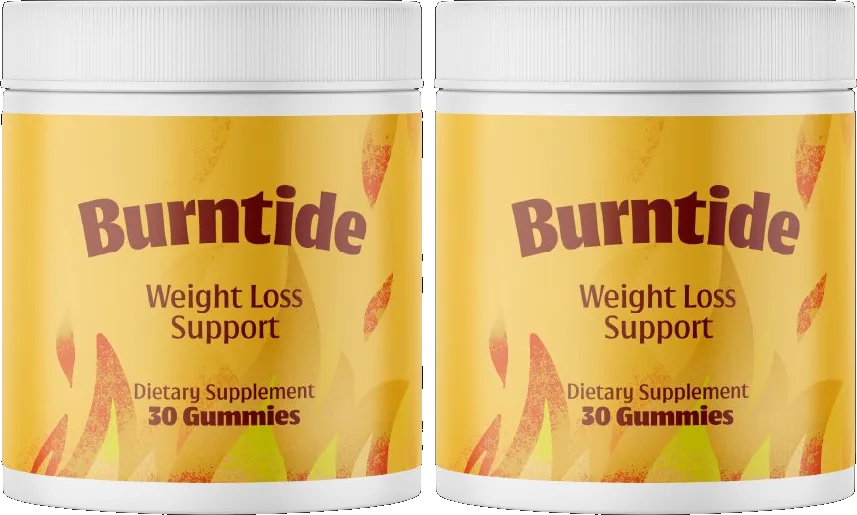 2 bottles60-day supply$79 /bottle$158 · + shippingCheck availability →Best value
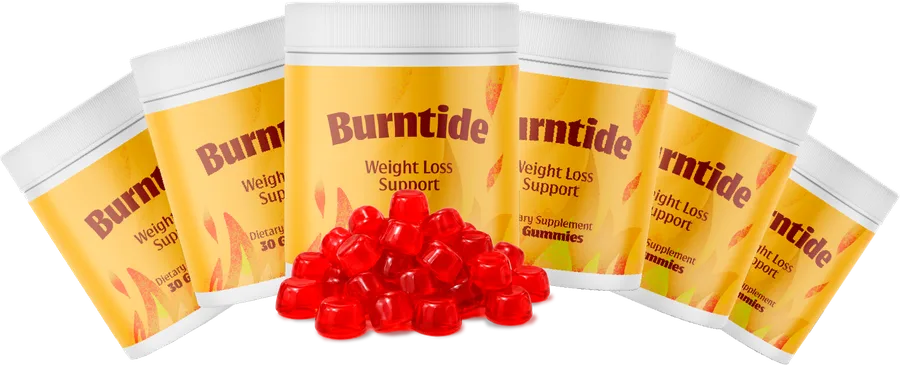 6 bottles180-day supply$49 /bottle$294 · free shipping + 3 e-booksCheck availability →
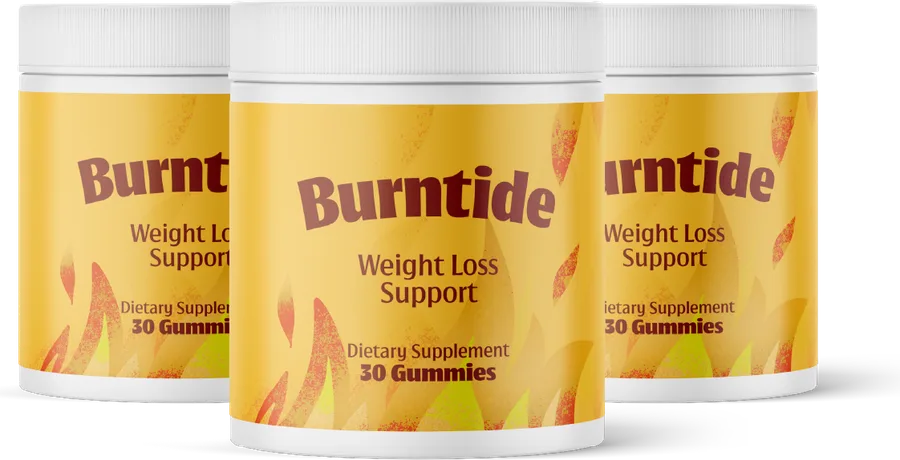 3 bottles90-day supply$69 /bottle$207 · shipping shown at checkoutCheck availability →
The 6-jar package ships free and adds three digital e-books. For the 2-jar and 3-jar packages the brand's pages disagree on shipping, so read the final total on the checkout page before you pay. The guarantee runs 60 days from the order date; the support pages publish two different versions of which bottles to send back, so email support first and keep their written answer. The full breakdown is in our Burntide review, and the authenticity questions are covered in is Burntide legit.
Who is each one for?
A conventional ACV gummy may suit you better if...
- you want a printed ACV amount you can compare between brands;
- you also want B12 or folate in the same gummy;
- you prefer to buy one jar at a pharmacy, return it easily and not commit to a package;
- you want a sugar-free version, which several brands offer.
Burntide may suit you better if...
- you like the idea of pairing ACV with BHB salts rather than with vitamins you may already get elsewhere;
- you want a short panel with no stimulants, no caffeine and no botanical list;
- you prefer one gummy a day and a one-time payment with no subscription;
- a 60-day guarantee from the seller matters more to you than buying in a store.
In both cases, the gummy is an addition to what you eat, how you move and how you sleep, not a replacement for any of them, and individual results vary.
Safety: when to ask a doctor
The Burntide label asks you to consult a healthcare professional if you are under a physician's care, take medication, or are pregnant or nursing, and to keep the jar away from children. Based on the ingredients in this whole category, we would add:
- Diabetes medication or insulin: vinegar has been linked in the general literature to interactions here, and the gummy itself contains sugar. Ask first, and count the grams.
- Diuretics or digoxin: large vinegar intakes have been associated with low potassium in the general literature. Whether that applies at gummy amounts is not established, which is exactly why it is a question for your doctor rather than a website.
- Kidney disease or a sodium-restricted diet: BHB salts supply minerals including sodium, so mention the product at your next appointment.
- Dental work, reflux or a history of esophageal problems: raise the acid question with your dentist or physician.
And the medical red flag worth naming: unexplained weight change, persistent fatigue or a big shift in appetite should be looked at by a doctor before any supplement enters the picture, because thyroid, hormonal and medication causes are common and treatable.
Check Burntide price on the official site →Opens the brand's official website · money-back guarantee
Frequently asked questions
Is Burntide an apple cider vinegar gummy?
Yes. Apple cider vinegar is one of the two components of its 525 mg proprietary blend; the other is BHB salts (calcium, magnesium and sodium beta-hydroxybutyrate).
How much apple cider vinegar is in a Burntide gummy?
The label does not say. It discloses a 525 mg blend total shared between the ACV and the BHB salts, without splitting the amounts.
What is the difference between Burntide and regular ACV gummies?
Most ACV gummies pair vinegar with added vitamins such as B12 and folate plus fruit powders. Burntide pairs it with BHB salts and adds no vitamins or botanicals.
Do apple cider vinegar gummies damage your teeth?
A gummy is less acidic in contact than liquid vinegar, but it is sugary and sticks to teeth. Sugar is the main driver of tooth decay, so take it with a meal, rinse with water afterwards and keep up normal brushing.
Does Burntide contain caffeine or stimulants?
No. The official Supplement Facts panel lists no caffeine, no green tea and no cayenne, despite what some copycat websites claim.
Is there a study proving ACV gummies work?
No published trial exists on Burntide or, as far as we found, on any finished ACV gummy brand. The research that exists studied vinegar itself, mostly as a liquid, in small short-term trials.
Related reading
 Review
Does Burntide work?
We could not find a published clinical trial of the Burntide gummy itself. Here is what is on the label, what research exists on the two ingredients, and how to test it on yourself inside the 60-day window.
Read more → Legit or scam?
Is Burntide legit or a scam?
Burntide has a real label, a real checkout and a published returns address. It also has a homepage that shows an error, look-alike domains and a sales page with leftover developer notes. Here is how to tell what matters.
Read more →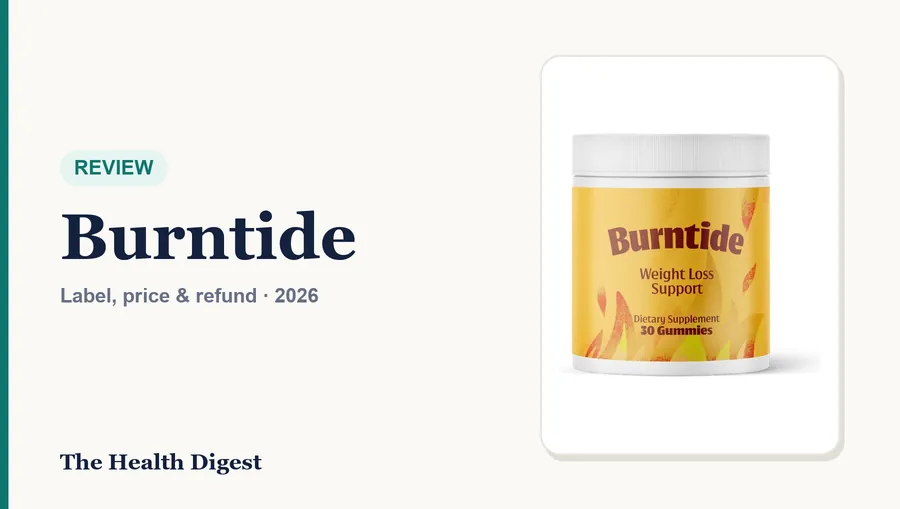 Review
Burntide review
Burntide is a one-a-day gummy marketed for weight management. Here is what the label actually lists, what research on those two ingredients has looked at, what it costs and how the refund works.
Read more →
Buy it from the official store so the guarantee applies, and keep your order email until you decide.
Check Burntide price on the official site →Opens the brand's official website · money-back guaranteeSources
- Burntide official order page, Supplement Facts label (REV 04/24), support, shipping and returns pages (burntide.us), accessed September 2026
- Kondo T. et al. Vinegar intake reduces body weight, body fat mass, and serum triglyceride levels in obese Japanese subjects. Biosci Biotechnol Biochem, 2009. pubmed.ncbi.nlm.nih.gov/19661687
- Newman J.C., Verdin E. Beta-hydroxybutyrate: a signaling metabolite. Annu Rev Nutr, 2017. pubmed.ncbi.nlm.nih.gov/28826372
- Hill L.L. et al. Esophageal injury by apple cider vinegar tablets and subsequent evaluation of products. J Am Diet Assoc, 2005. pubmed.ncbi.nlm.nih.gov/15983536
- NIH Office of Dietary Supplements: Dietary Supplements for Weight Loss. ods.od.nih.gov/factsheets/WeightLoss-HealthProfessional
- NCCIH: Using Dietary Supplements Wisely. nccih.nih.gov/health/using-dietary-supplements-wisely
- National Institute of Dental and Craniofacial Research: Tooth Decay. nidcr.nih.gov/health-info/tooth-decay
- FDA: Dietary Supplements. fda.gov/food/dietary-supplements
 Burntide