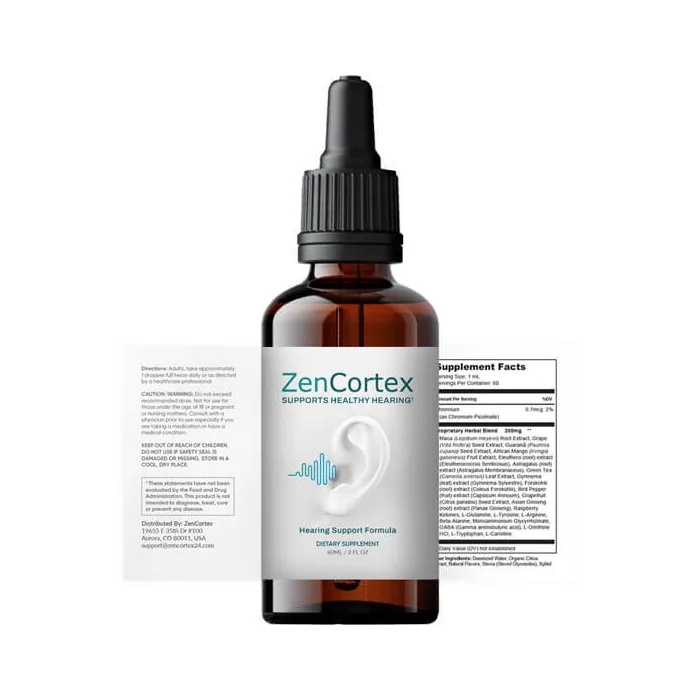
ZenCortex is easy to buy and easy to take, it is sold as a one-time payment through ClickBank, and it comes with a 60-day money-back guarantee. The problem is what is in the bottle. The label lists 0.7 mcg of chromium and a 200 mg blend of 22 ingredients that look like a general energy and metabolism formula, not a hearing formula, and it is the same formula sold as Audifort and EchoXen. None of the ingredients has clinical evidence for tinnitus. If you buy it, buy it knowing that, after a doctor has checked your ears, and keep the refund deadline in mind.
What we like
- The full Supplement Facts label is published
- One-time payment, no subscription
- 60-day money-back guarantee, empty bottles included
- Phone support seven days a week
Keep in mind
- Same label as Audifort and EchoXen
- No ingredient has tinnitus or hearing trials
- 200 mg shared by 22 ingredients, amounts hidden
- Says "No Stimulants" but contains caffeine sources
Check ZenCortex price on the official site →Opens the brand's official website · money-back guarantee
Affiliate links for ZenCortex open the order page at zencortex24.com. Support emails use zencortexhq.com, and payment goes through ClickBank.
ZenCortex is a liquid dietary supplement sold to support healthy hearing. You take it by dropper, under the tongue or in water. The order page highlights eight ingredients, grape seed, green tea, gymnema, capsicum, Panax ginseng, astragalus, chromium and maca, and says there are "over 20". The full label lists 22 plus chromium. It is sold at $49 to $79 per bottle as a one-time payment, with a 60-day money-back guarantee. This review goes through the label line by line, what research says about each ingredient, the prices, the refund fine print and who should ask a doctor before trying it.
First, a word about tinnitus
Tinnitus is hearing a sound, often ringing, buzzing, hissing or humming, that has no outside source. It is very common: the NIDCD estimates that roughly 1 in 10 U.S. adults has had tinnitus lasting at least five minutes in the past year. It is usually a symptom, not a disease. Age-related hearing loss and noise exposure are the most common causes, but earwax, ear infections, some medicines, jaw problems, high blood pressure and, rarely, a growth on the hearing nerve can all be behind it.
That is why some situations need a doctor or an ear, nose and throat specialist (ENT), not a supplement:
- Sudden hearing loss in one or both ears, with or without ringing. Doctors treat this as urgent, because treatment works best when it starts within days.
- Tinnitus in only one ear, or one that is clearly louder on one side.
- Pulsatile tinnitus, a whooshing or thumping in time with your heartbeat, which can point to a blood vessel problem.
- Tinnitus with hearing loss, dizziness, ear pain or discharge, or that started after a head injury or a new medicine.
For long-lasting tinnitus, the approaches with the best evidence are hearing aids when there is hearing loss, sound therapy and cognitive behavioral therapy, which helps people be less bothered by the sound. ZenCortex is a dietary supplement, not a treatment for tinnitus or hearing loss.
What is inside ZenCortex?
The order page shows the full Supplement Facts panel. This is exactly what it lists:
| Supplement Facts (per 1 ml, 60 servings) | Amount |
|---|---|
| Chromium (as chromium picolinate) | 0.7 mcg (2% DV) |
| Proprietary herbal blend: maca root, grape seed, guarana seed, African mango fruit, eleuthero root, astragalus root, green tea leaf, gymnema leaf, Coleus forskohlii root, bird pepper (capsicum) fruit, grapefruit seed, Asian ginseng (Panax ginseng) root, raspberry ketones, L-glutamine, L-tyrosine, L-arginine, beta-alanine, monoammonium glycyrrhizinate, GABA, L-ornithine HCl, L-tryptophan, L-carnitine | 200 mg total |
| Other ingredients | Deionized water, organic citrus extract, natural flavors, stevia, xylitol |
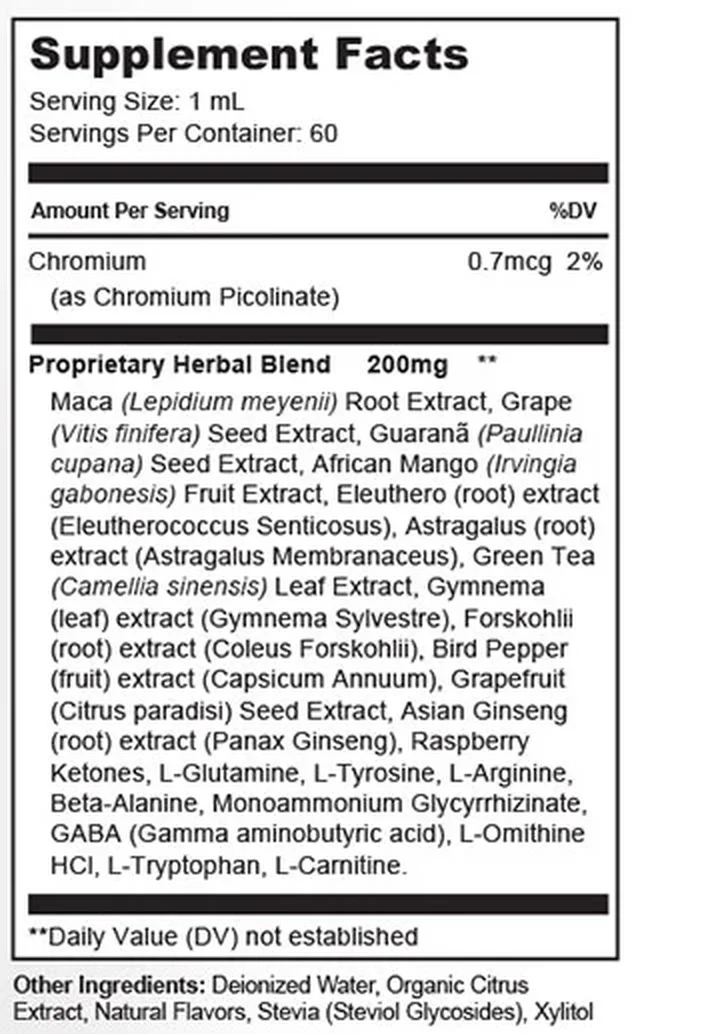
Two things stand out. First, the only ingredient with a stated amount is chromium, at 0.7 mcg, or 2% of the daily value. That is a trace: the NIH says adults need roughly 25 to 35 mcg a day, and most people get that from food. Second, the other 22 ingredients share 200 mg in total. Even if they were split evenly, that would be about 9 mg each. Most of these ingredients were studied at hundreds of milligrams or several grams a day. At the label dose of two droppers a day you get twice that, 400 mg of blend, which is still small for 22 ingredients.
There is one more thing worth knowing before you buy. The ZenCortex Supplement Facts panel lists the same 22 blend ingredients, in the same order, with the same 0.7 mcg of chromium and the same 200 mg blend total as two other hearing drops we have reviewed, Audifort and EchoXen. ZenCortex and Audifort also share the order page layout, the package prices, the FAQ wording and the reference list, so they appear to come from the same seller. The visible differences are the bottle size (ZenCortex: 60 ml, 60 servings), the dose (one dropper twice a day) and the "other ingredients" line. Sharing a formula is common with private-label supplements and is not a problem in itself. It does mean the research picture is the same for all three, and you do not need to buy more than one of them to find out whether this blend does anything for you.
Every ingredient, up close
Here is every active ingredient on the label, what it actually is, and what research does and does not show. Where the order page makes a claim for an ingredient, we quote it. Every ingredient except chromium sits inside the same 200 mg blend (400 mg a day at the label's two droppers), so no single amount is disclosed.

Chromium (as chromium picolinate)
0.7 mcg (2% DV)An essential trace mineral that helps insulin do its job; broccoli, whole grains and meat all supply some (pictured: broccoli, a common food source of chromium). The order page says it supports auditory health. Trials of chromium picolinate for blood sugar have used roughly 200 to 1,000 mcg a day, with small and inconsistent effects, and none has looked at hearing. This label gives 0.7 mcg, about 2% of the daily value.
Photo: David / Public domain, via Wikimedia Commons
Maca root
In a 200 mg blend, amount not disclosedA turnip-like root grown high in the Peruvian Andes and eaten dried or ground into flour. The order page says it boosts your energy. Small trials have tested it for mood, energy and libido, usually at 1.5 to 3 grams a day, and none has tested hearing or tinnitus. A share of a 200 mg blend cannot get near those amounts.
Photo: Fumikas Sagisavas / CC0, via Wikimedia Commons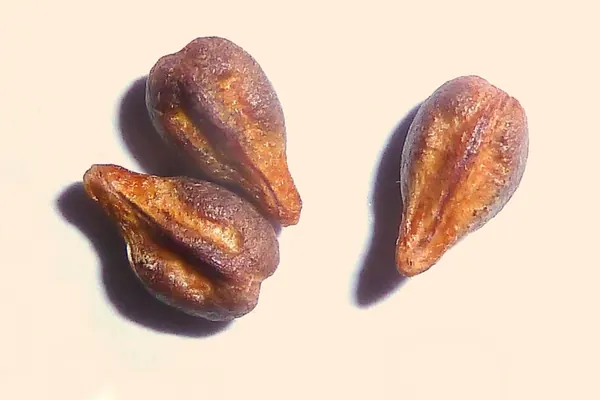
Grape seed
In a 200 mg blend, amount not disclosedThe crushed seeds of wine grapes, concentrated for antioxidant compounds called proanthocyanidins. The order page says it supports healthy ears. Human studies have looked mainly at blood pressure and circulation, generally with a few hundred milligrams of extract a day and small effects. We found no human trials on hearing or tinnitus.
Photo: Philmarin / CC BY-SA 3.0, via Wikimedia Commons
Guarana seed
In a 200 mg blend, amount not disclosedThe seeds of an Amazonian climbing plant, naturally richer in caffeine than coffee beans. Its effect on alertness comes mostly from that caffeine; there is no research on tinnitus, and the label does not say how much caffeine a dropper delivers.
Photo: Geoff Gallice from Gainesville, FL, USA / CC BY 2.0, via Wikimedia Commons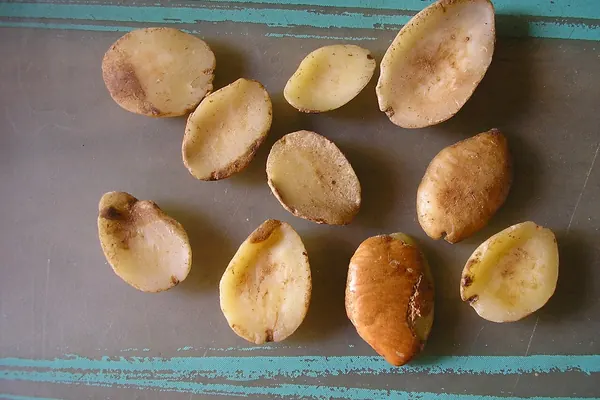
African mango fruit
In a 200 mg blend, amount not disclosedIrvingia gabonensis, a West African fruit tree whose seed kernels are sold as ogbono (pictured: the kernels). This label lists the fruit, while the few small weight-loss trials, which reviewers rate as weak evidence, used a seed extract; nothing links either to hearing.
Photo: Zz411 at English Wikipedia / CC BY-SA 3.0, via Wikimedia Commons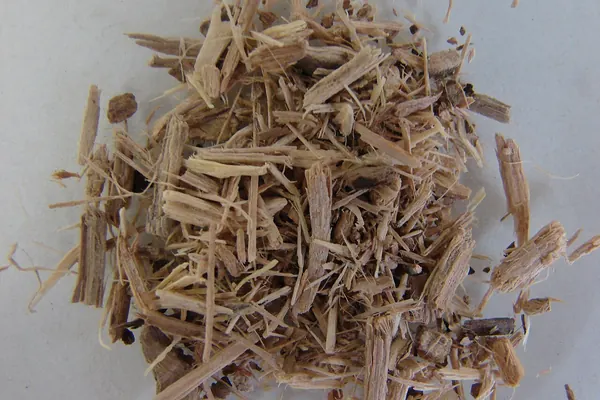
Eleuthero root
In a 200 mg blend, amount not disclosedThe root of a thorny shrub from Siberia and northern China, sold as "Siberian ginseng" although it is not a true ginseng. It was studied mostly for fatigue and endurance, with mixed results, and has no tinnitus trials.
Photo: Maša Sinreih in Valentina Vivod / CC BY-SA 3.0, via Wikimedia Commons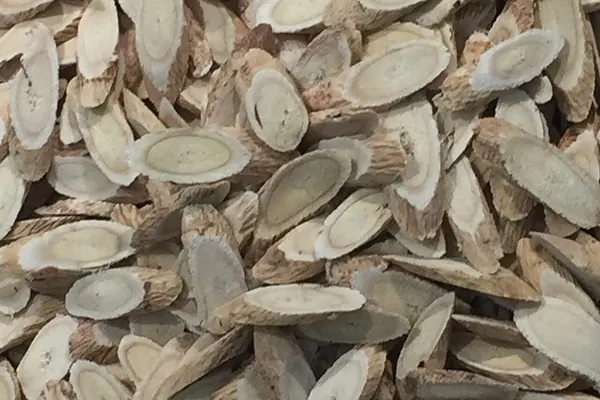
Astragalus root
In a 200 mg blend, amount not disclosedThe root of a legume used in traditional Chinese medicine, where it is called huang qi. The order page says it supports clear sounds. Most research is in the lab, in animals or in multi-herb formulas; good trials of astragalus alone in people are scarce, and none involves hearing.
Photo: Fumikas Sagisavas / CC0, via Wikimedia Commons
Green tea leaf
In a 200 mg blend, amount not disclosedLeaves of the tea plant, Camellia sinensis, which provide caffeine and antioxidant catechins such as EGCG. The order page says it improves blood flow to the ears. NCCIH describes modest evidence for weight and cholesterol, and rare liver injury from concentrated extracts. There are no trials on blood flow to the ear or on tinnitus.
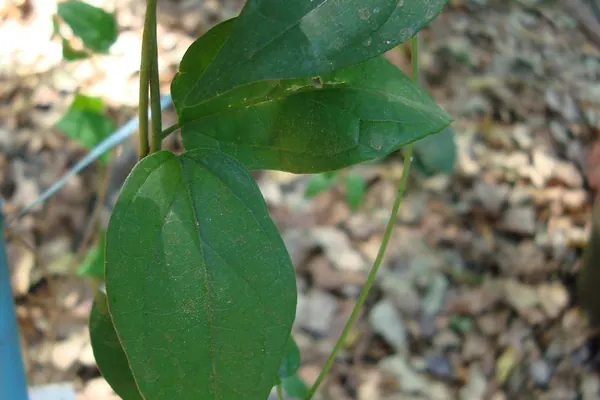
Gymnema leaf
In a 200 mg blend, amount not disclosedA woody climbing plant from India whose leaves briefly dull the taste of sugar, which earned it the Hindi name gurmar, "sugar destroyer". The order page says it supports hearing. Small trials have studied it for blood sugar, usually at a few hundred milligrams of extract a day, and we found no research linking it to hearing. If you take diabetes medicine, ask before combining.
Photo: Satheesan.vn / CC BY-SA 3.0, via Wikimedia Commons
Coleus forskohlii root
In a 200 mg blend, amount not disclosedA mint-family plant from India whose root contains forskolin (pictured: the leaves; supplements use the root). Forskolin is sold for weight loss, but the human trials are few, small and inconsistent, and none involves hearing. It may lower blood pressure and interact with blood pressure or blood-thinning medicine.
Photo: Krzysztof Ziarnek, Kenraiz / CC BY-SA 4.0, via Wikimedia Commons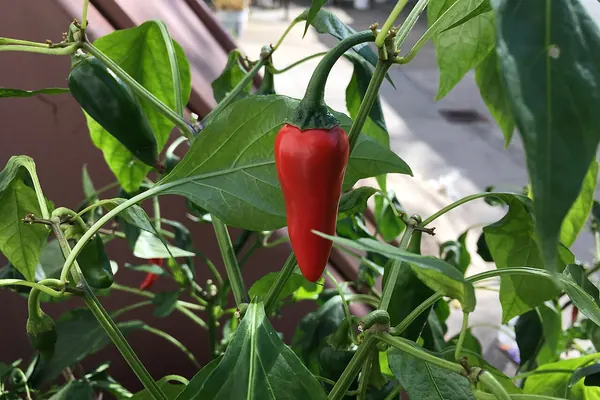
Bird pepper (capsicum) fruit
In a 200 mg blend, amount not disclosedHot red pepper, which gets its burn from capsaicin. The order page says it supports a healthy inflammatory response. Capsaicin is studied as a skin cream for nerve pain and, by mouth, for a small bump in calorie burning; there is nothing on tinnitus.
Photo: Ashoka Jegroo / CC BY-SA 4.0, via Wikimedia Commons
Grapefruit seed
In a 200 mg blend, amount not disclosedGrapefruit seed extract, marketed mostly for antimicrobial uses with little human research behind it (pictured: the fruit). Grapefruit can block an enzyme (CYP3A4) that breaks down many medicines; whether a small amount of seed extract does the same is unknown, so ask your pharmacist if your medicine carries a grapefruit warning.
Photo: tracy from north brookfield,Massachusetts, usa / CC BY 2.0, via Wikimedia Commons
Asian ginseng (Panax ginseng) root
In a 200 mg blend, amount not disclosedThe root of Asian ginseng, a staple of traditional Chinese and Korean medicine. The order page credits it with "neuromaintaining or supporting properties". NCCIH describes mixed results for thinking, fatigue and blood sugar, with no tinnitus trials, and possible interactions with diabetes medicine and warfarin.
Raspberry ketones
In a 200 mg blend, amount not disclosedThe aroma compound that makes raspberries smell like raspberries; supplement amounts are made in a lab, since the fruit holds only traces. Its weight-loss reputation rests mainly on rodent and test-tube studies, with almost no human evidence and none on hearing.

L-glutamine
In a 200 mg blend, amount not disclosedThe most plentiful amino acid in the blood; the body makes it and also gets it from protein foods (pictured: tofu, a common food source of L-glutamine). It is studied in grams for gut health and exercise recovery, and a normal diet already supplies several grams a day, so a few milligrams add little.
Photo: DryPot / CC BY-SA 3.0, via Wikimedia Commons
L-tyrosine
In a 200 mg blend, amount not disclosedAn amino acid the body uses to make dopamine and related messengers (pictured: Parmesan cheese, a common food source of L-tyrosine). Trials give grams at a time for thinking under stress or sleep loss; none looks at hearing.
Photo: Unknown author / CC BY-SA 3.0, via Wikimedia Commons
L-arginine
In a 200 mg blend, amount not disclosedAn amino acid the body turns into nitric oxide, which relaxes blood vessels (pictured: mixed nuts, a common food source of L-arginine). Studies used several grams a day for blood pressure and circulation, with modest results, and none looked at hearing.
Photo: User:Melchoir / CC BY-SA 3.0, via Wikimedia Commons
Beta-alanine
In a 200 mg blend, amount not disclosedAn amino acid muscles use to build carnosine, a buffer against fatigue in hard exercise (pictured: chicken breast, a common food source of beta-alanine). Sports studies use a few grams a day for weeks; nothing connects it to hearing.
Photo: kakyusei / CC0, via Wikimedia Commons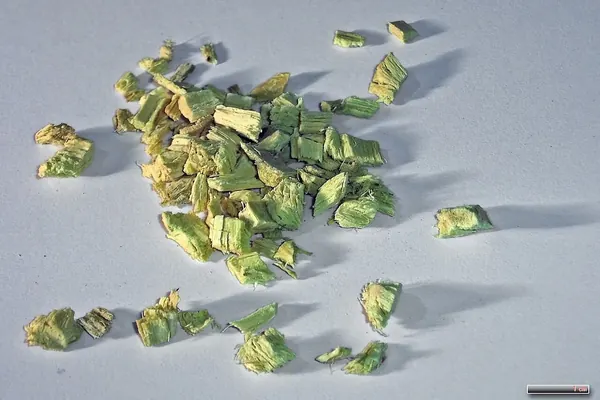
Monoammonium glycyrrhizinate
In a 200 mg blend, amount not disclosedA sweet compound taken from licorice root and used mainly as a sweetener and flavor (pictured: dried licorice root, its source). NCCIH warns that large amounts of glycyrrhizin can raise blood pressure and lower potassium; the amount here is not stated, and there is no hearing research.
Photo: Rillke / CC BY-SA 3.0 de, via Wikimedia CommonsGABA
In a 200 mg blend, amount not disclosedA messenger chemical that quiets nerve activity in the brain, also sold as a supplement. There are small studies on stress and sleep, but it is debated how much GABA taken by mouth reaches the brain, and it has not been studied for tinnitus.

L-ornithine HCl
In a 200 mg blend, amount not disclosedAn amino acid that helps the body clear ammonia (pictured: shijimi clams, a common food source of L-ornithine). Small studies on fatigue and sleep used hundreds of milligrams or more; none involved hearing.
Photo: Kentin / CC BY-SA 4.0, via Wikimedia Commons
L-tryptophan
In a 200 mg blend, amount not disclosedAn essential amino acid the body turns into serotonin and melatonin (pictured: roast turkey, a common food source of L-tryptophan). Sleep studies generally used a gram or more, it should not be combined with SSRIs without a doctor's advice, and there is no tinnitus research.
Photo: Mark Miller / CC BY-SA 4.0, via Wikimedia Commons
L-carnitine
In a 200 mg blend, amount not disclosedA nutrient that carries fats into cells to be burned for energy; healthy people make enough on their own (pictured: beef steak, a common food source of L-carnitine). It is studied at grams a day for exercise and some heart and nerve conditions, with mixed results, and not for hearing.
Photo: pelican from Tokyo, Japan / CC BY-SA 2.0, via Wikimedia CommonsWe looked for human trials on tinnitus or hearing for each ingredient on the label and found none. The supplement most studied for tinnitus, ginkgo, is not in ZenCortex, and a 2022 Cochrane review of 12 ginkgo trials found little or no benefit either.
What the order page claims, and what it shows
The page is careful in places: it talks about "supporting" hearing and carries the standard FDA disclaimer. Other lines go further than the evidence:
- "Once your body adapts to the ingredients you will notice less noise and better ear health." No published study supports this for any ingredient on the label.
- "No Stimulants". Guarana and green tea are natural sources of caffeine, which is a stimulant.
- "We have not received a single complaint yet" and "4.98/5 based on 2000+ reviews". Neither can be checked, and the reviews are not linked to an independent platform.
- "In our tests, the best results come when you take ZenCortex consistently for 3 months." No test results are published.
- The reference list mixes real tinnitus research, such as an NIDCD news story about an animal study and brain mapping studies, with unrelated items, including a spiritual book, a survey of plants used for stomach problems and papers on radiation injury. None of the references is a study of ZenCortex or of its blend.
Check ZenCortex price on the official site →Opens the brand's official website · money-back guarantee
How to take ZenCortex
The label says to take approximately one full dropper twice daily; one serving is 1 ml, and the bottle holds 60 ml (2 fl oz), or 60 servings. The FAQ says one dropper in the morning before breakfast and another before lunch, under the tongue or dissolved in water or juice, and that a full dropper is about 15 drops. At two droppers a day, one bottle lasts about a month, which matches how the packages are sold (2 bottles = 60 days). Do not go over the label dose.
How much does ZenCortex cost?
The official order page sells three packages, each a single charge through ClickBank. The FAQ states there are no future payments.
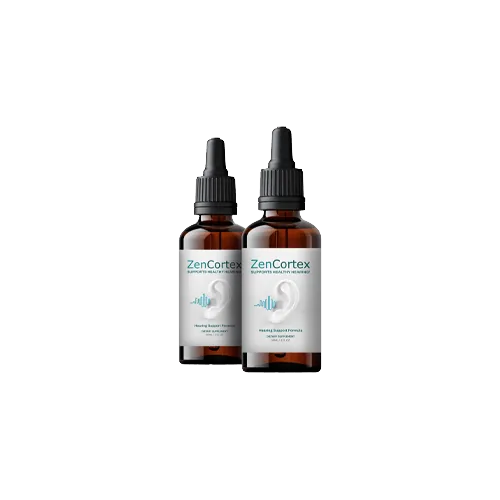 2 bottles60-day supply$79 /bottle$158 · + $9.95 shippingCheck availability →Best value
 6 bottles180-day supply$49 /bottle$294 · free US shipping + 2 e-booksCheck availability →
 3 bottles90-day supply$69 /bottle$207 · free US shipping + 2 e-booksCheck availability →
| Package | Supply | Price per bottle | Total | Extras |
|---|---|---|---|---|
| 2 bottles | 60-day supply | $79 | $158 | + $9.95 shipping |
| 6 bottles | 180-day supply | $49 | $294 | free US shipping + 2 e-books |
| 3 bottles | 90-day supply | $69 | $207 | free US shipping + 2 e-books |
Prices as listed on the official order page and the ClickBank order form when we checked. They can change, so the order form is the final word.
About shipping: the 2-bottle package adds $9.95 at checkout (the ClickBank form showed a total of $167.95); the 3 and 6-bottle packages ship free in the US. The FAQ says orders usually ship within 24 working hours and arrive in 5 to 10 days in the US; the shipping policy says to allow 1 to 2 business days of processing and that UPS is the main carrier. The ClickBank form also offers optional shipping insurance for $6.95; it was not added to the total when we checked. The 3 and 6-bottle packages include two e-books, listed as The Ultimate Tea Remedies and Powerful Ways To Sharpen Your Memory. Your statement will show a charge from CLKBANK*ZenCortex.
If you live outside the US, check first: the seller publishes a list of countries it does not ship to, including Ireland, Mexico, New Zealand, the Philippines and South Africa.
How the 60-day guarantee works

Orders from the official ZenCortex store are covered by a 60-day money-back guarantee, counted from the date of purchase, and the FAQ describes a one-time payment with no future charges.
The order page, the FAQ, the terms and the return policy all give 60 days from purchase, and the order page says even empty bottles qualify. To use it:
- Email support@zencortexhq.com (or call +1-877-908-5398, listed as 10 AM to 1 AM Eastern, seven days a week) and ask for a return authorization number (RMA).
- Mail all the bottles, including empty ones and any bonus bottles, with a note listing your order ID, name, address, email and phone, to 19655 E 35th Dr #100, Aurora, CO 80011, within 14 days of receiving the RMA. Email them the tracking number.
Three things to know:
- You pay return shipping, and the refund is "minus shipping and handling fees". Missing bottles mean a partial refund.
- The deadline is tight. The shipping policy says the package must arrive at the fulfillment center within 60 days of the purchase date, not just be mailed. Start the process well before day 50.
- The return policy page includes generic store text, such as lines about gift cards, CDs and "sale items cannot be refunded", that does not seem written for this product. If that worries you, ask support to confirm the refund terms by email before you order. Because ClickBank is the retailer, you can also contact ClickBank's order support at clkbank.com.
Who should talk to a doctor before taking ZenCortex?
- Anyone sensitive to caffeine, or with heart rhythm problems: guarana and green tea contain caffeine, even though the order page says "No Stimulants". The amount per dropper is not listed.
- People taking diabetes medicine: gymnema, chromium, ginseng and African mango are all studied for lowering blood sugar.
- People on antidepressants such as SSRIs: the blend includes L-tryptophan, which affects serotonin. Ask before combining.
- Anyone on blood thinners such as warfarin, or blood pressure medicine: ginseng, Coleus forskohlii and the licorice compound glycyrrhizin can interact with these drugs.
- People who take medicines that warn against grapefruit: the blend contains grapefruit seed extract. Whether this small amount matters is unknown, so ask your pharmacist.
- Pregnant or nursing women and anyone under 18: the label says the product is not for them.
The amounts in a 200 mg blend are small, so strong effects are unlikely, but the label does not let you or your doctor check. If you feel jittery, have trouble sleeping, or notice palpitations, stop and get advice.
What to realistically expect
The FAQ says most people feel a difference after the first week and recommends three months or longer. There is no published study behind either number. Tinnitus also naturally rises and falls with stress, sleep, noise and caffeine, so a few good weeks can happen with or without a supplement. If you decide to try it, note how loud and how bothersome your tinnitus is each week, change nothing else, and decide well before your 60 days run out. If your hearing is also getting worse, a hearing test is the more useful first step: hearing aids often make tinnitus less noticeable.
Our verdict
ZenCortex's buying experience is reasonable: a published label, a one-time ClickBank checkout, phone support every day and a 60-day refund that covers empty bottles. What it does not have is a reason to believe it helps tinnitus. The label is the same energy and metabolism blend sold as Audifort and EchoXen, the doses are hidden inside 200 mg, and none of the 22 ingredients has been tested for ringing in the ears. If you still want to try it after seeing a doctor, buy from the official site so the guarantee applies, and keep your order email.
Check ZenCortex price on the official site →Opens the brand's official website · money-back guarantee
Your doubts, answered honestly
Is ZenCortex a scam?
What we could verify: the full Supplement Facts label is shown on the order page, payment goes through ClickBank (your statement shows CLKBANK*ZenCortex), a phone line is listed seven days a week, returns go to an address in Aurora, Colorado, and there is a 60-day guarantee. What we could not: the "4.98/5 based on 2000+ reviews" rating, the claim of no complaints, the "in our tests" line, for which no tests are published, and the generic store text on the return policy page. The checkout is real; the hearing claims are not backed by evidence.
Why does it cost $49 to $79 a bottle?
At the label's two droppers a day, one 60 ml bottle lasts about a month. That is roughly $1.63 a day with the 6-bottle package, $2.30 with 3 bottles and $2.80 with 2 bottles, using the $167.95 total the ClickBank form showed. For that money you get a blend with hidden amounts. Single-ingredient supplements of maca, ginseng or green tea are usually much cheaper and list their doses.
Will it work for me?
We cannot promise it will, and the research does not suggest it. None of the ingredients has been tested for tinnitus, and the FAQ's "first week" and "three months" figures come with no published data. The blend is the same one printed on the Audifort and EchoXen labels, so if you have already tried one of those, expect the same result here. Tinnitus rises and falls on its own, so judge it by a weekly note of loudness and bother, and if your hearing is also getting worse, get a hearing test first.
Is it safe? Can I take it with my medication?
The order page says "No Stimulants", but guarana and green tea contain caffeine, and the amount is not listed. Gymnema, chromium, ginseng and African mango are studied for lowering blood sugar, which matters with diabetes medicine. L-tryptophan matters with SSRI antidepressants. Ginseng, Coleus forskohlii and the licorice compound can interact with blood thinners such as warfarin and blood pressure medicine, and the grapefruit seed extract is worth a question to your pharmacist. The label says it is not for pregnant or nursing women or anyone under 18.
What if it doesn't work?
You have 60 days from purchase, and the shipping policy says the package must arrive back within that window, not just be mailed. Email support@zencortexhq.com or call for a return authorization (RMA), then send all bottles, including empty and bonus ones, within 14 days. You pay return postage, the refund is minus shipping and handling, and missing bottles mean a partial refund. Start before day 50.
Why not just buy it on Amazon or another marketplace?
The 60-day guarantee applies to orders placed through the official order page and ClickBank. A bottle from a marketplace reseller is not an order the seller can look up, so it is not covered by that refund, and you cannot check how it was stored. If you live outside the US, check the seller's list of countries it does not ship to before you order.
Do you get paid if I buy?
Yes. We are an affiliate site and may earn a commission if you buy through our buttons. It does not raise your price, and it does not change what we write: this review still tells you the formula is shared with two other products and has no tinnitus evidence. The buttons go to the official order page.
Frequently asked questions
What are the ingredients in ZenCortex?
The label lists chromium (0.7 mcg) and a 200 mg proprietary herbal blend of 22 ingredients: maca, grape seed, guarana, African mango, eleuthero, astragalus, green tea, gymnema, Coleus forskohlii, bird pepper (capsicum), grapefruit seed, Asian ginseng, raspberry ketones, L-glutamine, L-tyrosine, L-arginine, beta-alanine, monoammonium glycyrrhizinate, GABA, L-ornithine, L-tryptophan and L-carnitine. The amount of each is not disclosed.
Is ZenCortex the same as Audifort?
The Supplement Facts panels list the same chromium amount, the same 200 mg blend total and the same 22 ingredients in the same order. ZenCortex comes in a 60 ml bottle and is taken twice a day; the other ingredients differ slightly.
How do you take ZenCortex?
The label says about one full dropper twice daily. The FAQ says one dropper before breakfast and one before lunch, under the tongue or in water or juice. A full dropper is about 15 drops (1 ml).
How much does ZenCortex cost?
2 bottles for $158 plus $9.95 shipping, 3 bottles for $207 ($69 each) or 6 bottles for $294 ($49 each). The 3 and 6-bottle packages ship free in the US and include two e-books.
Can ZenCortex cure tinnitus?
No. It is a dietary supplement, and none of its ingredients has been shown to reduce tinnitus in clinical trials. Sudden, one-sided or pulsing tinnitus needs a doctor.
How do I get a refund from ZenCortex?
Within 60 days of purchase, email support@zencortexhq.com for a return authorization (RMA), then mail all bottles, even empty ones, to 19655 E 35th Dr #100, Aurora, CO 80011 within 14 days of getting the RMA. You pay return shipping, and the refund is minus shipping and handling.
Related reading
 Legit check
Is ZenCortex legit?
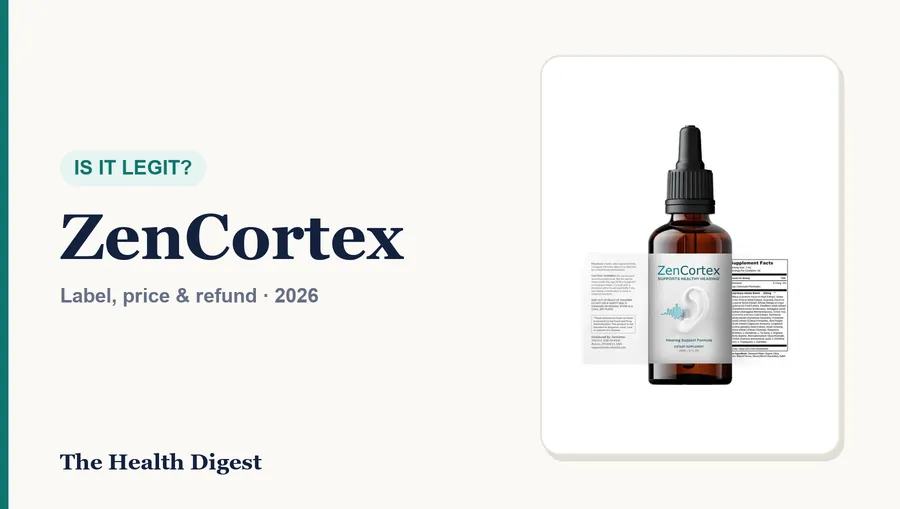
ZenCortex has a real ClickBank checkout, a published label and a 60-day refund. It also has the same label as Audifort. Here is how to weigh both before you pay.
Read more →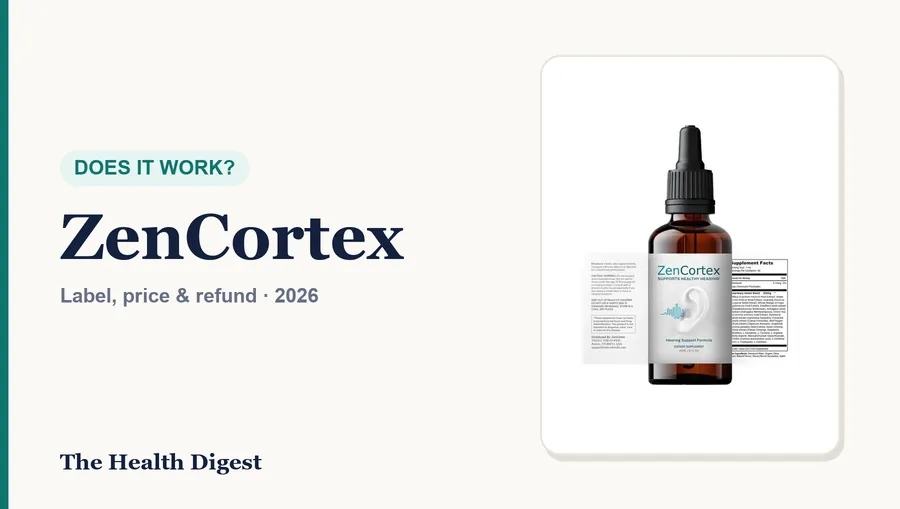 Review
Does ZenCortex work?
We match every ingredient on the ZenCortex label with the research behind it, explain what the 200 mg blend means and show how to test it fairly.
Read more → Review
Audifort review
What the Audifort label really lists, what research says about each ingredient for tinnitus, who should ask a doctor first, what it costs and how the 90-day refund works.
Read more →
Buy it from the official store so the guarantee applies, and keep your order email until you decide.
Check ZenCortex price on the official site →Opens the brand's official website · money-back guaranteeSources
- ZenCortex official order page and home page, Supplement Facts label image, FAQ, contact page, return policy, shipping policy and terms (zencortex24.com), plus the ClickBank order form, accessed October 2026
- NIDCD: Tinnitus. nidcd.nih.gov/health/tinnitus
- NIDCD: Sudden Deafness. nidcd.nih.gov/health/sudden-deafness
- MedlinePlus: Tinnitus. medlineplus.gov/tinnitus.html
- NIH Office of Dietary Supplements: Chromium, Health Professional Fact Sheet. ods.od.nih.gov
- NCCIH: Licorice Root. nccih.nih.gov/health/licorice-root
- NCCIH: Green Tea. nccih.nih.gov/health/green-tea
- NCCIH: Asian Ginseng. nccih.nih.gov/health/asian-ginseng