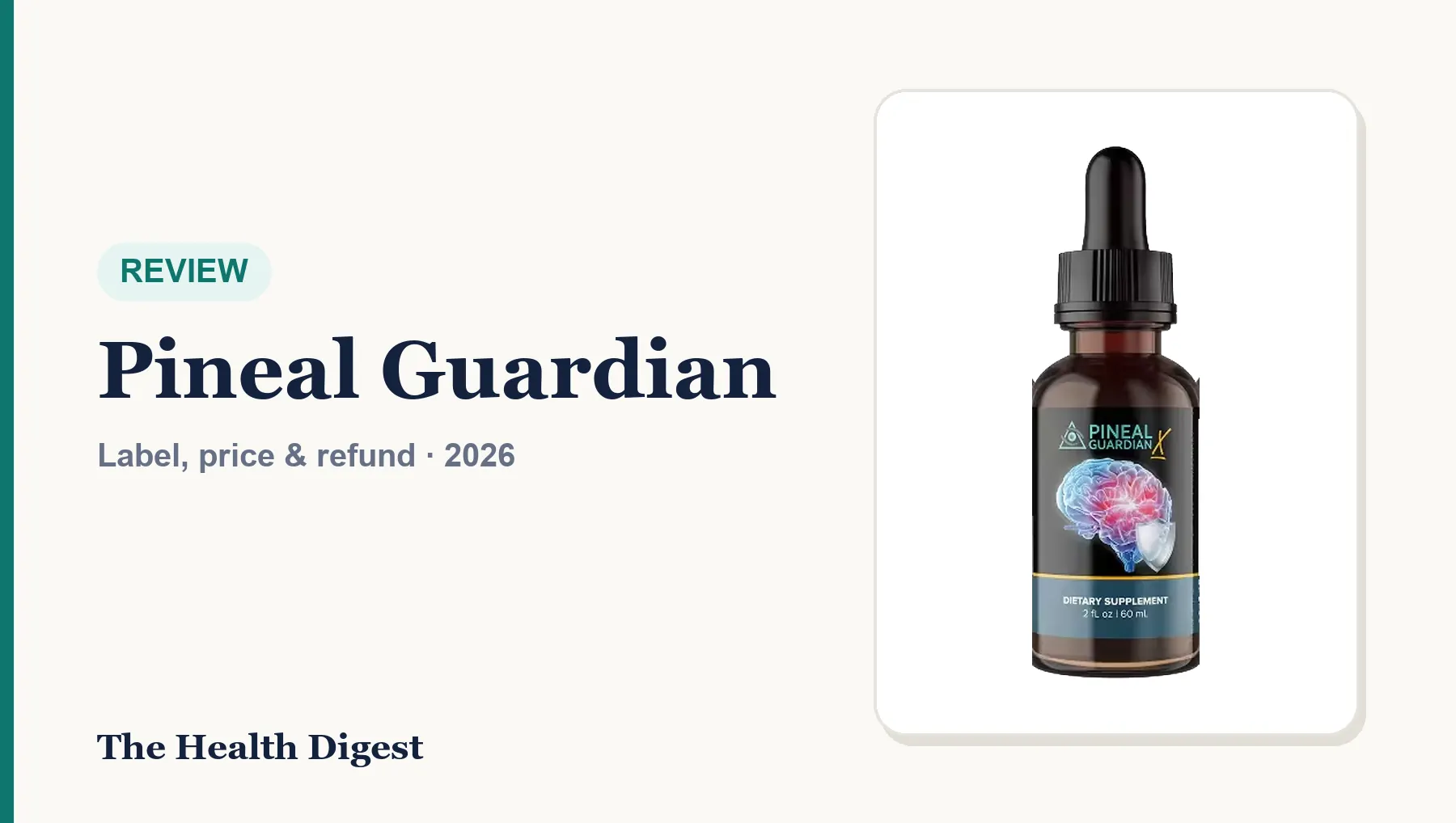
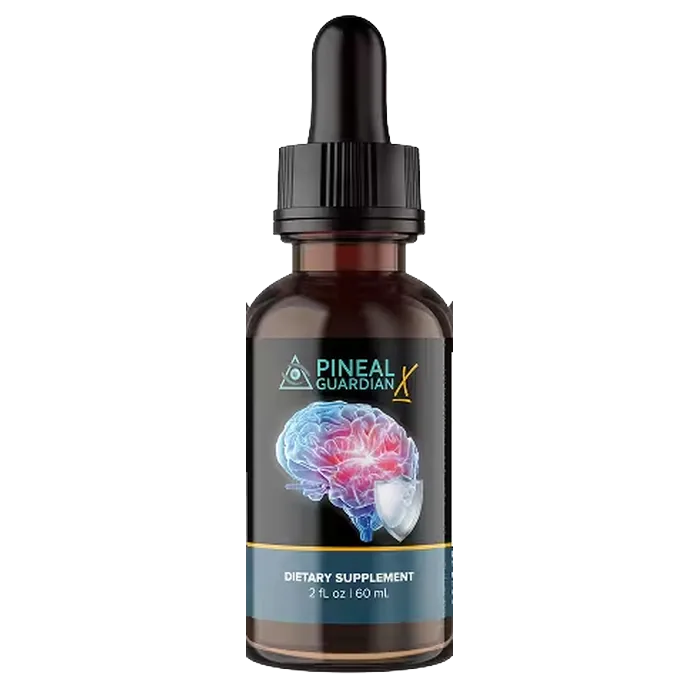
Pineal Guardian is a herbal memory liquid with a couple of ingredients worth taking seriously, mainly bacopa and lion's mane, which have small human studies showing modest effects. The rest is a mix of superfoods and herbs with little or no memory research, all inside an 800 mg blend with no amounts listed, so we cannot tell whether the bacopa or lion's mane doses come close to the studies. Its biggest weakness is the sales pitch: claims that a "toxic mineral" causes 99.98% of memory loss and that the product reverses memory loss and Alzheimer's are not backed by evidence. The 365-day guarantee is a genuine plus.
What we like
- Bacopa and lion's mane have some human research
- Easy liquid, can be mixed into a drink
- One-time payment, no subscription
- 365-day refund that accepts empty bottles
Keep in mind
- No amount per ingredient on the label
- Fluoride and Alzheimer's claims are unsupported
- Ginkgo raises bleeding risk with blood thinners
- You pay return shipping; refund is less shipping and handling
Check Pineal Guardian price on the official site →Opens the brand's official website · money-back guarantee
The sales page and bottle say Pineal Guardian X; the label and website footer say Pineal Guardian. It is the same product.
Pineal Guardian is a liquid supplement for memory and focus, sold with a video that blames fluoride buildup in the pineal gland for memory loss. The label lists an 800 mg blend of lion's mane, Bacopa monnieri, moringa, tamarind, chlorella, ginkgo biloba, maritime pine bark, neem and spirulina. You take 2 ml from the dropper each morning. It is sold through thepinealguardian.com at $39 to $69 per bottle as a one-time payment, with a 365-day money-back guarantee. This review covers what is in the bottle, what the research supports, the price, the refund fine print and the safety points.
First, a word about memory problems
Some forgetfulness is a normal part of getting older: names take longer to come back, keys go missing. But memory trouble that is new, getting worse, or that worries the people around you deserves a doctor's visit. MedlinePlus lists possible causes that include depression, thyroid, kidney or liver problems, reactions to medicines, strokes and head injuries, alongside Alzheimer's disease and other dementias. Several of these are treatable.
So before anything else: if you or someone you love is struggling, start with a check-up. Getting lost in familiar places or forgetting how to do everyday tasks are reasons to see a doctor soon. Pineal Guardian is a dietary supplement, not a treatment for memory loss, dementia or Alzheimer's disease, whatever its sales video suggests.
What is inside Pineal Guardian?
The label (shown on the official site's "Label" page) lists nine ingredients in one 800 mg proprietary blend per 2 ml serving, in a base of water, glycerin, flavor and potassium sorbate. Each one is covered in detail in the next section.
| Proprietary blend (per 2 ml) | Amount |
|---|---|
| Lion's mane mushroom (Yamabushitake), Bacopa monnieri, Moringa leaf, Tamarind fruit, Chlorella, Ginkgo biloba leaf, French maritime pine bark extract, Neem leaves, Spirulina | 800 mg total, amount of each not disclosed |
| Other ingredients | Water, glycerin, flavor, potassium sorbate |
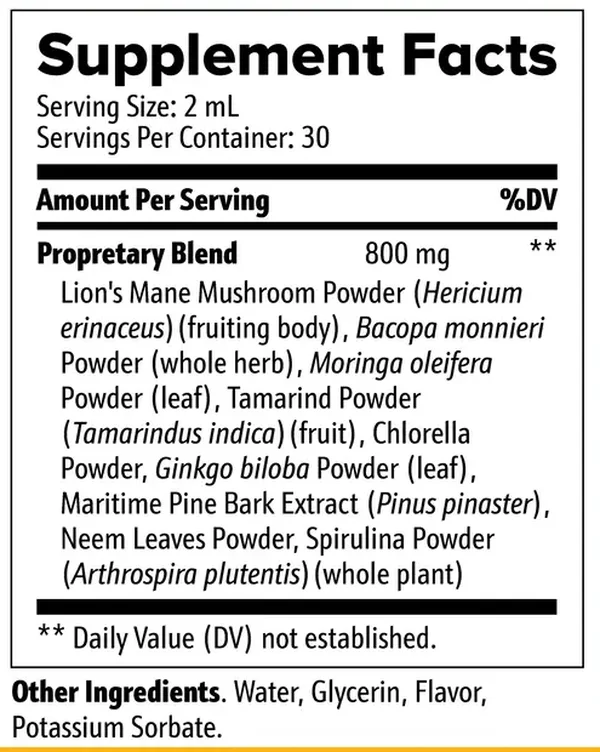
Because the amounts are hidden, the comparison with research is limited. The lion's mane trial used 3 grams a day and bacopa studies typically used about 300 mg of a standardized extract; the whole Pineal Guardian blend is 800 mg shared by nine ingredients, and the bacopa is listed as whole-herb powder rather than a standardized extract. It is unlikely that each daily serving matches the studied doses.
Every ingredient, up close
Here is every active ingredient on the label, what it actually is, and what research does and does not show.
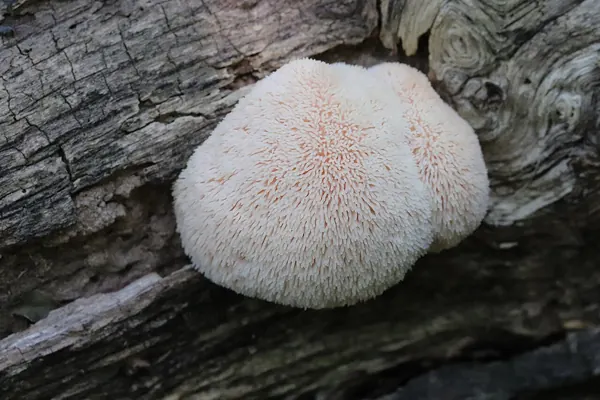
Lion's mane mushroom (Yamabushitake)
In an 800 mg blend per 2 ml, amount not disclosedAn edible mushroom with long white spines that grows on hardwood trees. The brand says it "purges fluoride from the pineal gland"; the research is a small 2009 trial in older adults with mild cognitive impairment that used 3 grams a day for 16 weeks and saw better test scores that faded after stopping, with nothing about fluoride. It is listed first, so it is the largest share of the blend, but even all 800 mg would be well under 3 grams.
Photo: Nina Filippova / CC BY 4.0, via Wikimedia Commons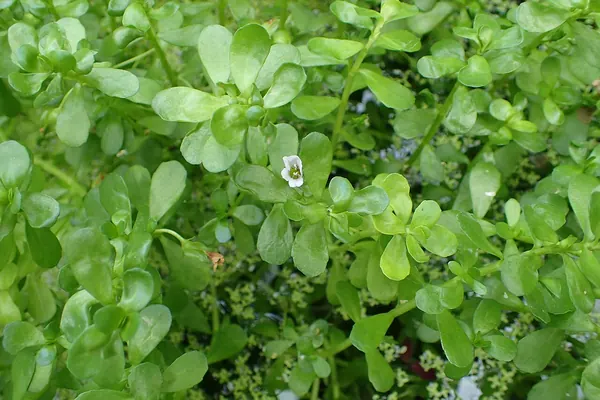
Bacopa monnieri
In an 800 mg blend per 2 ml, amount not disclosedA creeping wetland herb used in Ayurveda, and the best-studied ingredient here. Trials, usually with about 300 mg of a standardized extract for around 12 weeks, found modest gains on some memory tests, and stomach upset is a common side effect. Here it appears to be whole-herb powder with no amount given, so we cannot tell if it comes close to the studied dose.
Photo: Krzysztof Ziarnek, Kenraiz / CC BY-SA 4.0, via Wikimedia Commons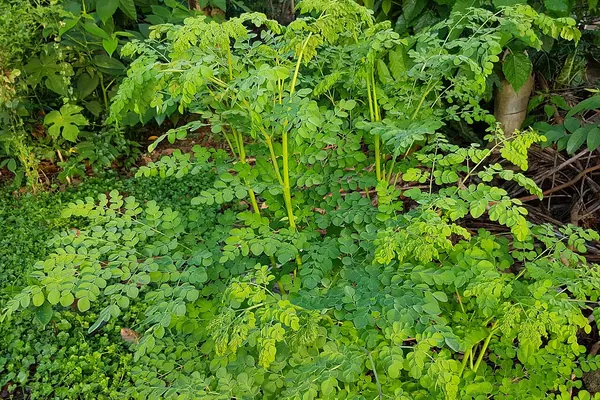
Moringa leaf
In an 800 mg blend per 2 ml, amount not disclosedLeaves of a fast-growing tropical tree eaten as a vegetable in South Asia and Africa. The brand calls its ingredients "proven" against Alzheimer's, but memory research on moringa is in labs and animals only. It may lower blood sugar and blood pressure.
Photo: Obsidian Soul / CC0, via Wikimedia Commons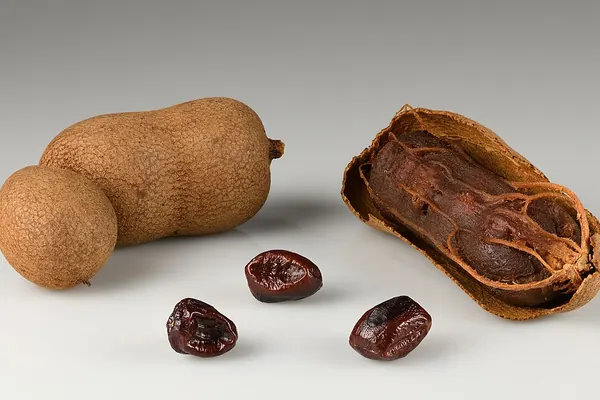
Tamarind fruit
In an 800 mg blend per 2 ml, amount not disclosedThe sour, sticky pulp inside the pods of the tamarind tree, a common cooking ingredient. We found no human studies on memory. It is a food, not a brain ingredient.
Photo: Ivar Leidus / CC BY-SA 4.0, via Wikimedia Commons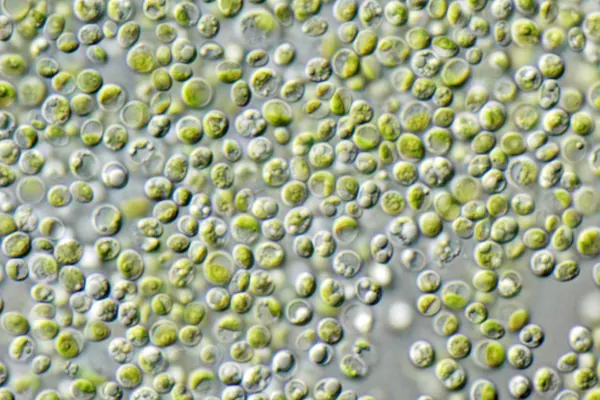
Chlorella
In an 800 mg blend per 2 ml, amount not disclosedA single-celled green freshwater alga, here seen under a microscope; supplements are a dried green powder. Like spirulina, it is nutritious, but there is no good human evidence that it helps memory or pulls anything out of the brain. It contains vitamin K, which can affect warfarin.
Photo: ja:User:NEON / User:NEON_ja / CC BY-SA 3.0, via Wikimedia Commons
Ginkgo biloba leaf
In an 800 mg blend per 2 ml, amount not disclosedThe leaf of the ginkgo tree, the classic memory herb. NCCIH sums up the evidence clearly: in the Ginkgo Evaluation of Memory study, with more than 3,000 people aged 75 and older followed for about six years, ginkgo did not reduce the risk of dementia or Alzheimer's. It can raise bleeding risk with blood thinners.
Photo: böhringer friedrich / CC BY-SA 2.5, via Wikimedia Commons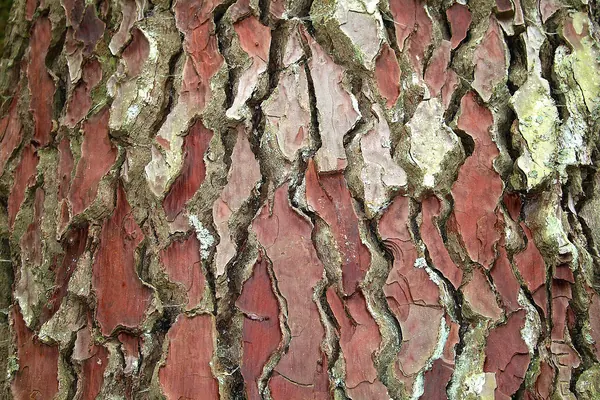
French maritime pine bark extract
In an 800 mg blend per 2 ml, amount not disclosedAn extract from the bark of the maritime pine that grows along the coast of southwest France, rich in plant compounds called procyanidins. The brand says it boosts blood flow for "faster detoxification"; small studies have looked at attention and cognition, and the evidence is limited.
Photo: Jean-Pol GRANDMONT / CC BY 3.0, via Wikimedia Commons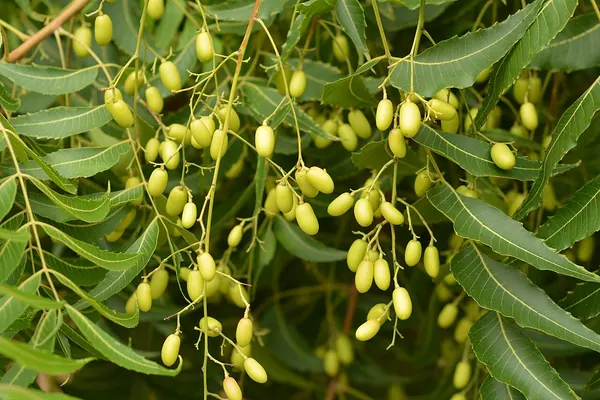
Neem leaf
In an 800 mg blend per 2 ml, amount not disclosedLeaves of an Indian tree used in Ayurveda and in natural pesticides. Evidence for memory comes from lab and animal studies only, and neem is generally advised against in pregnancy and for anyone trying to conceive.
Photo: Kevinsooryan / CC BY-SA 3.0, via Wikimedia Commons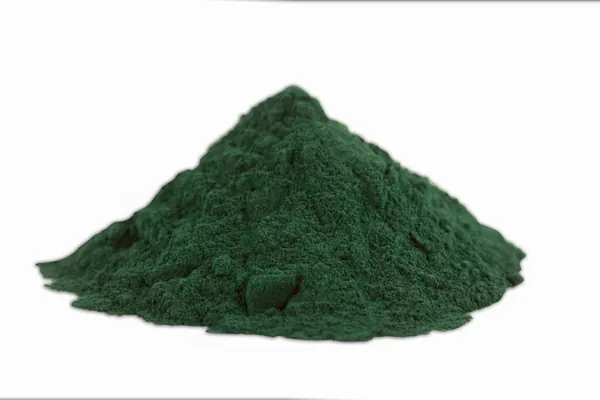
Spirulina
In an 800 mg blend per 2 ml, amount not disclosedA blue-green microalga sold as a protein-rich powder. The brand says it boosts melatonin and removes heavy metals from brain tissue; there is no good human evidence for either, or for memory. It may stimulate the immune system, which matters for people with autoimmune conditions.
Photo: Music4thekids / CC BY-SA 3.0, via Wikimedia CommonsThe pattern is the same as in the label note above: two ingredients with some human memory research, bacopa and lion's mane, and seven with little or none, all sharing 800 mg.
The fluoride and pineal gland story
The sales video says a "top neuroscientist" found that a toxic mineral is behind 99.98% of memory loss in seniors, that fluoride calcifies the pineal gland, and that this cuts melatonin and causes "Neural Drought". Some pieces are real: the pineal gland makes melatonin, it does develop calcium deposits with age, and fluoride can accumulate there. The leap is everything else. Memory loss has many well-understood causes, from normal aging to Alzheimer's, strokes, depression and medicine side effects; no study attributes 99.98% of it to fluoride, and "Neural Drought" is not a medical term. We found no evidence that any of these herbs removes fluoride from the pineal gland, or that doing so improves memory.
Check Pineal Guardian price on the official site →Opens the brand's official website · money-back guarantee
How to take Pineal Guardian
Shake the bottle, fill the dropper to 2 ml and squeeze it into your mouth, preferably in the morning, or mix it into a drink. The label says that if you tolerate it you may take a second serving later in the day. Note that at two servings a day a 60 ml bottle lasts about 15 days, not 30, so the "supply" on each package halves. Start with one serving, and stop if you get stomach upset.
How much does Pineal Guardian cost?
The official order page sells three packages, each a single charge. The FAQ says there is no automatic billing.
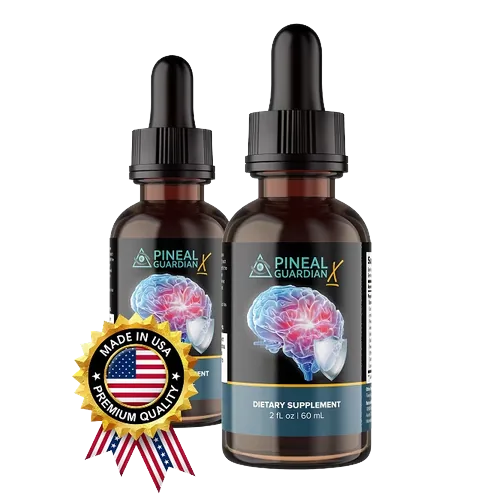 2 bottles60-day supply$69 /bottle$138 · + $9.99 shippingCheck availability →Best value
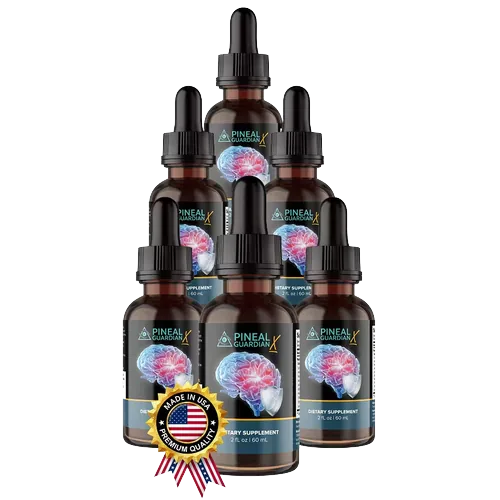 6 bottles180-day supply$39 /bottle$234 · free shipping + bonusesCheck availability →
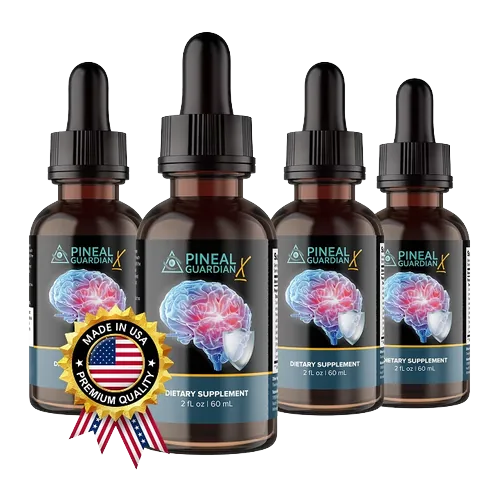 4 bottles120-day supply$59 /bottle$236 · + $9.99 shipping + 4 bonusesCheck availability →
| Package | Supply | Price per bottle | Total | Extras |
|---|---|---|---|---|
| 2 bottles | 60-day supply | $69 | $138 | + $9.99 shipping |
| 6 bottles | 180-day supply | $39 | $234 | free shipping + bonuses |
| 4 bottles | 120-day supply | $59 | $236 | + $9.99 shipping + 4 bonuses |
Prices as listed on the official order page when we checked. Supply assumes one 2 ml serving a day. Prices change from time to time, so the checkout page is the final word.
About shipping and extras: the 2 and 4-bottle packages show a $9.99 shipping fee, while the shipping policy page says the purchase price includes shipping, so check the checkout total. The 6-bottle package ships free. Oddly, 6 bottles ($234) cost $2 less than 4 bottles ($236). The 4 and 6-bottle packages include digital bonuses (a quick-start guide, The Sleep Miracle, an ear health toolkit and brain audio tracks), and the 6-bottle package adds "ShipSelect". A pop-up also offers a "buy 3, get 1 free" deal; its image shows $69 per bottle. Orders ship from Tallmadge, Ohio, and arrive in about 5 to 7 business days after processing in the US.
How the 365-day guarantee works
Every order from the official Pineal Guardian store is covered by a 365-day money-back guarantee, and it is a one-time payment with no subscription or auto-shipment.
You have 365 days from purchase, and the order page says even empty bottles qualify. Email support@thepinealguardian.com or call +1-302-251-2961 (the contact page says to leave a voicemail and they call back within 24 to 48 business hours), then return the bottles to 285 Northeast Ave, Tallmadge, OH 44278. Two things to know:
- You pay return shipping, and the refund is "less shipping and handling", so the original shipping is not returned.
- The order page says the refund is issued within 48 hours of the product arriving back. Keep your tracking number.
Who should talk to a doctor before taking Pineal Guardian?
- Anyone taking blood thinners such as warfarin, apixaban or daily aspirin: NCCIH says ginkgo may raise bleeding risk, and chlorella contains vitamin K, which can affect warfarin.
- Anyone taking antidepressants or other psychiatric medicine: the sales page shows a customer who feels she no longer needs her antidepressants after four days. Never stop these medicines because of a supplement; stopping suddenly can cause withdrawal and relapse.
- Anyone on diabetes or blood pressure medicine: moringa may lower blood sugar and blood pressure.
- People with autoimmune conditions or on immune-suppressing drugs: spirulina and chlorella may stimulate the immune system.
- Women who are pregnant, breastfeeding or trying to conceive: neem and ginkgo are generally advised against, and the label itself says safety "has not been determined".
- Anyone scheduled for surgery: stop ginkgo-containing products beforehand, as your surgeon advises.
Possible side effects include stomach upset and nausea (bacopa, algae), headache (ginkgo) and allergic reactions. Stop if you notice unusual bruising or bleeding.
What to realistically expect
The sales page promises to "reverse memory loss" and features a story about reversing a wife's Alzheimer's. No supplement has been shown to do that. If Pineal Guardian helps, the best-case scenario from the bacopa and lion's mane research is a small improvement in everyday recall or focus after two to three months. A fair approach is to see a doctor first, take one serving daily for 12 weeks without changing anything else, and keep a short weekly note. The year-long guarantee gives you time to judge.
Our verdict
Pineal Guardian contains two ingredients with real, if modest, human memory research, comes as an easy liquid and is backed by an unusually long 365-day refund. But the doses are hidden and probably below the studied amounts, and the fluoride and Alzheimer's claims are not supported. If you understand that you are buying a gentle herbal blend, not a cure, and your doctor has ruled out a medical cause, it is reasonable to try from the official site.
Check Pineal Guardian price on the official site →Opens the brand's official website · money-back guarantee
Your doubts, answered honestly
Is Pineal Guardian a scam?
What we could verify: a Supplement Facts label on the official site, a support email and phone line (support@thepinealguardian.com, +1-302-251-2961), a returns address in Tallmadge, Ohio, a one-time payment with no automatic billing according to the FAQ, and a 365-day refund that accepts empty bottles. What we could not verify: the "99.98% of memory loss" figure, the "top neuroscientist", or any claim that it reverses memory loss or Alzheimer's. The refund is real; those claims are not.
Why does it cost $39 to $69 a bottle?
At one 2 ml serving a day, a bottle lasts about 30 days: roughly $1.30 a day on the 6-bottle package and about $2.47 a day on the 2-bottle package once the $9.99 shipping is added. At two servings a day, as the label allows, the cost doubles. Single-ingredient bacopa or lion's mane supplements are usually much cheaper and list their doses.
Will it work for me?
The best case from the research is a small improvement in recall or focus after two to three months, driven by bacopa and lion's mane, and only if the hidden doses come close to the studied ones, which is unlikely. It will not remove fluoride from your pineal gland, and it will not reverse dementia. If memory trouble is new or getting worse, see a doctor first.
Is it safe? Can I take it with my medication?
Ginkgo may raise bleeding risk with warfarin, apixaban or daily aspirin, and chlorella contains vitamin K, which can affect warfarin. Moringa may lower blood sugar and blood pressure, spirulina and chlorella may stimulate the immune system, and neem and ginkgo are generally advised against in pregnancy. Never stop antidepressants because of a supplement. Stomach upset is the most likely side effect.
What if it doesn't work?
You have 365 days from purchase, even for empty bottles. Email support@thepinealguardian.com or call and leave a voicemail, then return the bottles to 285 Northeast Ave, Tallmadge, OH 44278. You pay return shipping and the refund is less shipping and handling; the order page says it is issued within 48 hours of the return arriving. Keep your tracking number.
Why not just buy it on Amazon?
The 365-day guarantee covers orders placed on the official site. A marketplace listing is not covered by it, and we cannot check where that stock came from or how it was stored. Buy from the official site and keep your order email.
Do you get paid if I buy?
Yes. If you buy through our buttons we may earn a commission, at no extra cost to you. It does not change what we write, which is why this review calls the fluoride and Alzheimer's claims unsupported. The buttons go to the brand's official site.
Frequently asked questions
What are the ingredients in Pineal Guardian?
The label lists an 800 mg proprietary blend per 2 ml: lion's mane mushroom, Bacopa monnieri, moringa leaf, tamarind fruit, chlorella, ginkgo biloba leaf, maritime pine bark extract, neem leaves and spirulina, in water, glycerin, flavor and potassium sorbate. It does not show the amount of each.
How do you take Pineal Guardian?
Shake the bottle and take 2 ml (one full dropper) a day by mouth, preferably in the morning, or mix it into a drink. The label says that if tolerated you may take a second serving later in the day.
How much does Pineal Guardian cost?
2 bottles for $138 ($69 each) plus $9.99 shipping, 4 bottles for $236 ($59 each) plus $9.99 shipping, or 6 bottles for $234 ($39 each) with free shipping. Six bottles cost slightly less than four.
Does Pineal Guardian remove fluoride from the pineal gland?
There is no evidence that it does. The pineal gland does collect calcium deposits with age, but no study shows that these herbs remove fluoride from it or that doing so restores memory.
Can Pineal Guardian treat Alzheimer's?
No. It is a dietary supplement. Its ingredients have not been shown to treat or prevent dementia, and NCCIH notes that ginkgo failed to prevent dementia in large trials.
How long is the Pineal Guardian guarantee?
365 days from purchase, even for empty bottles, but the refund is less shipping and handling and you pay return shipping.
Related reading
 Review
Memo Matrix review
Memo Matrix is a two-capsule memory and focus supplement. Its own web pages describe three different formulas, so we went back to the Supplement Facts label on the order page and built this review from it.
Read more → Legit or scam?
Is Pineal Guardian legit or a scam?
Pineal Guardian has a real checkout, a one-time price and a 365-day refund. It also has some of the most aggressive memory claims we have seen. Here is how to separate the two.
Read more →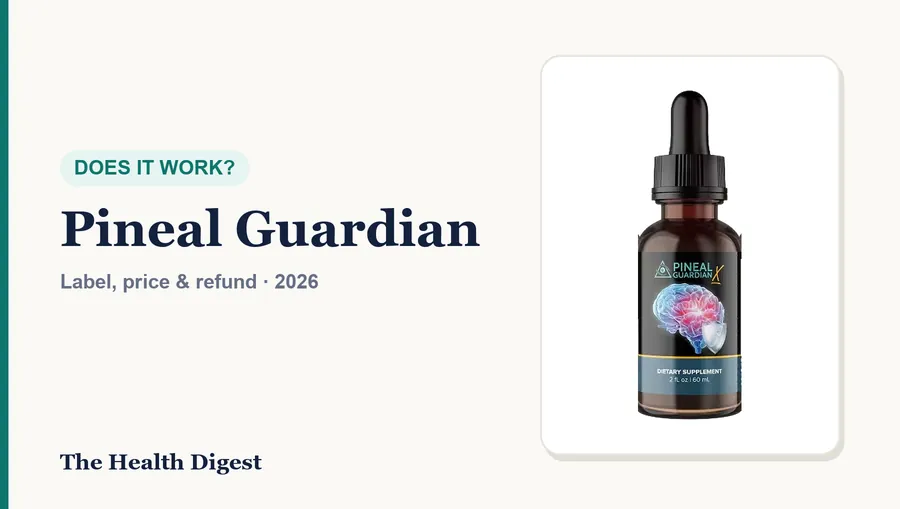 Review
Does Pineal Guardian work?
Pineal Guardian is sold as a fluoride "brain flush". The research on its ingredients tells a much smaller story. Here is what the evidence shows and what to expect.
Read more →
Buy it from the official store so the guarantee applies, and keep your order email until you decide.
Check Pineal Guardian price on the official site →Opens the brand's official website · money-back guaranteeSources
- Pineal Guardian official order page, Supplement Facts label image, contact page, shipping and return policy, terms and disclaimer (thepinealguardian.com), accessed October 2026
- MedlinePlus: Memory. medlineplus.gov/memory.html
- MedlinePlus: Dementia. medlineplus.gov/dementia.html
- NCCIH: Ginkgo. nccih.nih.gov/health/ginkgo