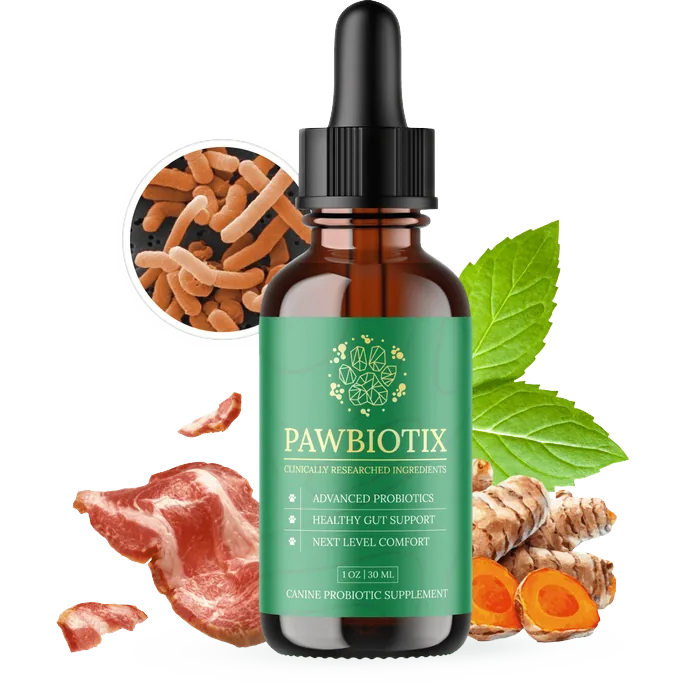
PawBiotix is a real, fully labeled dog probiotic: the label shows the strains, the CFU count per mL, a weight-based dose chart and clear warnings, which is better than many pet supplements. Probiotics can help some dogs with digestion, and the formula adds a prebiotic fiber and a few extras. What holds it back is the marketing: a headline about adding "up to 5 years" to your dog's life, testimonials about stiff dogs running like puppies, an FAQ that miscounts the strains, and a "60-day supply" that only holds for medium dogs. It is a reasonable option for a healthy dog with a sensitive stomach, after a word with your vet.
What we like
- Full label with strains and CFU per mL
- Weight-based dropper dosing, easy to mix with food
- Clear label warnings
- One-time payment, 60-day guarantee covering empty bottles
Keep in mind
- "Adds up to 5 years" is not supported by evidence
- Large dogs finish a bottle in about 15 days
- Proprietary blend amounts not given
- You pay return shipping; email-only product support
Check PawBiotix price on the official site →Opens the brand's official website · money-back guarantee
The label says PAWBIOTIX and the website writes Pawbiotix or PawBiotix. It is the same product.
PawBiotix is a liquid probiotic for dogs, sold in 30 mL dropper bottles. The official label lists Bacillus coagulans and a six-strain blend of Lactobacillus and Bifidobacterium, plus prebiotic chicory inulin and a proprietary blend with palmitoylethanolamide (PEA), turmeric, kelp, chlorella, beef liver and fish collagen. You give 0.5 to 2 mL once a day depending on your dog's weight. It is sold through thepawbiotix.com at $49 to $79 per bottle as a one-time payment, with a 60-day money-back guarantee. This review covers the label, the evidence, the real cost per dog size, the refund fine print and when to call your vet.
First, a word about your dog's gut
Most dogs have an occasional upset stomach or a soft stool, and many settle on their own. But some digestive signs need a vet, not a supplement: diarrhea that lasts more than a day or two, vomiting, blood or black stool, weight loss, a swollen belly, loss of appetite or a dog that seems weak or in pain. Puppies, senior dogs and dogs with other illnesses can get worse quickly. Chronic gut trouble can come from food allergies, parasites, pancreas problems or inflammatory bowel disease, and each is treated differently.
So before anything else: if your dog has ongoing symptoms, take them to your veterinarian, and bring the PawBiotix label with you if you plan to use it. PawBiotix is a supplement, not a treatment for any disease, and its own label says not to give it to dogs on other medicines unless a vet directs it.
What is on the PawBiotix label?
The brand publishes the full label on its references page. Here is what it lists per mL:
| What the label lists | Amount |
|---|---|
| Bacillus coagulans (100 million CFU at manufacture) | 1.5 mg per mL |
| 6-strain probiotic blend (250 million CFU at manufacture): L. acidophilus, L. rhamnosus, B. longum, L. plantarum, B. breve, L. casei | Not stated in mg |
| Proprietary blend: chicory root inulin, beef liver powder, kelp powder, hydrolyzed fish collagen, flax seed powder, sodium copper chlorophyllin, chlorella powder, palmitoylethanolamide (PEA), turmeric root extract 4:1, fennel seed powder, L-glutamine | No amounts given |
| Base: glycerin, water, natural flavors, sodium benzoate, potassium sorbate, citric acid | "Other ingredients" listed as 81.8 mg |
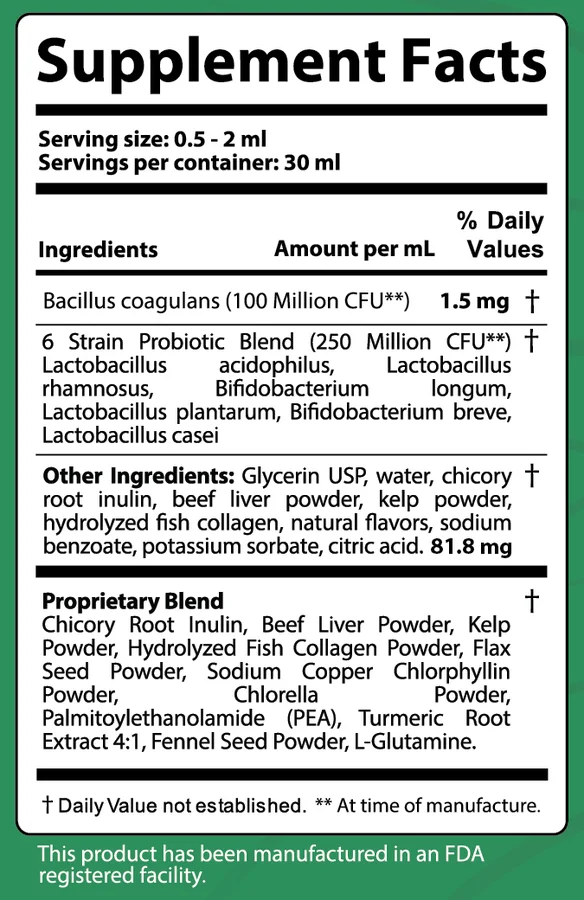
Two details are worth knowing. The CFU counts are marked "at time of manufacture", which is standard but means the number of live bacteria can be lower by the time your dog gets them; the label tells you to refrigerate after opening and use within 6 months. And the FAQ talks about "5 distinct strains", while the label lists seven: Bacillus coagulans plus the six-strain blend.
Every ingredient, up close
Here is every active ingredient on the label, what it actually is, and what research does and does not show.
Bacillus coagulans
1.5 mg per mL (100 million CFU at manufacture)A spore-forming probiotic that survives stomach acid well. A study cited by the brand tested one strain (GBI-30) at graded doses in healthy adult dogs, but the label does not name the strain used here, so that study cannot simply be transferred to this bottle.
L. acidophilus
In a 6-strain blend (250 million CFU at manufacture), amount per strain not disclosedOne of the most common probiotic species in pet and human products. In dogs, probiotic benefits are strain-specific and modest, seen mainly for short-term diarrhea.
L. rhamnosus
In a 6-strain blend (250 million CFU at manufacture), amount per strain not disclosedA widely studied species in people; dog research is smaller. The label does not name the strain or how much of the 250 million CFU it contributes.
B. longum
In a 6-strain blend (250 million CFU at manufacture), amount per strain not disclosedA Bifidobacterium species that lives naturally in the gut. Some combination probiotics containing it have been tested in dogs with acute diarrhea, with modest results.
L. plantarum
In a 6-strain blend (250 million CFU at manufacture), amount per strain not disclosedA hardy species common in fermented foods. Evidence specific to dogs is limited.
B. breve
In a 6-strain blend (250 million CFU at manufacture), amount per strain not disclosedAnother Bifidobacterium, studied mostly in human infants. Little dog-specific research.
L. casei
In a 6-strain blend (250 million CFU at manufacture), amount per strain not disclosedA species found in many fermented dairy products. Like the others, its effect in dogs depends on the strain, which the label does not give.
Chicory root inulin
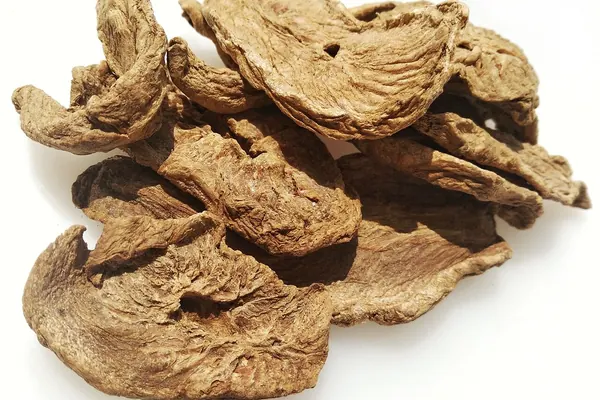
In a proprietary blend, amount not disclosedInulin is a prebiotic fiber extracted from chicory root that feeds gut bacteria and is widely used in pet foods. Too much at once can cause gas or soft stools, which is one reason to start at the label dose.
Photo: Herbeater / CC BY-SA 4.0, via Wikimedia Commons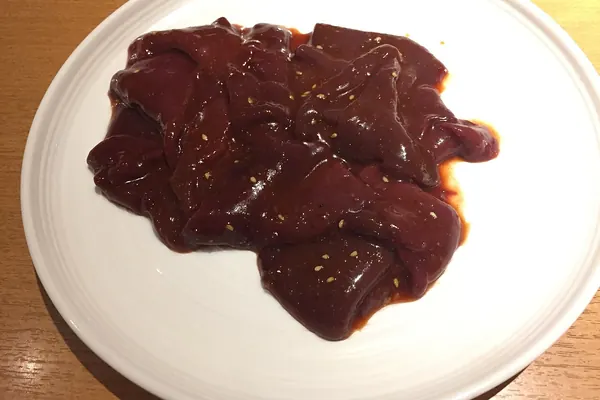
Beef liver powder
In a proprietary blend, amount not disclosedMainly there for taste, which helps dogs accept the dropper. Relevant if your dog has a beef allergy.
Photo: Ldays / CC BY-SA 4.0, via Wikimedia Commons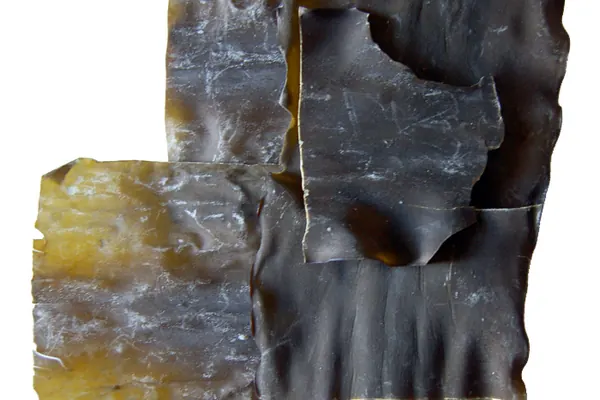
Kelp powder
In a proprietary blend, amount not disclosedA brown seaweed and a natural source of iodine, with content that varies by batch. That is why dogs with thyroid problems should get a vet's okay first.
Photo: Alice Wiegand, ( Lyzzy ) / CC BY-SA 3.0, via Wikimedia CommonsHydrolyzed fish collagen
In a proprietary blend, amount not disclosedProtein from fish skin or scales, broken into smaller pieces. Joint claims for collagen in dogs rest on little research; here it mostly adds protein and flavor, and it matters for dogs with fish allergies.
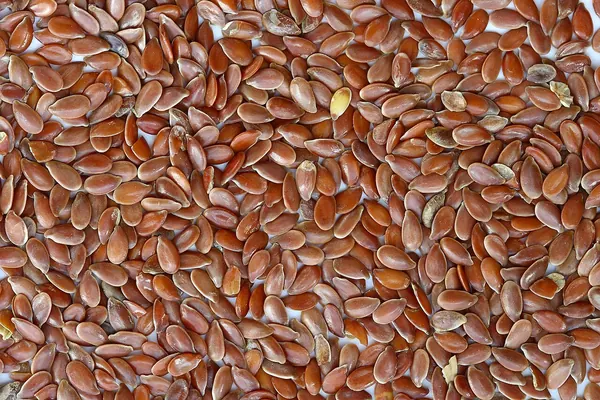
Flax seed powder
In a proprietary blend, amount not disclosedGround flax adds fiber and the plant omega-3 ALA. Dogs convert ALA poorly into the EPA and DHA found in fish oil, so it is not a substitute for that.
Photo: Sanjay Acharya / CC BY-SA 3.0, via Wikimedia CommonsSodium copper chlorophyllin
In a proprietary blend, amount not disclosedA water-soluble form of chlorophyll, often marketed for breath or stool odor. There is little dog research for any purpose.
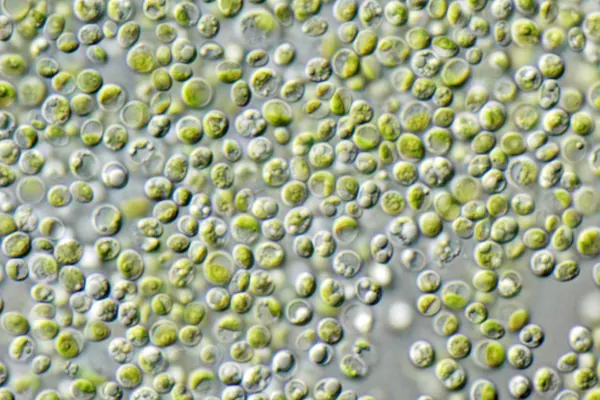
Chlorella powder
In a proprietary blend, amount not disclosedA single-celled green alga, dried into a powder. Sold as a "detox" ingredient, but dog research is very limited, and several of the brand's cited studies are in rodents.
Photo: ja:User:NEON / User:NEON_ja / CC BY-SA 3.0, via Wikimedia CommonsPalmitoylethanolamide (PEA)
In a proprietary blend, amount not disclosedA fatty compound the body makes naturally. It has been studied in dogs with itchy skin (atopic dermatitis), mostly in open-label studies with a special micronized form; the form and amount in this blend are not stated.
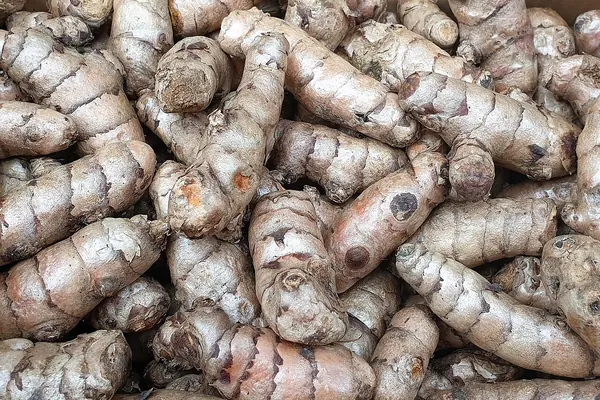
Turmeric root extract 4:1
In a proprietary blend, amount not disclosedTurmeric is the source of curcumin, which is poorly absorbed. The meta-analysis the brand cites was done in humans with arthritis, not dogs, and the amount in this blend is not disclosed.
Photo: Emőke Dénes / CC BY-SA 4.0, via Wikimedia Commons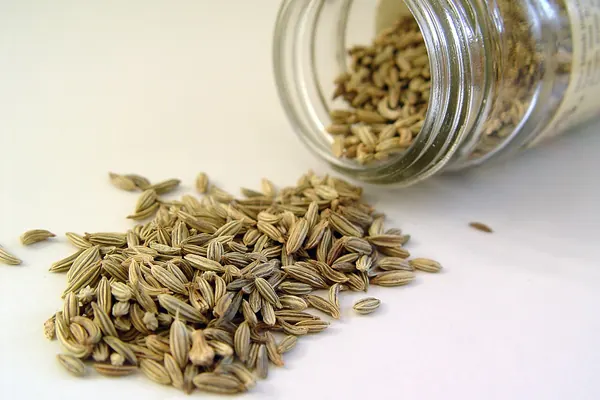
Fennel seed powder
In a proprietary blend, amount not disclosedA traditional remedy for gas and bloating in people. There is little or no research in dogs.
Photo: Holly Cheng / CC BY-SA 3.0, via Wikimedia Commons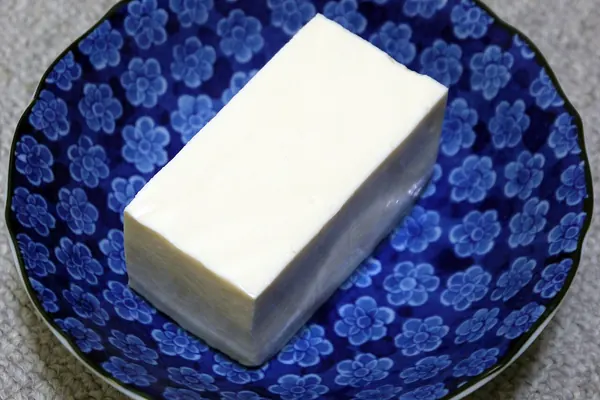
L-glutamine
In a proprietary blend, amount not disclosedAn amino acid that the cells lining the gut use as fuel (pictured: tofu, a protein food that supplies glutamine). Dogs make their own, and evidence that supplementing it helps healthy dogs is limited.
Photo: DryPot / CC BY-SA 3.0, via Wikimedia CommonsThe brand's references page lists real studies, but most are about one ingredient, often in another species. None is a study of PawBiotix itself.
Check PawBiotix price on the official site →Opens the brand's official website · money-back guarantee
What probiotics can and cannot do for dogs
A dog's gut holds a large community of bacteria that helps digest food, supports the gut lining and interacts with the immune system. Research in dogs, including the review the brand cites, links an unbalanced gut community with digestive disease. Probiotics try to nudge that community in a healthier direction. In dogs, the most consistent benefit so far is for short-term diarrhea, such as after a diet change or stress, and the effects tend to be modest and strain-specific.
What probiotics have not shown is the sweeping list in the marketing: more years of life, younger joints, a shinier coat and better mobility. Joint stiffness in an older dog usually has nothing to do with the gut and deserves a vet exam.
How to give PawBiotix
The label says to choose the dose by weight, place it in your dog's mouth with the dropper or mix it with food, and give it once a day. Refrigerate the bottle after opening and use it within 6 months.
| Dog's weight | Daily dose (label) | One 30 mL bottle lasts |
|---|---|---|
| 1 to 25 lb | 0.5 mL | about 60 days |
| 26 to 50 lb | 1 mL | about 30 days |
| 51 to 75 lb | 1.5 mL | about 20 days |
| 76 lb and up | 2 mL | about 15 days |
Start with the label dose, not more. Some dogs have a little gas or softer stool for the first days of any probiotic; if it lasts, or if your dog vomits or stops eating, stop and call your vet.
How much does PawBiotix cost?
The official order page sells three packages, each a single charge. The FAQ says there is no autoship and the checkout price is the only price you pay.
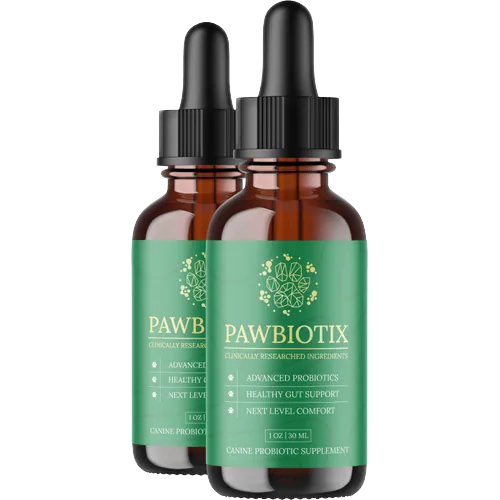 2 bottlesabout 60 days for a 26-50 lb dog$79 /bottle$158 · + $9.99 shippingCheck availability →Best value
 6 bottlesabout 180 days for a 26-50 lb dog$49 /bottle$294 · free US shipping + 3 e-booksCheck availability →
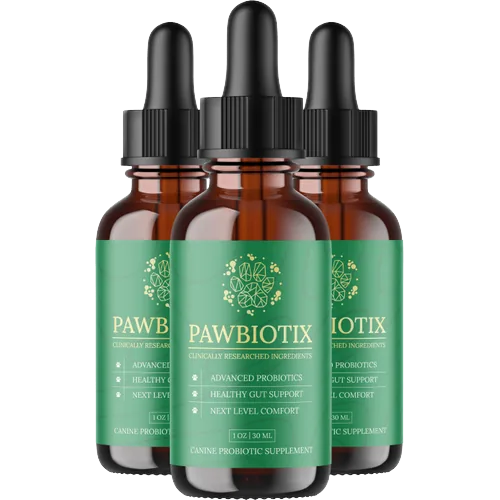 3 bottlesabout 90 days for a 26-50 lb dog$69 /bottle$207 · free US shippingCheck availability →
| Package | Supply | Price per bottle | Total | Extras |
|---|---|---|---|---|
| 2 bottles | about 60 days for a 26-50 lb dog | $79 | $158 | + $9.99 shipping |
| 6 bottles | about 180 days for a 26-50 lb dog | $49 | $294 | free US shipping + 3 e-books |
| 3 bottles | about 90 days for a 26-50 lb dog | $69 | $207 | free US shipping |
Prices as shown on the official order page when we checked; the page presents the 3 and 6-bottle packages as "2 + 1" and "3 + 3". How long a 30 mL bottle lasts depends on your dog's weight (see the dosing table). The checkout page is the final word on price.
About shipping and supply: the order page shows US shipping free on the 3 and 6-bottle packages and $9.99 on 2 bottles. Shipping to Canada, the UK, Ireland, Australia and New Zealand is $15.95 and takes 10 to 15 working days; US orders take 5 to 7. The "60-day supply" on the 2-bottle package assumes a 1 mL dose; for a 90 lb dog, six bottles last about three months, not six. The 6-bottle package includes three e-books: The Ageless Dog, Brain Building Exercises for Dogs and Happy Dog Code.
How the 60-day guarantee works

Every order from the official PawBiotix store is covered by a 60-day money-back guarantee, and it is a one-time payment with no subscription or auto-shipment.
The refund policy counts the 60 days from the day your order is delivered. To get a refund:
- Email contact@pawbiotix-product.com with "Refund Request" in the subject.
- Send all the bottles back, empty or not, with the packing slip and a note with your name, email and order number, to 11870 62nd St N, Largo, FL 33773.
- You pay return shipping. Refunds are processed within days of arrival and take 5 to 10 days to show on your statement.
Product support is by email. For payment questions, BuyGoods, which processes the order, has its own order support.
Which dogs should see a vet before PawBiotix?
- Dogs with epilepsy and dogs with kidney or liver disease: the label says not to use it.
- Puppies and pregnant or nursing dogs: the label says not to use it in immature, pregnant or lactating animals.
- Dogs taking any other medicine: the label says not to use it unless a veterinarian directs you to.
- Dogs with beef or fish allergies: it contains beef liver and fish collagen.
- Dogs with thyroid problems: kelp is a natural source of iodine, so ask your vet.
- Dogs with sudden diarrhea, vomiting, blood in the stool, weight loss or loss of appetite: these need a vet visit, not a supplement.
What to realistically expect
If PawBiotix helps, the most likely change is in digestion: firmer, more regular stools and less gas in a dog with a sensitive stomach, usually over a few weeks. Changes in energy, joints or lifespan are not something probiotics have been shown to deliver. A fair approach is to check with your vet, give the label dose daily for four to six weeks, keep a simple note of stool quality and appetite, and decide before day 60 so you can still use the guarantee.
Our verdict
PawBiotix is better labeled than many pet supplements, with named strains, CFU counts, a dose chart and sensible warnings, and a liquid with a meaty flavor is easy to give. Its marketing promises far more than any probiotic can, the per-day cost is high for big dogs, and you pay to return the bottles. For a healthy dog with occasional tummy trouble, and with your vet's okay, it is a reasonable thing to try from the official site.
Check PawBiotix price on the official site →Opens the brand's official website · money-back guarantee
Your doubts, answered honestly
Is PawBiotix a scam?
Verifiable: a full label with named species, CFU counts per mL, a weight-based dose chart and warnings; orders processed by BuyGoods; a written 60-day refund policy that accepts empty bottles; and a returns address in Largo, Florida. Not verifiable: the headline that it can add "up to 5 years" to your dog's life. No probiotic has been shown to do that, and no study has tested PawBiotix itself.
How much do I give my dog, and how long will a bottle last?
The label goes by weight, once a day: 0.5 mL for 1 to 25 lb, 1 mL for 26 to 50 lb, 1.5 mL for 51 to 75 lb and 2 mL for 76 lb and up. A 30 mL bottle lasts about 60 days for a small dog, 30 days for a medium dog and only about 15 days for a large one. Start at the label dose, not more.
Why does it cost $49 to $79 a bottle?
It depends on your dog's size. With the 6-bottle package ($49 a bottle), a 26 to 50 lb dog costs about $1.63 a day, a small dog about $0.82 and a dog over 76 lb about $3.27. Single-strain dog probiotics are often cheaper; what you pay extra for here is the liquid format and the added blend.
Will it help my dog?
If it helps, the most likely change is in digestion: firmer, more regular stools and less gas in a dog with a sensitive stomach, over a few weeks. In dogs, probiotics show their most consistent benefit for short-term diarrhea, and effects are modest. Younger joints, more energy or a longer life are not things probiotics have been shown to deliver.
Should I ask my vet first?
Yes, especially if your dog has ongoing symptoms. The label says not to use it in dogs with epilepsy, kidney or liver disease, in puppies, pregnant or nursing dogs, or in dogs on other medicines unless a vet directs it. It contains beef liver and fish collagen (allergies) and kelp (iodine, a thyroid concern). Diarrhea that lasts more than a day or two, vomiting, blood in the stool or weight loss need a vet, not a supplement.
What if it does not work?
You have 60 days from delivery. Email contact@pawbiotix-product.com with "Refund Request" in the subject, then send all bottles, empty or not, with the packing slip and a note to the Largo, Florida address. You pay return shipping; refunds take 5 to 10 days to appear on your statement.
Do you get paid if I buy?
Yes, we may earn a commission when you buy through our buttons, at no extra cost to you. It does not change the price or our verdict, which is why we say plainly that the "5 extra years" claim is not supported. The buttons go to the official site.
Frequently asked questions
What are the ingredients in PawBiotix?
Per mL, Bacillus coagulans (100 million CFU) and a six-strain blend of L. acidophilus, L. rhamnosus, B. longum, L. plantarum, B. breve and L. casei (250 million CFU), plus a proprietary blend of chicory root inulin, beef liver, kelp, fish collagen, flax, chlorophyllin, chlorella, PEA, turmeric, fennel and L-glutamine, in a glycerin and water base.
How do I give PawBiotix to my dog?
Once a day with the dropper, directly into the mouth or mixed with food: 0.5 mL for 1 to 25 lb, 1 mL for 26 to 50 lb, 1.5 mL for 51 to 75 lb and 2 mL for dogs over 76 lb. Refrigerate after opening and use within 6 months.
How long does one bottle of PawBiotix last?
A bottle holds 30 mL. That is about 60 days for a small dog, 30 days for a 26 to 50 lb dog and only about 15 days for a dog over 76 lb.
How much does PawBiotix cost?
2 bottles for $158 plus $9.99 shipping, 3 bottles for $207 or 6 bottles for $294, with free US shipping on the larger two and three e-books with the 6-bottle package.
Which dogs should not take PawBiotix?
The label says not to use it in dogs with epilepsy, kidney or liver disease, in puppies, pregnant or nursing dogs, or in dogs on other drugs unless a veterinarian directs it.
Who pays return shipping on PawBiotix?
You do. The refund policy says to send all bottles back, empty or not, with the packing slip, and that return shipping costs are not covered.
Related reading
 Legit or scam?
Is PawBiotix legit or a scam?
PawBiotix has a real checkout, a full label and a Florida returns address. It also has a "5 extra years" headline and copied help pages. Here is how to buy safely.
Read more → Review
Does PawBiotix work?
PawBiotix promises extra years. The research on its ingredients shows modest digestive benefits at best. Here is what you can honestly expect for your dog.
Read more →
Buy it from the official store so the guarantee applies, and keep your order email until you decide.
Check PawBiotix price on the official site →Opens the brand's official website · money-back guaranteeSources
- PawBiotix official order page, text presentation, FAQ and contact page, refund policy, shipping policy, references page and product label (thepawbiotix.com), accessed October 2026
- Acuff HL, Aldrich CG. Evaluation of graded levels of Bacillus coagulans GBI-30, 6086 on apparent nutrient digestibility, stool quality, and intestinal health indicators in healthy adult dogs. Journal of Animal Science, 2021 (cited on the brand's references page). doi.org/10.1093/jas/skab137
- Pilla R, Suchodolski JS. The Role of the Canine Gut Microbiome and Metabolome in Health and Gastrointestinal Disease. Frontiers in Veterinary Science, 2020 (cited on the brand's references page). doi.org/10.3389/fvets.2019.00498
- Noli C, et al. Efficacy of ultra-micronized palmitoylethanolamide in canine atopic dermatitis: an open-label multi-centre study. Veterinary Dermatology, 2015 (cited on the brand's references page). doi.org/10.1111/vde.12250
- Della Rocca G, Re G. Palmitoylethanolamide and Related ALIAmides for Small Animal Health: State of the Art. Biomolecules, 2022 (cited on the brand's references page). doi.org/10.3390/biom12091186
- U.S. Food and Drug Administration, Animal & Veterinary (Center for Veterinary Medicine). fda.gov/animal-veterinary
- American Veterinary Medical Association. avma.org