What SonoVive is, in one paragraph
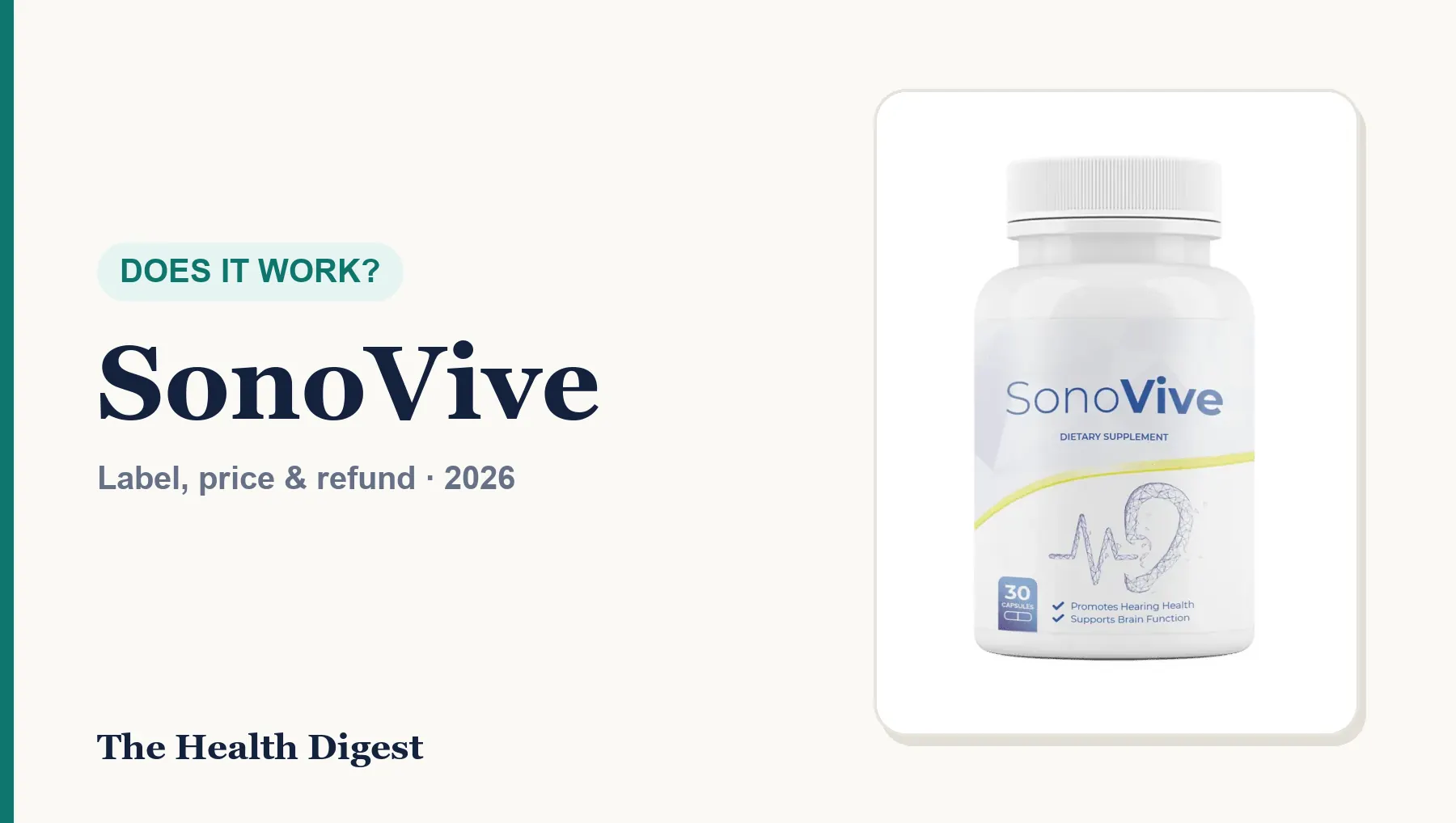
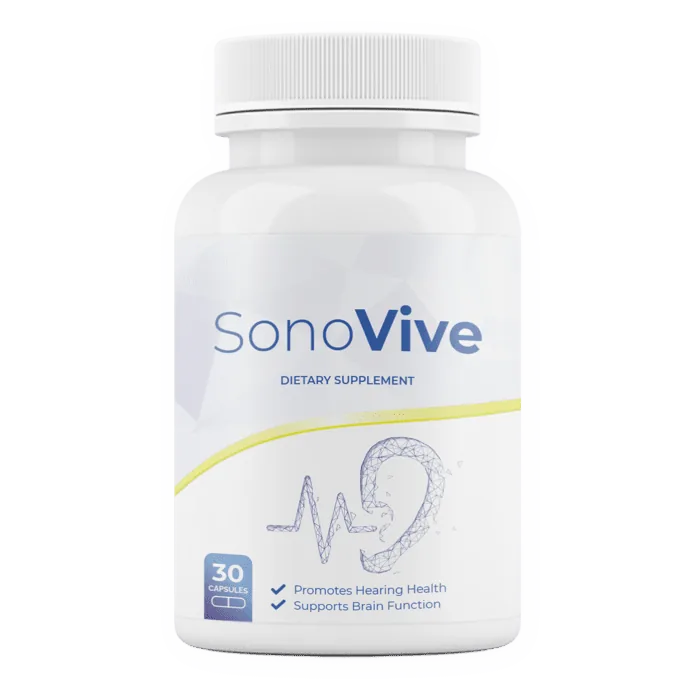
SonoVive is a capsule sold for hearing and brain support. Each capsule lists St. John's wort 250 mg, L-glutamine 150 mg, a phosphatidylserine 4% complex 125 mg, bacopa 120 mg, ginkgo 50 mg, N-acetyl L-carnitine 50 mg, vinpocetine 2 mg and huperzine A 10 mcg. The label says 1 capsule once or twice a day with meals. It costs $49 to $69 per bottle as a one-time payment with free US shipping and a 60-day money-back guarantee.
What "work" can mean here
| What you hope for | Realistic? |
|---|---|
| Hearing gets clearer | ❌ No ingredient on the label has been shown to restore hearing. |
| Tinnitus fades | ❌ Ginkgo, the one ingredient tested, did not beat placebo. |
| Sharper memory or focus | ⚠️ Small studies on bacopa and others, but at higher doses than SonoVive provides. |
| Better mood | ⚠️ St. John's wort is studied for mild depression, though usually at higher doses, and it interacts with many medicines. |
The evidence, ingredient by ingredient
Ginkgo, the only ingredient tested for tinnitus
Ginkgo has been tested for tinnitus more than any other supplement. A 2022 Cochrane review pooled 12 studies with about 1,900 participants and found little or no difference from placebo, based on low to very low certainty evidence. Those trials mostly used 120 to 240 mg a day of a standardized extract; SonoVive lists 50 mg of ginkgo leaf.
The memory ingredients
Bacopa (120 mg), phosphatidylserine (a 125 mg complex that, at 4%, would provide about 5 mg), acetyl-L-carnitine (50 mg) and huperzine A (10 mcg) are all studied for memory. Their studies used roughly 300 mg, 100 to 300 mg, 1 gram or more, and hundreds of micrograms a day, respectively. None has been tested for hearing.
St. John's wort and vinpocetine
St. John's wort is studied for depression, usually at about 900 mg a day. Vinpocetine is sold as a drug in some countries for blood flow to the brain; we found no good-quality trials showing it helps tinnitus or hearing, and the FDA advises women who are or could become pregnant not to take it.
Check SonoVive price on the official site →Opens the brand's official website · money-back guarantee
The theory behind SonoVive
The marketing says hair cells do not die but "lose the connection" to the brain cells that interpret sound, and that SonoVive strengthens that link. Damage to the connections between hair cells and the hearing nerve, sometimes called cochlear synaptopathy, is a real area of research, mostly in animals. But no supplement, including anything on this label, has been shown to repair those connections in people. Age-related hearing loss also involves changes in the inner ear itself, including the loss of hair cells, which in people do not grow back.
No trial of the finished product
We found no published study of SonoVive. Its references page lists news stories and general articles about ginkgo, bacopa, vinpocetine and brain health, which describe the ingredients but do not test this formula or measure hearing.
So why do some people say it helps?
Hearing varies with fatigue, background noise and attention, and tinnitus is very sensitive to stress and sleep. Starting a daily routine and expecting improvement can make you feel you are hearing better or are less bothered by ringing for a while. That is real, but it is not the same as a supplement working, and it is why testimonials cannot settle the question.
If you want to try it, here is a fair test
- Check your medicines with a doctor or pharmacist first, because of the St. John's wort.
- Get a hearing test before you start, so you have a real baseline instead of an impression.
- Take the label dose and change nothing else.
- After about six weeks, note honestly whether anything changed in daily listening.
- Decide before day 60 from delivery so the refund still applies.
The answer, stated plainly
SonoVive is unlikely to work for hearing loss or tinnitus. It is a memory blend with no hearing research, most doses are below study levels, its one tinnitus ingredient has failed in trials, and the product itself has never been tested. If you still want to try it, clear it with your doctor, treat it as an experiment covered by the 60-day refund, and remember that hearing aids remain the option with strong evidence.
Check SonoVive price on the official site →Opens the brand's official website · money-back guarantee
Frequently asked questions
Is there a clinical trial of SonoVive?
Not that we could find. The references page links to news stories and general articles about the ingredients, not to a study of SonoVive.
How long does SonoVive take to work?
The FAQ says supplements take "around 9-12 weeks". That figure does not come from a study of SonoVive.
Does ginkgo help tinnitus?
A 2022 Cochrane review of 12 trials found little or no difference between ginkgo and placebo, and tinnitus guidelines recommend against using it.
Can SonoVive reverse hearing loss?
No. No ingredient on the label has been shown to restore hearing. A hearing test and, when needed, hearing aids are the proven route.
Could SonoVive help memory or focus?
Bacopa, ginkgo and phosphatidylserine have small studies on memory, but SonoVive's doses of each are below the amounts usually tested.
Related reading
 Review
SonoVive review
The full SonoVive label with doses, what research says about each ingredient for hearing, the medicine interactions to know, what it costs and how the 60-day refund works.
Read more → Legit check
Is SonoVive legit?
SonoVive has a real ClickBank checkout, a fully dosed label and a 60-day refund. It also has big promises and a key ingredient with serious drug interactions.
Read more → Review
Does ZenCortex work?
We match every ingredient on the ZenCortex label with the research behind it, explain what the 200 mg blend means and show how to test it fairly.
Read more →
Buy it from the official store so the guarantee applies, and keep your order email until you decide.
Check SonoVive price on the official site →Opens the brand's official website · money-back guaranteeSources
- SonoVive official text presentation (sonovive.com/text.php), Supplement Facts label image, FAQ and contact page, references page, refund policy, shipping policy and terms (sonovive.com), plus the ClickBank order form, accessed October 2026
- NIDCD: Age-Related Hearing Loss. nidcd.nih.gov/health/age-related-hearing-loss
- NIDCD: Hearing Aids. nidcd.nih.gov/health/hearing-aids
- NCCIH: St. John's Wort. nccih.nih.gov/health/st-johns-wort
- Sereda M. et al. Ginkgo biloba for tinnitus. Cochrane Database of Systematic Reviews, 2022. cochranelibrary.com
- FDA: Vinpocetine in Dietary Supplements. fda.gov